

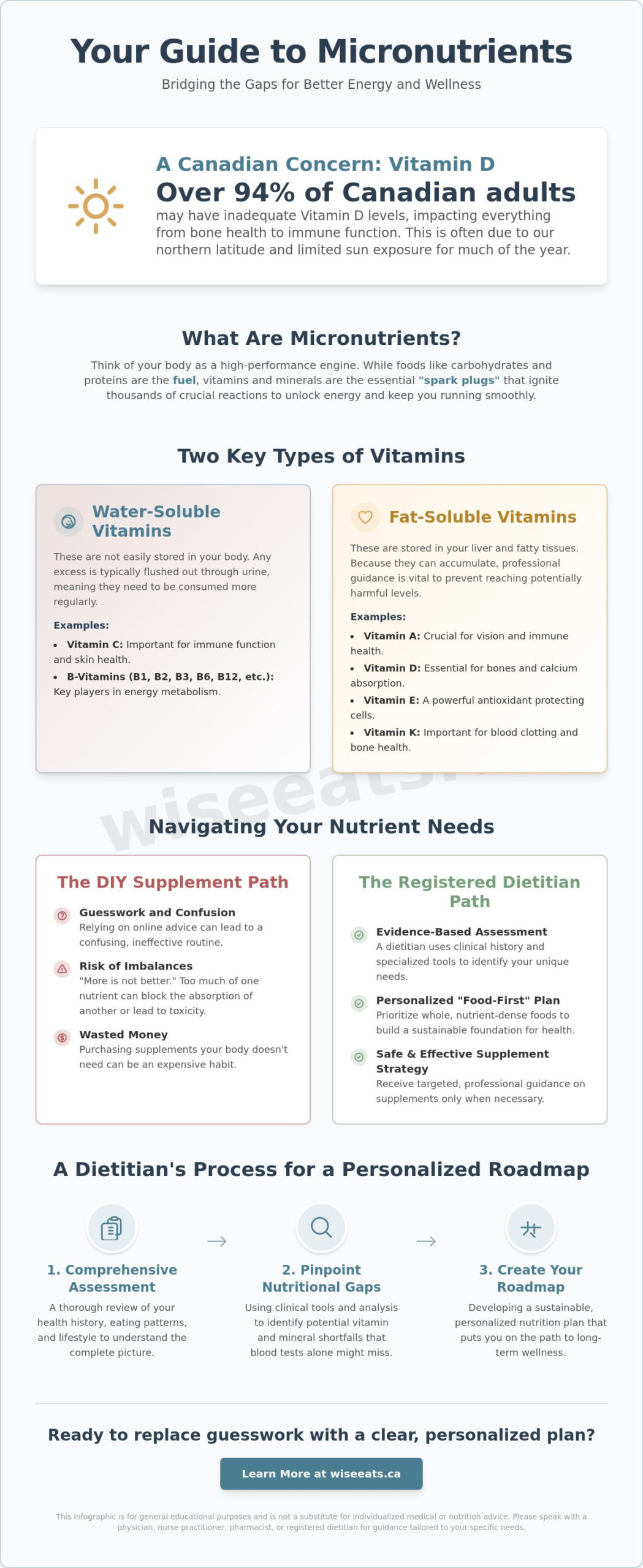
Did you know that more than 94% of Canadian adults have inadequate Vitamin D levels? It’s incredibly frustrating to eat your greens and choose whole foods only to still feel drained of energy by mid-afternoon. You might find yourself staring at rows of expensive vitamins in the pharmacy, wondering if a micronutrient deficiency dietitian is the missing piece of your health puzzle. It’s completely normal to feel overwhelmed by conflicting online advice or worried about wasting your hard-earned C$ on supplements you don’t actually need.
Partnering with a professional can replace that guesswork with clinical precision. You’ll learn how a Registered Dietitian uses evidence-based assessments to pinpoint your specific vitamin and mineral gaps and build a nutrition plan that’s as unique as you are. This article explores how professional guidance can clear up confusion and help you prioritize real food while ensuring your routine is safe and effective.
This article is for general educational purposes and is not a substitute for individualized medical or nutrition advice. Please speak with a physician, nurse practitioner, pharmacist, or registered dietitian for guidance tailored to your specific needs.
Key Takeaways
- Understand how vitamins and minerals act as the “spark plugs” for your metabolism and why distinguishing between fat-soluble and water-soluble types is vital for your safety.
- Discover how a micronutrient deficiency dietitian uses clinical history and specialized software to identify nutritional gaps that blood tests alone might miss.
- Learn why “more is not always better” when it comes to supplements and how to avoid common nutrient-nutrient interactions that can hinder your body’s absorption.
- Explore why Canada’s unique geography and lifestyle factors make certain nutrients, such as Vitamin D and iron, a year-round priority for many of us.
- Find out how to transition from a confusing routine of random vitamins to a personalized nutrition roadmap that prioritizes whole, nutrient-dense foods.
What Are Micronutrients and How Do They Impact Your Health?
Think of your body as a sophisticated, high-performance engine. While macronutrients like protein and carbohydrates provide the fuel, micronutrients act as the essential spark plugs that get everything moving. Without these tiny but mighty compounds, your metabolic engine simply can’t run efficiently. A micronutrient is a vitamin or mineral that your body requires in small amounts to facilitate thousands of chemical reactions, from repairing DNA to creating cellular energy.
To better understand how these essential elements work within your body, watch this helpful video:
When you work with a micronutrient deficiency dietitian, one of the first things you’ll discuss is safety and solubility. Vitamins are generally categorized as either water-soluble or fat-soluble. Water-soluble vitamins, like Vitamin C and the B-complex group, aren’t easily stored in your body; any excess is typically flushed out through urine. Fat-soluble vitamins, including A, D, E, and K, are stored in your liver and fatty tissues. Because these can accumulate over time, professional guidance is vital to ensure you aren’t reaching levels that could be counterproductive to your health.
There is also a significant difference between the Recommended Dietary Allowance (RDA) and “optimal” levels. The RDA is often the minimum amount needed to prevent a deficiency disease, like scurvy or rickets. However, many people want to move beyond just “not being sick” and toward feeling their best. Small gaps in your intake can quietly impact your daily life, leading to persistent fatigue, subtle mood shifts, or a weakened immune response. A tailored approach helps bridge these gaps using evidence-informed strategies.
The Vital Role of Vitamins
Vitamins are organic compounds that perform a variety of specialized jobs. For instance, B-vitamins are the maestros of energy metabolism. They don’t provide energy themselves, but they help your body unlock the energy found in the food you eat. Antioxidants like Vitamin C and E act as a protective shield for your cells, helping to manage oxidative stress. For Canadians, Vitamin D is particularly unique. Because our northern latitude limits sun exposure for much of the year, this hormone-like vitamin often requires extra attention to support bone health and immune function.
Minerals: The Body’s Structural Foundation
Minerals are inorganic elements that originate in the earth and find their way into our diet through plants and water. We need macro-minerals like calcium and potassium in larger amounts, while trace minerals like selenium and iodine are required in much smaller quantities. Minerals like magnesium and zinc are essential for hundreds of enzyme functions that keep your heart beating and your brain communicating. Balancing these is a delicate process, as some minerals can compete for absorption. You can learn more about how to navigate these complexities through professional supplement guidance that prioritizes your safety.
This article is for general educational purposes and is not a substitute for individualized medical or nutrition advice. Please speak with a physician, nurse practitioner, pharmacist, or registered dietitian for guidance tailored to your specific needs.
Common Micronutrient Deficiencies in the Canadian Context
Living in Canada brings unique nutritional challenges that go beyond simply eating a balanced plate. While we rarely see severe malnutrition in our communities, many Canadians live with subclinical common micronutrient deficiencies that quietly sap our vitality. These gaps aren’t always obvious. They often show up as a lingering sense of “not feeling your best” rather than a clear medical crisis. A micronutrient deficiency dietitian can help you look beneath the surface to see how our environment and food systems impact your unique biology.
Our northern geography is a major factor. In Canada, the sun’s rays aren’t strong enough for most of the year to trigger Vitamin D production in the skin. Data from the Canadian Community Health Survey indicates that over 94% of adults have inadequate Vitamin D intakes from food and supplements alone. This makes it a significant, year-round concern for most Canadians. Similarly, magnesium gaps are widespread, with more than 45% of Canadian adults falling short. This is often due to the high prevalence of processed foods, which lose significant mineral content during manufacturing.
Iron deficiency is another common struggle, particularly for athletes and women. High-intensity training can increase iron loss, while menstrual cycles create a consistent demand for replenishment. For those following plant-based or vegetarian patterns, Vitamin B12 is a critical focus. Since B12 is primarily found in animal products, it’s easy to fall behind without a strategic plan. If you’re feeling stuck, you can reach out for a professional consultation to explore your specific needs.
Signs You May Be Lacking Key Nutrients
Your body has subtle ways of asking for help. You might notice brittle nails, thinning hair, or even changes in your dental health. For example, Padden Dental notes that restorative oral health is frequently tied to how well your body absorbs key vitamins and minerals. Persistent fatigue is a major red flag, but so are digestive issues. If your gut isn’t healthy, you might experience secondary malabsorption, where you’re eating the right foods but your body can’t actually use the nutrients. Lifestyle factors like high stress or intense exercise further deplete your reserves, making professional assessment even more valuable.
When to Seek Professional Help
If you live with chronic conditions like Crohn’s or Celiac disease, your risk for nutritional gaps is significantly higher. These conditions often require a specialized micronutrient deficiency dietitian to navigate safe intake levels. It’s also wise to seek guidance if you’re planning a pregnancy, recovering from surgery, or dealing with unexplained, persistent exhaustion. A professional can help you distinguish between a temporary slump and a deeper nutritional need.
This article is for general educational purposes and is not a substitute for individualized medical or nutrition advice. Please speak with a physician, nurse practitioner, pharmacist, or registered dietitian for guidance tailored to your specific needs.
Professional Assessment versus DIY Supplementation: Why Expert Guidance Matters
Have you ever stood in the pharmacy supplement aisle feeling completely lost? It’s easy to grab a generic multivitamin and hope for the best. But without a clear picture of your actual needs, you might be engaging in what professionals call “expensive urine.” This happens when you take high doses of water-soluble vitamins that your body doesn’t need and simply flushes out. A micronutrient deficiency dietitian helps you move past the guesswork. They ensure that every C$ you spend on your health is working toward a specific, measurable goal.
Precision matters because nutrients don’t act in isolation. Did you know that certain minerals actually fight for the same absorption pathways? For example, taking high doses of zinc for a long period can interfere with your copper levels. Similarly, calcium can hinder how your body processes iron if they’re taken at the same time. A professional assessment identifies these nutrient-nutrient interactions before they become a health hurdle. This level of data-driven care is why expert guidance is so much more effective than a generic one-size-fits-all approach.
Evidence-Based Precision
A dietitian doesn’t just look at a single lab value in a vacuum. They consider your whole lifestyle, including your stress levels, sleep patterns, and physical activity. They also help you navigate the often confusing market by recommending high-quality brands that undergo third-party testing. This ensures that what’s on the label is actually in the bottle, free from hidden contaminants. By streamlining your routine and removing unnecessary products, professional guidance can often save you money. You can explore professional supplement guidance to learn how to simplify your daily routine safely.
The Food First Philosophy
While supplements have their place, nutrients from whole foods are usually better absorbed. This is because food provides a complex “package” of enzymes and co-factors that help your body use those nutrients effectively. A dietitian’s goal is to help you create a sustainable eating pattern that naturally meets your needs. However, food isn’t always enough. Research on Common Nutrient Deficiencies in Canada shows that many of us struggle to get enough Vitamin D or magnesium from diet alone. In these cases, supplements become a helpful bridge, provided they’re used with therapeutic dosing that is tailored to your unique biology.
This article is for general educational purposes and is not a substitute for individualized medical or nutrition advice. Please speak with a physician, nurse practitioner, pharmacist, or registered dietitian for guidance tailored to your specific needs.
How a Dietitian Identifies Nutritional Gaps: The Assessment Process
Working with a micronutrient deficiency dietitian is a methodical journey that moves far beyond a simple food diary. It’s a collaborative process designed to uncover the “why” behind your symptoms. This assessment doesn’t just look at what you ate yesterday; it examines your history, your biology, and your future health goals. By following a structured path, you can move from a state of uncertainty to a clear, actionable plan for wellness.
The process typically follows five essential steps:
- Step 1: Clinical History and Symptom Review. We start by discussing your energy levels, sleep quality, and any physical signs like skin changes or digestive discomfort.
- Step 2: Detailed Dietary Analysis. Using specialized software, we look at the specific density of your current eating patterns.
- Step 3: Collaboration with Your Physician. We help you interpret blood work results in the context of your nutrition.
- Step 4: Life Stage Risk Identification. Your needs as an athlete, a senior, or someone planning a pregnancy are vastly different.
- Step 5: Developing Your Nutrition Roadmap. This is your step-by-step guide to closing identified gaps through food and, if necessary, targeted supplementation.
If you’re ready to stop guessing and start knowing, you can book an initial assessment to begin your personalized journey.
Deep Dive into Diet Analysis
Tracking your intake for a few days provides a wealth of data that goes beyond calories or macronutrients. Specialized software allows a dietitian to see the “density” of your diet. This means we can identify if you’re getting enough zinc, folate, or selenium from your current meals. You can learn more about this process in our ultimate nutrition guide, which explains how professional analysis reveals hidden patterns in your eating habits. It’s about finding the small shifts that lead to big improvements in how you feel.
Interpreting Lab Results with Context
Lab results can be confusing. A value that falls within the “normal” range on a lab printout might not be “optimal” for your specific health goals. For instance, your iron levels might be technically adequate to prevent disease but still low enough to cause significant fatigue during exercise. A micronutrient deficiency dietitian helps you understand the difference between blood levels and cellular stores. This perspective allows you to have more informed, effective conversations with your doctor about your health data.
This article is for general educational purposes and is not a substitute for individualized medical or nutrition advice. Please speak with a physician, nurse practitioner, pharmacist, or registered dietitian for guidance tailored to your specific needs.
Creating Your Personalized Nutrition Roadmap for Long-Term Wellness
Once your assessment is complete, the focus shifts from identifying gaps to building a sustainable path forward. A micronutrient deficiency dietitian doesn’t just hand you a list of pills and send you on your way. Instead, we work together to create a living document that evolves with your life. This roadmap prioritizes nutrient-dense, local foods while ensuring that any necessary supplements are integrated with clinical precision. It’s about moving away from the “all-or-nothing” mentality and toward a balanced, manageable routine that fits your unique Canadian lifestyle.
Your plan will focus on consistently including “at-risk” nutrients that we identified during your analysis. If we’ve found that your magnesium or iron levels need support, your meal plan will reflect that through specific food choices. Safety is our top priority, especially if you’re already taking medications for other health conditions. We carefully review how certain vitamins might interact with your current prescriptions to ensure your routine is both safe and effective. Because your body’s needs change as you age or your activity levels shift, we’ll monitor your progress and make adjustments as needed.
Practical Meal Planning for Better Absorption
Success isn’t just about what you eat; it’s about how your body uses it. We use “pairing” strategies to boost your results. For example, pairing Vitamin C-rich foods like bell peppers with iron-rich plant foods like lentils can significantly improve iron absorption. We also look at how you prepare your meals. Did you know that steaming vegetables often preserves more water-soluble vitamins than boiling them? For more detailed guidance on how to blend these strategies with your routine, you can explore our personalized supplement recommendations for expert integration.
Long-Term Support and Guidance
Maintaining nutritional balance is a marathon, not a sprint. Ongoing counseling provides the accountability and expert filtering you need to stay on track as your life changes. Whether you’re training for a local run, navigating a new life stage, or simply trying to stay healthy during a busy season, your nutritional needs will fluctuate. A micronutrient deficiency dietitian acts as your steady hand, helping you filter out the “hype” of online trends and stick to what works for your biology. If you’re ready to take the next step toward clarity, we encourage you to contact a dietitian for a tailored assessment.
This article is for general educational purposes and is not a substitute for individualized medical or nutrition advice. Please speak with a physician, nurse practitioner, pharmacist, or registered dietitian for guidance tailored to your specific needs.
Take the Next Step Toward Nutritional Clarity
Navigating your health doesn’t have to feel like a guessing game. You’ve learned that micronutrients are the essential spark plugs for your metabolism and that Canada’s unique climate often requires a more strategic approach to nutrients like Vitamin D and iron. By moving away from generic multivitamins and toward a plan rooted in your actual biology, you can replace confusion with confidence. A micronutrient deficiency dietitian provides the expert filter you need to ensure your routine is safe, effective, and tailored specifically to your life stage.
Our Licensed Registered Dietitians are here to support you with evidence-based nutrition counselling and personalized supplement strategies that prioritize your long-term wellness. You deserve to feel vibrant and energized, knowing that your nutritional gaps are being closed with professional precision. If you’re ready to gain a clearer picture of your status and build a sustainable roadmap, book a consultation with a Registered Dietitian to identify your nutritional gaps. We are in this together, and we look forward to helping you feel your best.
This article is for general educational purposes and is not a substitute for individualized medical or nutrition advice. Please speak with a physician, nurse practitioner, pharmacist, or registered dietitian for guidance tailored to your specific needs.
Frequently Asked Questions
Can a dietitian order blood tests for vitamin deficiencies in Canada?
In British Columbia, Registered Dietitians do not typically have the authority to order blood tests independently. Instead, we work as part of your healthcare team to recommend specific markers for your physician or nurse practitioner to order. This collaborative approach ensures that your medical history and current health status are fully considered before any testing is performed. It also helps streamline your care and ensures your doctor is kept in the loop.
What are the most common signs of a micronutrient deficiency?
Common signs of a micronutrient deficiency often include persistent fatigue, brittle nails, thinning hair, or unusual skin rashes. You might also experience muscle weakness, frequent colds, or a noticeable change in your mood and cognitive clarity. Because these signs can overlap with many different health conditions, a professional assessment is vital. We help you connect these dots to see if your diet might be playing a role in how you feel.
Is it better to get vitamins from food or supplements?
Whole foods are almost always the ideal source because they provide a synergistic blend of fibre, antioxidants, and co-factors that isolates lack. A micronutrient deficiency dietitian focuses on a “food first” strategy to maximize these natural benefits. However, if your levels are significantly low or your absorption is compromised, targeted supplements can be a necessary and effective tool. We help you find the right balance between your plate and your supplement routine.
How long does it take to correct a nutritional deficiency?
The timeline for correcting a deficiency varies depending on the specific nutrient and the severity of the gap. Some people may notice improvements in energy or mood within a few weeks, while others might need several months of consistent intake to replenish cellular stores. Regular monitoring helps us adjust your plan as your levels stabilize. Your unique biology and lifestyle factors will ultimately determine how quickly your body responds to these nutritional changes.
Are expensive designer vitamins worth the extra cost?
A higher price tag does not always mean a supplement is better or more effective for your body. The most important factors are the chemical form of the nutrient and whether the product has undergone third-party testing for purity and accuracy. We help you navigate these choices to find high-quality options that fit your budget. Professional guidance ensures you aren’t overpaying for “designer” labels that don’t offer additional clinical value for your specific needs.
Can taking too many vitamins be harmful to my health?
Yes, taking excessive amounts of certain vitamins and minerals can lead to toxicity or interfere with other essential nutrients. This is especially true for fat-soluble vitamins, which your body stores in fatty tissues rather than flushing out. High doses can also interact poorly with common medications. Working with a professional ensures your intake remains within safe, evidence-informed limits. We prioritize your safety by keeping your dosages aligned with established health standards.
Does insurance usually cover a dietitian for nutritional deficiencies?
Many private insurance and extended health benefit plans in Canada cover the cost of seeing a Registered Dietitian. Since every plan is different, it’s best to contact your provider and ask if “Registered Dietitian” services are included in your coverage. Some plans may require a doctor’s referral, while others allow you to book directly. Investing in your nutrition can often prevent more complex and costly health challenges in the future.
What should I bring to my first appointment with a deficiency dietitian?
You should bring a list of your current medications, any supplements you take, and copies of recent blood work to your first appointment. A three-day record of what you typically eat can also provide valuable insights during our first conversation. This information allows your micronutrient deficiency dietitian to conduct a more thorough and accurate assessment from the very start. Being prepared helps us focus our time on creating the most effective roadmap for your wellness.
This article is for general educational purposes and is not a substitute for individualized medical or nutrition advice. Please speak with a physician, nurse practitioner, pharmacist, or registered dietitian for guidance tailored to your specific needs.

Article by
Rachel McBryan, Dietitian
Rachel McBryan is a licenced Dietitian in British Columbia offering comprehensive nutrition counselling as virtual and/or in-person counselling sessions to suit your needs and preferences. With a Bachelor of Science in Nutrition and Food Science, Rachel has over 20 years experience helping people address their health through nutrition. She was awarded Human Nutrition and Food Science BSc.from University of Alberta followed by post-grad course work at UBC in guidance counselling.
An eating disorder is a serious mental health illness.
If you are in immediate distress or crisis, please contact emergency services by dialing 911 or calling Vancouver Island Crisis Line: 1-888-494-3888. This article is educational information only, not professional diagnosis or treatment. Content is AI generated and may not be reviewed for accuracy.