

Have you ever found yourself standing in your kitchen, staring at a cupboard full of food, but feeling too afraid to take a single bite? When you’re dealing with sharp, localized abdominal pain, the simple act of eating can feel like navigating a minefield. It’s completely natural to feel confused about what to eat with diverticulitis flare up, especially when the advice you find online seems to flip-flop between high-fibre and low-fibre options without much explanation.
We understand how exhausting it is to manage this discomfort while trying to find a path toward relief. This guide provides a clear, compassionate roadmap for using gentle dietary stages to support your body’s natural healing process and lower inflammation. We will explore how a temporary move to a clear liquid diet and a gradual reintroduction of low-fibre foods can provide the “gut rest” your colon needs to recover.
This article is for educational purposes and is not a substitute for professional medical advice, diagnosis, or treatment. Because every body is different, we encourage you to discuss these strategies with your own healthcare team to ensure they’re right for your specific situation.
Key Takeaways
- Understand the difference between diverticulosis and active inflammation to better appreciate why a temporary period of gut rest is so important for healing.
- Learn exactly what to eat with diverticulitis flare up during the acute phase, including how to use clear liquids to stay hydrated without stressing your system.
- Discover the “low and slow” philosophy for reintroducing low-fibre solids once your pain has subsided and your bowel movements have stabilized.
- Identify critical “red flag” symptoms that signal when it is time to stop managing at home and seek immediate support from your medical team.
- Gain confidence for the future by learning how a Registered Dietitian can help you transition back to a high-fibre lifestyle that may eventually include seeds and nuts.
Understanding Diverticulitis and the Role of Gut Rest
Living with diverticulosis often means having small pouches in the wall of your colon. Most people don’t even know they have them. But when those pouches become inflamed or infected, it turns into diverticulitis. This shift can be incredibly painful and emotionally draining. You might feel a sudden sharp pain, usually in the lower left side of your abdomen. It’s a moment where your body is clearly saying it needs a break. Understanding Diverticulitis is the first step in managing these symptoms effectively and finding your way back to comfort.
To better understand how food choices impact your recovery, watch this helpful video:
What Happens During a Flare-Up?
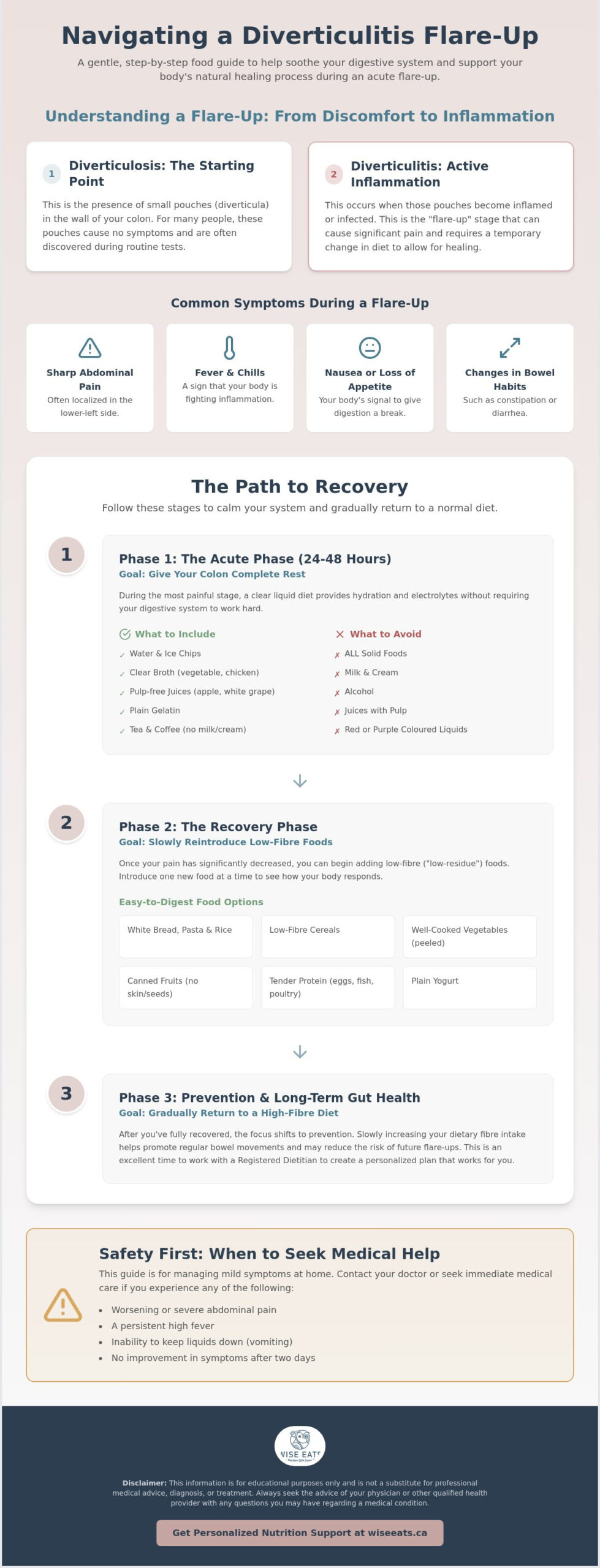
When a flare-up occurs, the delicate lining of your colon becomes irritated. Think of it like a small bruise or a scrape that needs time to heal without being bumped. If you continue to eat high-fibre foods during this time, the bulky waste can scrape against the inflamed pouches, potentially making the pain worse. This is why knowing what to eat with diverticulitis flare up is so vital. It isn’t about permanent restrictions. Instead, it’s about giving your digestive system a temporary “vacation” so the inflammation can settle down. Canadians often report a specific set of symptoms during this time:
- Sharp pain or tenderness, often in the lower left quadrant of the abdomen.
- Fever or occasional chills.
- Nausea or a sudden loss of appetite.
- A noticeable change in bowel habits, such as constipation or diarrhea.
Acknowledging the emotional toll of these symptoms is part of the healing process. It’s okay to feel overwhelmed by the conflicting advice you find online. We want to replace that anxiety with a sense of clarity and hope.
The Goal of Medical Nutrition Therapy
As a dietitian, I see diet as a supportive tool rather than a set of rigid rules. The primary goal of medical nutrition therapy during a flare-up is to reduce the workload on your bowel. We move through stages: starting with rest, moving to recovery, and finally focusing on prevention. This approach helps you realize which foods your unique body can handle at different times. Understanding what to eat with diverticulitis flare up allows you to take an active role in your own recovery alongside your doctor’s recommendations.
Working with your healthcare team ensures you aren’t missing out on essential nutrients while you heal. If you’re looking for support with nutrition for digestion problems, a personalized plan can provide the clarity you need to move forward without fear. We want to move you from a place of restriction to a place of variety and vitality. Your gut health is a journey, and having a steady hand to guide you can make all the difference.
The Acute Phase: Transitioning to a Clear Liquid Diet
When your symptoms are at their most intense, the thought of eating anything can feel risky. This is the moment where the concept of a Diverticulitis diet begins with a very specific tool: the clear liquid phase. If you’re wondering what to eat with diverticulitis flare up during those first few days of sharp pain, the answer is simplicity. The goal isn’t to provide a full meal. Instead, we want to offer your colon a chance to rest while keeping you hydrated and your electrolyte levels steady.
A clear liquid is defined as anything you can see through when it’s at room temperature. It might feel like a big shift, but it’s a temporary one. This phase usually lasts between 24 and 48 hours. We keep it short because clear liquids don’t provide the protein, fat, or vitamins your body needs to truly thrive in the long term. However, for those first two days, they’re exactly what your inflamed tissues need to start the healing process without the irritation of bulky waste.
Safe Liquid Options
Hydration is about more than just plain water. To keep your energy from dipping too low, you can choose from several soothing options. Clear broths, such as chicken, vegetable, or bone broth, are excellent for providing a bit of sodium and warmth. You might also enjoy pulp-free fruit juices like apple, white grape, or white cranberry. If you need a caffeine fix, plain tea or coffee is perfectly fine. Just remember to skip the milk, cream, or dairy-free whiteners for now, as these aren’t considered clear liquids and can be harder to digest during a flare.
- Clear broths (chicken, beef, or vegetable)
- Pulp-free juices (apple, white cranberry, white grape)
- Electrolyte replacement drinks
- Plain tea or coffee (no dairy or creamers)
Managing Hunger and Energy
It’s completely normal to feel a bit empty or frustrated during this stage. To help with the psychological side of hunger, try adding some variety in texture. Plain fruit-flavoured gelatin or ice pops can feel more like a snack than a drink. Just check the labels to ensure they don’t contain any fruit bits, seeds, or dairy. If you find your energy levels are dropping or you’re struggling to stay hydrated, it might be worth asking a dietitian about specialized clear liquid supplements. These products are designed to provide a bit more nutritional support without taxing your digestive system. If you’re feeling uncertain about how to manage these first 48 hours, you can connect with us to discuss a plan that fits your needs.
Remember, this is just the first step in a larger journey. You’re giving your body the space it needs to lower inflammation so you can move toward more satisfying foods soon. Stay patient with yourself. Healing takes time, and you’re doing a great job by listening to what your body needs right now.
The Recovery Phase: Introducing Low-Fibre Foods Safely
Once your sharp abdominal pain begins to subside and your bowel movements start to stabilize, you’ve likely reached the recovery phase. This is an encouraging sign that the initial inflammation is settling down. However, your colon is still in a delicate state. Determining what to eat with diverticulitis flare up during this transition requires a “low and slow” philosophy. You are essentially bridging the gap between a liquid diet and your regular eating habits without overtaxing your digestive system.
The transition should be gradual rather than immediate. Start by introducing one small low-fibre snack, such as a few plain crackers or half a slice of white toast. Wait a few hours to see how your body responds. If you don’t experience a return of pain or bloating, you can slowly add more variety. Following established Diverticulitis Diet Recommendations helps ensure you aren’t rushing the process. The goal is to provide enough energy for healing while keeping the “bulk” in your colon to a minimum.
Low-Fibre Food Favourites
During this stage, we focus on easily digestible carbohydrates and gentle proteins. Refined grains are your friends here because the tough outer shell of the grain has been removed, making them much easier to break down. Choosing what to eat with diverticulitis flare up becomes simpler when you stick to these soft, low-residue options:
- Refined grains: White rice, white bread, plain pasta, and crackers made with white flour.
- Soft proteins: Poached or scrambled eggs, plain tofu, and well-cooked, tender poultry or fish.
- Prepared produce: Canned fruits (like peaches or pears) without skins or seeds, and well-cooked, peeled carrots or potatoes.
Foods to Temporarily Limit
While high-fibre foods are usually the stars of a healthy diet, they can be too abrasive for a healing colon wall. It is best to temporarily avoid items that require significant effort to digest or those that produce excess gas. This includes whole-grain breads, raw vegetables with skins, and tough or gristly meats. We also suggest limiting fried or highly spicy foods, as these may irritate the digestive lining and cause unnecessary discomfort. Save the beans, lentils, and cruciferous vegetables like broccoli for when you are fully recovered.
Staying patient during this phase is key to preventing a setback. If you feel stuck or unsure about how to progress, seeking professional guidance for nutrition for digestion problems can provide you with a personalized roadmap. Remember to keep your healthcare team informed of your progress, and always listen to the signals your body is sending you as you heal.
Safety First: Recognizing Red Flags and When to Seek Help
Managing a flare-up at home can feel like a full-time job. You’re likely doing your best to research what to eat with diverticulitis flare up to find some relief and get back to your normal routine. While adjusting your diet is a powerful way to support your body’s healing, it’s vital to remember that nutrition is a support system. It’s not a replacement for a medical diagnosis. Self-diagnosing a flare-up can be risky because the symptoms of diverticulitis can sometimes look like other digestive issues. We want to ensure you’re treating the right problem with the right tools.
Consulting with your primary care provider or a Registered Dietitian provides a safe, non-judgmental space to discuss your concerns. We talk about bowel changes and abdominal pain every day. There is no need to feel embarrassed or alone. Having a professional assessment ensures that your plan for what to eat with diverticulitis flare up is safe for your specific situation. This information is for educational purposes and is not a substitute for professional medical advice, diagnosis, or treatment.
When to Contact Your Doctor Immediately
Sometimes, a flare-up requires more than just gut rest. It’s important to monitor how you feel closely. If you experience a persistent fever or chills alongside your abdominal pain, your body might be fighting a more significant infection. Similarly, if you find you’re unable to keep any liquids down or if your nausea and vomiting are getting worse, you need medical attention. Severe, localized pain that doesn’t improve even when you’re resting your gut is a clear signal that it’s time to reach out to your medical team right away.
The Role of a Professional Assessment
A clinical team uses tools like physical exams or imaging to rule out more serious complications. These might include abscesses or obstructions in the colon. While we focus on the healing power of food, individualized care is essential for complex digestive issues. Your healthcare team will also look for ‘red flags’ in your stool. This includes seeing bright red blood or noticing black, tarry textures. These signs require a quick professional look to keep you safe and ensure your recovery stays on track.
If you’re feeling overwhelmed by your symptoms or aren’t sure if your current plan is working, we’re here to help. You can book a consultation with us to discuss your digestive health in a supportive, evidence-based environment. Your safety and peace of mind are always the top priority as we navigate this journey together.
Long-Term Gut Health: How a Registered Dietitian Can Help
Once the initial pain has faded, it’s natural to wonder if you’ll ever be able to eat normally again. You’ve spent the last few weeks carefully choosing what to eat with diverticulitis flare up, focusing on low-fibre, gentle foods to allow your body to heal. But the goal of long-term gut health is actually the opposite. We want to move you away from restriction and toward a lifestyle where your gut feels resilient and strong. This is where personalized nutrition counseling becomes a powerful tool. It helps you navigate the transition from “gut rest” to “gut vitality” with confidence and peace of mind.
Did you know that for years, many people were told to strictly avoid nuts, seeds, and popcorn? It was believed these small bits could get stuck in the diverticula and cause infection. However, current research suggests this is largely a myth. For most people, these high-fibre foods are not only safe but actually beneficial for preventing future issues. A Registered Dietitian can help you reintroduce these foods safely, ensuring you feel comfortable as you expand your menu. We want you to enjoy your favourite snacks again without the lingering fear of another flare-up.
Custom Meal Planning for Prevention
The most well-established way to support your colon long-term is through fibre. We typically aim for a target of 25 to 35 grams of fibre per day. This helps keep things moving smoothly and reduces pressure on the colon walls. But how do you actually hit that number without feeling bloated or overwhelmed? We focus on a diverse range of plant foods, like berries, lentils, and whole grains, which also support a healthy gut microbiome. To make this easier, custom meal planning can take the guesswork out of your weekly shop. It ensures you have tasty, high-fibre recipes ready to go, so you don’t have to overthink every meal.
- Gradually increasing fibre to 25–35 grams per day to support regularity.
- Incorporating diverse plant foods to improve gut microbiome health.
- Using expert guidance to identify which high-fibre foods work best for your body.
Finding Your Unique Balance
Every digestive system is different. What works for your neighbour might not work for you, and that is perfectly okay. This is why “one size fits all” advice often fails when managing diverticular disease. We take a weight-neutral, compassionate approach to your health, focusing on how you feel and how your body functions. Our role is to be your expert guide, acting as a filter against misinformation and helping you build a sustainable lifestyle. If you’re ready to move past the stress of what to eat with diverticulitis flare up and toward a more varied, joyful diet, we are here to support you. You can book a discovery call today to discuss your recovery journey and start building a plan that truly fits your life.
This article is for educational purposes and is not a substitute for professional medical advice, diagnosis, or treatment. Always consult with your healthcare team before making significant changes to your diet or health routine.
Moving Toward a More Resilient Gut
Navigating a flare-up can feel like a daunting task, but remember that these dietary changes are only temporary. By moving through the clear liquid and low-fibre stages, you’re giving your body the space it needs to settle inflammation and begin the healing process. Knowing what to eat with diverticulitis flare up replaces confusion with a clear plan, helping you feel more in control of your recovery. Your long-term goal is a diet full of variety, fibre, and joy, rather than a life of permanent restriction.
We’re here to help you bridge the gap between acute discomfort and long-term vitality. Ready to find a clearer path to digestive comfort? Book a consultation with a Wise Eats Registered Dietitian today. Our team offers evidence-based nutrition care from Licensed Canadian Dietitians who provide compassionate, non-judgmental support for your digestive health. We can help you with personalized meal planning tailored to your recovery phase, ensuring you feel supported every step of the way.
This article is for educational purposes and is not a substitute for professional medical advice, diagnosis, or treatment. Always consult your healthcare team for personalized guidance. You have the strength to manage your gut health, and we’d be honoured to walk that path with you.
Frequently Asked Questions
Can I drink coffee during a diverticulitis flare-up?
Yes, you can typically enjoy plain coffee during the clear liquid phase of a flare-up. It is important to drink it black, as milk or cream are not considered clear liquids and can be harder to digest. Some people find that caffeine stimulates bowel movements, so if you feel extra sensitive, you may want to choose decaf or herbal tea instead.
How long does a diverticulitis flare-up usually last?
The duration of a flare-up varies for everyone, but acute symptoms often begin to improve within 48 to 72 hours of starting gut rest. While the sharpest pain may subside quickly, the underlying inflammation can take several weeks to fully resolve. It is essential to follow your healthcare team’s guidance to ensure you don’t rush the recovery process and risk symptoms returning.
Are eggs safe to eat when my diverticulitis is flaring?
Eggs are a wonderful option when you are ready to move past liquids and decide what to eat with diverticulitis flare up recovery stages. They provide high-quality protein and are very soft, making them easy for your colon to process. Poached or scrambled eggs are usually better tolerated than fried eggs, as they contain less added fat which can sometimes cause digestive discomfort.
Is it true I have to avoid nuts and seeds forever?
No, you do not need to avoid nuts and seeds for the rest of your life. While we suggest skipping them during an active flare-up to prevent irritation, evidence suggests that they do not cause flare-ups once you have healed. In fact, because they are high in fibre, they can be a helpful part of your long-term strategy to support bowel regularity and gut health.
What is the difference between diverticulosis and diverticulitis?
Diverticulosis is simply the presence of small pouches in the colon wall, which many Canadians have without any symptoms. Diverticulitis occurs when those pouches become inflamed or infected, leading to pain and other clinical symptoms. Think of diverticulosis as the condition and diverticulitis as the active flare-up that requires a temporary shift in your diet and medical attention.
Can stress trigger a diverticulitis flare-up?
Stress is not a direct cause of the pouches themselves, but it can certainly influence how your gut functions. High levels of stress can increase gut sensitivity and change how quickly food moves through your digestive tract. While more research is needed to confirm stress as a direct trigger for inflammation, many people find that managing stress helps them maintain better overall digestive comfort.
Should I take fibre supplements during a flare-up?
You should generally avoid fibre supplements while you are experiencing active symptoms. During a flare-up, your colon needs rest, and adding bulk through supplements can increase pressure and pain. These tools are much more effective during the prevention phase. Once your symptoms have fully resolved, fibre supplements can be a great way to help you reach your daily goals for long-term health.
When can I go back to my regular diet after a flare-up?
You can usually start returning to your regular diet once your pain has gone and your bowel movements are stable. Determining what to eat with diverticulitis flare up recovery involves a slow transition. We recommend gradually increasing your fibre intake over several weeks rather than all at once. This cautious approach allows your digestive system to adjust comfortably without causing new bloating or gas.
This article is for educational purposes and is not a substitute for professional medical advice, diagnosis, or treatment. Always consult with your Registered Dietitian or healthcare team for personalized guidance tailored to your specific health needs.

Article by
Rachel McBryan, Dietitian
Rachel McBryan is a licenced Dietitian in British Columbia offering comprehensive nutrition counselling as virtual and/or in-person counselling sessions to suit your needs and preferences. With a Bachelor of Science in Nutrition and Food Science, Rachel has over 20 years experience helping people address their health through nutrition. She was awarded Human Nutrition and Food Science BSc.from University of Alberta followed by post-grad course work at UBC in guidance counselling.
An eating disorder is a serious mental health illness.
If you are in immediate distress or crisis, please contact emergency services by dialing 911 or calling Vancouver Island Crisis Line: 1-888-494-3888. This article is educational information only, not professional diagnosis or treatment. Content is AI generated and may not be reviewed for accuracy.