

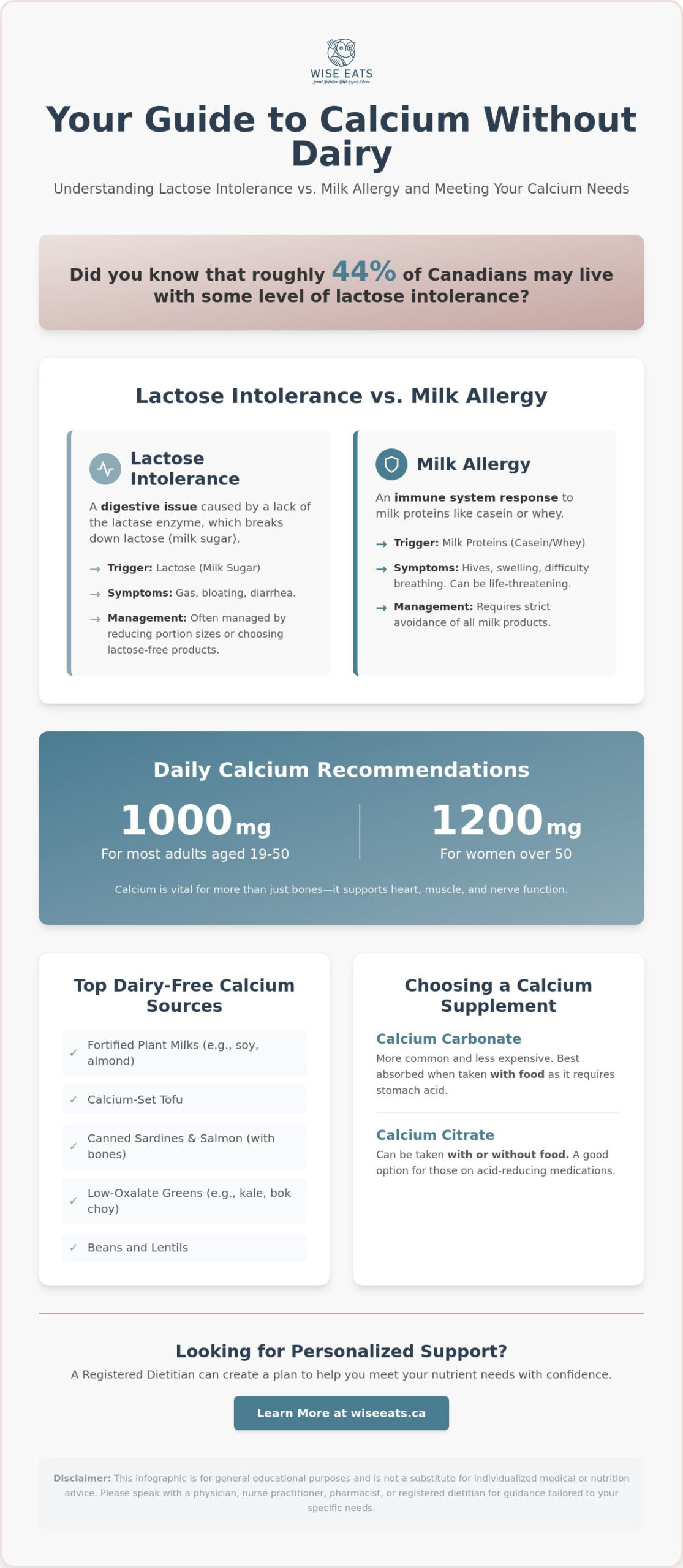
Did you know that roughly 44% of Canadians may live with some level of lactose intolerance? If you have recently had to cut back on dairy, you might feel a lingering sense of worry every time you think about your long-term bone health. It is completely normal to feel overwhelmed when your body begins to react poorly to foods you once enjoyed. If you are currently asking, "Lactose intolerance or milk allergy? Your guide to calcium supplementation." will help you find the clarity you need to move forward with confidence.
We believe that managing your health should feel like a supportive partnership rather than a confusing puzzle. This guide will help you distinguish between a dairy sensitivity and a true allergy while providing a practical roadmap for meeting your calcium needs through food and personalized supplementation. We will look at gut-friendly supplement options and explore calcium-rich alternatives that fit naturally into your daily routine. This article is for general educational purposes and is not a substitute for individualized medical or nutrition advice. Please speak with a physician, nurse practitioner, pharmacist, or registered dietitian for guidance tailored to your specific needs.
Key Takeaways
- Distinguish between a digestive enzyme deficiency and an immune system response to better understand how your body reacts to dairy.
- Lactose intolerance or milk allergy? Your guide to calcium supplementation. will help you identify your daily targets, such as the 1000 mg recommended for most adults.
- Explore a variety of non-dairy food sources, from calcium-set tofu to low-oxalate vegetables, to help you build a bone-friendly plate.
- Compare different supplement types, such as calcium citrate and carbonate, to find an option that supports your health without causing extra bloating or gas.
- See how a personalized nutrition plan can help you move past the fear of bone loss while reducing the stress of restrictive eating.
Table of Contents
Understanding the Difference: Lactose Intolerance vs. Milk Allergy
It’s common to feel confused when your body reacts to a glass of milk or a piece of cheese. Are you dealing with a digestive hiccup or something more serious? Determining if you are facing a lactose intolerance or milk allergy? Your guide to calcium supplementation. begins with recognizing how your body processes dairy. While they share some uncomfortable symptoms, the underlying causes are worlds apart. One involves your gut’s ability to break down sugar, while the other involves your immune system’s reaction to protein. This distinction isn’t just academic. It completely changes how you shop for groceries and manage your bone health.
To better understand this concept, watch this helpful video:
Lactose Intolerance: A Matter of Digestion
Lactose Intolerance occurs when your small intestine doesn’t produce enough lactase. This enzyme is responsible for breaking down lactose, the natural sugar found in milk. Without enough lactase, that sugar travels to your colon. Bacteria then ferment it, often causing gas, bloating, or diarrhea. Many Canadians find they don’t need to cut out dairy entirely. You might realize that small amounts of hard cheeses like cheddar or Swiss are well tolerated because the aging process naturally reduces lactose. Lactose-free products are also a great tool. They provide the same calcium and Vitamin D as regular milk without the digestive distress.
Cow’s Milk Allergy: An Immune Response
A milk allergy is far more complex than a digestive issue. It’s an immune response to proteins like casein or whey. Even a tiny amount can trigger a reaction. Because safety is the priority, total avoidance is usually necessary. This strict restriction can lead to significant nutrient gaps if you aren’t careful. If you’re struggling with these symptoms, exploring nutrition for digestion problems can help you find safe, nutrient-dense alternatives. It’s vital to know when to call for help. While intolerance causes discomfort, an allergy can lead to anaphylaxis, a life-threatening emergency. Signs like hives, swelling of the lips or throat, or trouble breathing require immediate medical attention.
This article is for general educational purposes and is not a substitute for individualized medical or nutrition advice. Please speak with a physician, nurse practitioner, pharmacist, or registered dietitian for guidance tailored to your specific needs.
Why Calcium Matters and How Much You Actually Need
Have you ever wondered why calcium is always the star of the show when we talk about dairy? While we often focus on bone density, this mineral is actually a busy multi-tasker that keeps your heart beating and your muscles moving. If you are navigating a new diagnosis, you might be asking: Lactose intolerance or milk allergy? Your guide to calcium supplementation. is here to help you understand that your body needs calcium for nerve signalling and blood clotting just as much as it does for skeletal strength. It acts as a structural foundation for your teeth while also ensuring your nervous system can send messages from your brain to your toes.
Meeting Canadian Nutrition Standards
Health Canada sets specific targets to ensure we are all getting enough. For most adults between the ages of 19 and 50, the goal is 1000 mg per day. However, these numbers shift as our bodies change. During pregnancy or menopause, your needs might increase to support a growing baby or to protect bone health as hormone levels fluctuate. To give you a clear target, the recommended dietary allowance for an adult female over the age of 50 is 1200 mg of calcium daily. It is also important to remember that more is not always better. Taking excessive amounts through supplements can sometimes lead to digestive discomfort or other health complications, so aim for the target rather than exceeding it.
Bioavailability: Is Your Body Actually Using the Calcium?
Eating a calcium-rich food is only half the battle. Your body must actually be able to absorb it. This is where the concept of bioavailability comes in. Did you know that the oxalates in spinach can significantly block calcium absorption, while the calcium in kale is much easier for your body to use? Vitamin D also acts like a key that unlocks the door for calcium to enter your bloodstream. Without enough Vitamin D, even a high-calcium diet might leave you short. Spreading your intake throughout the day, rather than taking one large dose, can also help your gut process the mineral more efficiently. For more specific guidance on Eating, Diet, & Nutrition for Lactose Intolerance, government resources offer great baseline facts.
If you find yourself staring at labels and feeling unsure if you are hitting these marks, you don’t have to guess. Feel free to reach out to us to discuss how your unique lifestyle affects your nutrient needs. We can help you build a plan that feels manageable and effective.
This article is for general educational purposes and is not a substitute for individualized medical or nutrition advice. Please speak with a physician, nurse practitioner, pharmacist, or registered dietitian for guidance tailored to your specific needs.
Navigating Non-Dairy Calcium Sources in Canada
Finding your way through the grocery store can feel like a chore when you are avoiding dairy. You might be wondering: Lactose intolerance or milk allergy? Your guide to calcium supplementation. will show you that the Canadian pantry is actually full of bone-building options. It is not just about what you remove from your plate, but what you add to it. By focusing on variety, you can meet your targets without feeling restricted. Many plant-based foods offer a significant amount of this mineral, provided you know where to look and how to prepare them.
Let’s look at some nutritional powerhouses. Calcium-set tofu is a fantastic choice; simply look for "calcium sulphate" in the ingredients list. Canned salmon with the bones mashed in is a traditional Canadian favourite that provides a high dose of calcium along with heart-healthy fats. Beans and lentils also contribute to your daily total while adding fibre and protein to your meals. Incorporating these regularly can help you maintain your health without relying on traditional dairy products.
Be careful with the generic "leafy green" advice often found online. While spinach contains calcium, it also has high levels of oxalates that can block your body from absorbing it. Instead, choose low-oxalate greens like kale, bok choy, or broccoli. These vegetables allow your body to actually use the minerals they provide. This is a simple shift that makes a big difference in your overall nutrient status.
The Role of Fortified Plant-Based Beverages
In Canada, not all plant-based milks are created equal. While soy milk is often fortified to match the nutrient profile of cow’s milk, others like almond, rice, or oat milk can vary significantly. Always check the nutrition facts table for added calcium and Vitamin D to ensure you are getting what you need. You can discover nutritious Canadian-made foods that fit these criteria by reading labels closely in the grocery aisle. Look for the word "fortified" to ensure the product has been enhanced with essential minerals.
Hidden Calcium in the Canadian Pantry
Don’t overlook small but mighty additions like chia seeds or tahini. A tablespoon of tahini stirred into a salad dressing or chia seeds added to your morning oats can help you reach your goals. These "hidden" sources make it easier to build a dietitian meal plan that feels natural and delicious rather than like a medical diet. Focus on these small, consistent additions to build a strong foundation for your bone health over time.
This article is for general educational purposes and is not a substitute for individualized medical or nutrition advice. Please speak with a physician, nurse practitioner, pharmacist, or registered dietitian for guidance tailored to your specific needs.
Calcium Supplementation: When and How to Choose Safely
While we always aim for a "food-first" approach, there are times when your diet might not quite hit the mark. This is especially true if you are managing multiple food sensitivities or have higher nutrient needs due to your stage of life. If you have been searching for "Lactose intolerance or milk allergy? Your guide to calcium supplementation.", you likely want to know which bottle on the pharmacy shelf is right for you. Choosing a supplement is not just about the dose; it is about finding a form that your body can actually use without causing extra digestive trouble.
The two most common types you will find in Canadian stores are calcium carbonate and calcium citrate. Calcium carbonate is often more affordable and contains more elemental calcium per pill, but it requires stomach acid to be absorbed properly. This means you must take it with a meal. On the other hand, calcium citrate is often a better choice for those taking acid blockers for GERD or for older adults with lower stomach acid. It can be taken with or without food and is generally gentler on the gut. Some people find that certain forms can lead to constipation or bloating, so starting with a smaller dose and staying hydrated can help manage these side effects.
Timing and Dosage for Optimal Absorption
Your body is actually quite picky about how much calcium it can handle at once. It can typically only absorb about 500 mg at a single time. If your plan requires more than that, it is much more effective to split your dose between the morning and evening. This strategy mimics how we naturally eat and prevents the mineral from simply passing through your system. If you have a history of kidney stones, it is especially vital to consult a healthcare professional before starting a new routine. We can help you determine the safest path forward to protect your kidneys while still supporting your bones.
Supplement Interactions and Audits
Calcium is a bit of a "bully" in the digestive tract because it can interfere with the absorption of other minerals like iron and zinc. It can also interact with certain medications, including those for thyroid health or osteoporosis. A professional review of your current routine can help you avoid these redundant or risky overlaps. You can learn more about how we approach these choices on our Wise Eats Supplement Page. It is always safer to have a clear, evidence-informed plan rather than guessing with over-the-counter products.
If you are ready to stop the guesswork and find a plan that works for your gut, connect with us today to get started on a personalized path.
This article is for general educational purposes and is not a substitute for individualized medical or nutrition advice. Please speak with a physician, nurse practitioner, pharmacist, or registered dietitian for guidance tailored to your specific needs.
Personalized Support: Why a Dietitian’s Guidance is Key
Trying to manage a new dietary restriction can feel like you are walking through a heavy fog without a map. You might have gathered plenty of facts, but applying them to your busy life is where the real challenge begins. If you are still weighing the question, "Lactose intolerance or milk allergy? Your guide to calcium supplementation.", you don’t have to find the answer alone. A Registered Dietitian acts as your knowledgeable partner, translating complex clinical data into a clear, manageable plan that respects your unique health history and lifestyle.
One of the most valuable steps we take together is a thorough audit of your current supplement routine. Many people unknowingly take vitamins that compete with each other or contain fillers that may trigger digestive upset. We help you filter through the noise of "fad" advice and marketing hype to find evidence-based options that truly support your needs. By reviewing your medications and existing mineral intake, we ensure your strategy is safe and effective without being redundant. This professional oversight helps you avoid the common pitfalls of over-supplementation while ensuring your bones get the support they deserve.
Building a Sustainable Nutrition Strategy
Transitioning to a dairy-free life doesn’t have to mean a lifetime of restrictive eating or fear of nutrient gaps. We focus on a compassionate approach that highlights what you can add to your plate rather than what is missing. Through Personalized Nutrition Counselling, we help you discover new favourite foods and simple meal swaps that fit your family’s routine. This shift from "avoidance" to "informed substitution" is the key to a sustainable, long-term wellness plan that feels like a natural part of your life rather than a burden.
The Wise Eats Approach to Mineral Balance
We believe in a "we are in this together" mindset. Our goal is to lower your defenses and replace anxiety with a sense of clarity and hope. We act as a steady hand, helping you navigate the often-confusing world of digestive health with confidence. You deserve a plan that is as unique as you are; one that considers your gut comfort, your bone health, and your peace of mind. If you are ready to move forward with a professional partner by your side, you can book a discovery call with a Registered Dietitian to explore your next steps.
This article is for general educational purposes and is not a substitute for individualized medical or nutrition advice. Please speak with a physician, nurse practitioner, pharmacist, or registered dietitian for guidance tailored to your specific needs.
Moving Forward with Bone Health and Confidence
Navigating life without dairy doesn’t have to mean compromising your long-term vitality. You now have the tools to tell the difference between a digestive sensitivity and an immune response. Whether you are adding calcium-set tofu to your favourite meals or choosing a citrate-based supplement for better gut comfort, every small change adds up. Remember that meeting your Health Canada targets is a journey of informed substitution rather than one of restriction. It is about finding what works for your body and your lifestyle.
If you were asking, "Lactose intolerance or milk allergy? Your guide to calcium supplementation." has hopefully provided the clarity you need to build a stronger foundation. Our team of licensed Registered Dietitians across Canada provides evidence-based nutrition care with a compassionate, weight-neutral approach. We are here to help you filter the noise and find a plan that fits your unique life. To get started, book a personalized supplement audit with a Registered Dietitian today. You have the power to protect your bones while still enjoying a varied and delicious diet.
This article is for general educational purposes and is not a substitute for individualized medical or nutrition advice. Please speak with a physician, nurse practitioner, pharmacist, or registered dietitian for guidance tailored to your specific needs.
Frequently Asked Questions
Can I take a calcium supplement if I have a severe milk allergy?
Most people with a severe milk allergy can safely take calcium supplements as long as the product is certified dairy-free. It is essential to read labels carefully, as some brands may use lactose as a filler or contain dairy-derived ingredients like whey. Choosing a vegan-certified supplement is often a reliable way to ensure safety. Always double-check with your pharmacist if you are unsure about a specific brand’s manufacturing process or potential cross-contamination.
How much calcium can my body absorb at one time?
Your body can typically only absorb about 500 mg of calcium at one time. If you take a higher dose, the excess may simply pass through your system without being used. This is why many healthcare professionals recommend splitting your daily intake into two smaller doses taken at different times of the day. This approach helps maximize absorption and can also reduce the risk of digestive side effects like gas or bloating.
Is calcium citrate better than calcium carbonate for people with IBS or GERD?
Calcium citrate is often the preferred choice for those living with IBS or GERD. Unlike calcium carbonate, it does not require stomach acid for absorption, making it much gentler on the digestive tract. This form can be taken on an empty stomach and is less likely to cause the gas or bloating that some people experience with other types. It is a practical solution for maintaining bone health while managing sensitive gut symptoms.
Will a calcium supplement cause constipation or bloating?
Some calcium supplements can cause constipation or bloating in certain individuals. This is more common with calcium carbonate, which requires a more acidic environment to break down in the stomach. You can often manage these symptoms by switching to calcium citrate, increasing your water intake, or ensuring you take your supplement with a meal. If discomfort persists, it may be helpful to adjust the timing or the specific form of the mineral you are using.
Do I need to take Vitamin D with my calcium supplement?
Vitamin D is necessary because it acts as the primary tool that allows your body to absorb calcium from the gut. Without adequate Vitamin D, your body may struggle to use the calcium you consume, even if you are meeting your daily targets. Many Canadians find that a combined supplement is convenient, especially during the winter months when sun exposure is limited. Checking your Vitamin D status with a physician can help determine the right balance for you.
Can I get enough calcium from a vegan diet without supplements?
It is possible to meet your calcium needs on a vegan diet, but it requires careful meal planning. Focus on favourite foods like calcium-set tofu, fortified plant-based beverages, and low-oxalate greens like bok choy or kale. If you are wondering, "Lactose intolerance or milk allergy? Your guide to calcium supplementation." highlights that many plant-based sources are highly bioavailable. Some people may still find a supplement helpful to bridge any remaining gaps in their daily intake.
What are the signs that I might have a calcium deficiency?
Calcium deficiency often has no obvious symptoms in the early stages, which is why it is sometimes called a "silent" issue. Over time, low intake can lead to weakened bones, increased fracture risk, or muscle cramps. Because your body pulls calcium from your bones to keep blood levels steady, a standard blood test might not show a deficiency. Regular bone density screenings are often the most reliable way to monitor your long-term bone health.
How do calcium supplements interact with other medications?
Calcium can interfere with the absorption of several medications, including thyroid hormones, certain antibiotics, and iron supplements. To avoid these interactions, it is usually best to take your calcium at least two to four hours apart from other prescriptions. A Registered Dietitian or pharmacist can help you create a schedule that ensures all your medications and nutrients are working effectively. This step is vital for avoiding redundant dosing and ensuring your treatment plan remains safe.
This article is for general educational purposes and is not a substitute for individualized medical or nutrition advice. Please speak with a physician, nurse practitioner, pharmacist, or registered dietitian for guidance tailored to your specific needs.

Article by
Rachel McBryan, Dietitian
Rachel McBryan is a licenced Dietitian in British Columbia offering comprehensive nutrition counselling as virtual and/or in-person counselling sessions to suit your needs and preferences. With a Bachelor of Science in Nutrition and Food Science, Rachel has over 20 years experience helping people address their health through nutrition. She was awarded Human Nutrition and Food Science BSc.from University of Alberta followed by post-grad course work at UBC in guidance counselling.
An eating disorder is a serious mental health illness.
If you are in immediate distress or crisis, please contact emergency services by dialing 911 or calling Vancouver Island Crisis Line: 1-888-494-3888. This article is educational information only, not professional diagnosis or treatment. Content is AI generated and may not be reviewed for accuracy.