

An eating disorder is a serious mental health illness.
If you are in immediate distress or crisis, please contact emergency services by dialing 911 or calling Vancouver Island Crisis Line: 1-888-494-3888. A dietitian, psychologist, psychiatrist, and medical team work together to support eating disorder recovery.
This article is educational information only, not professional diagnosis or treatment. Content is AI generated and may not be reviewed for accuracy.
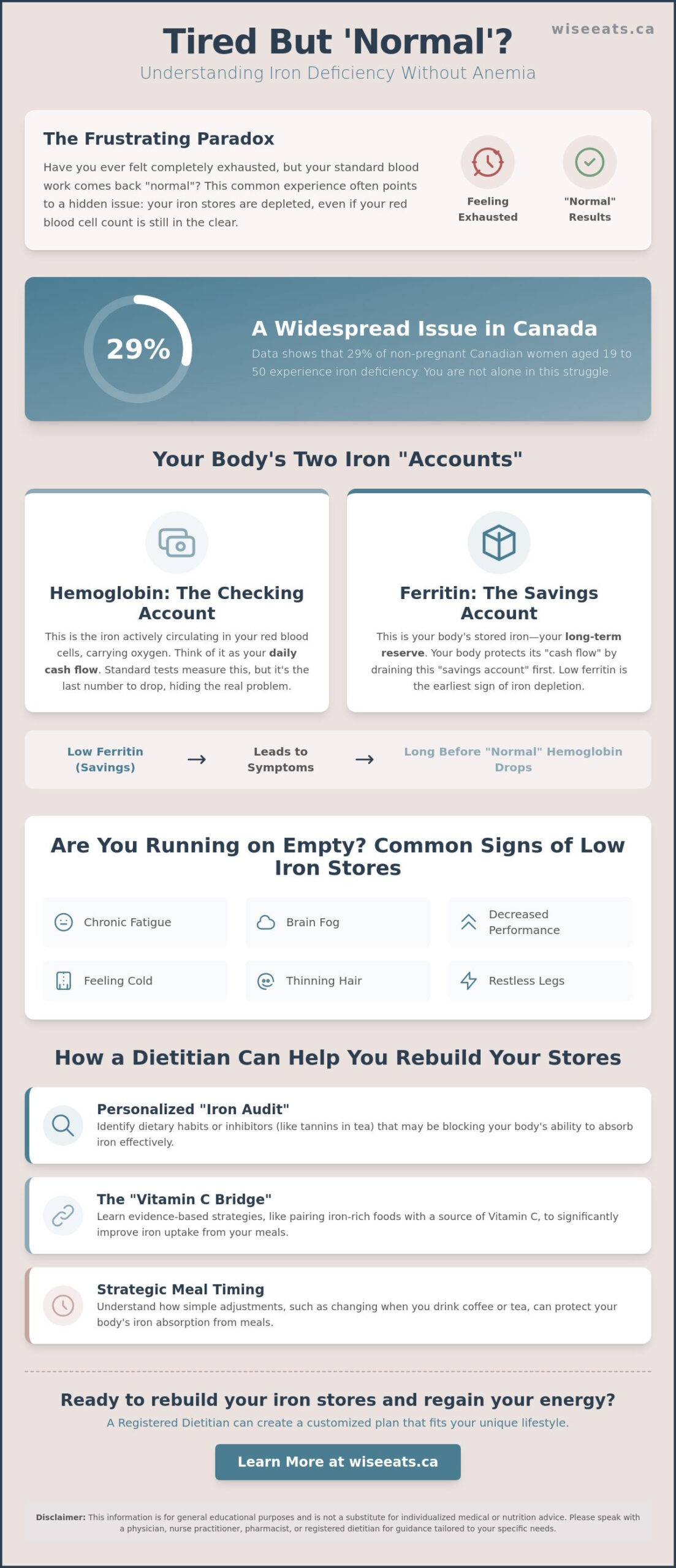
Have you ever been told your blood work is “normal” even though you’re too exhausted to finish your day? It’s a frustrating paradox, especially since data shows that 29% of non-pregnant Canadian women aged 19 to 50 deal with iron deficiency. You know your body best, and feeling like a shell of yourself isn’t just a side effect of a busy life. When your hemoglobin is fine but your ferritin is low, you’re essentially running a life with a healthy checking account but a completely empty savings account. Working with an iron deficiency without anemia dietitian can help you bridge the gap between “clinically normal” and actually feeling well.
It’s validating to realize that your symptoms, from restless legs to thinning hair, often have a biological basis. This article explains why your iron stores matter just as much as your red blood cell count and how you can raise those levels without the digestive upset often caused by standard supplements. We’ll explore the difference between ferritin and hemoglobin, identify the common signs of low stores, and outline a clear path toward better absorption through thoughtful food choices. This article is for general educational purposes and is not a substitute for individualized medical or nutrition advice. Please speak with a physician, nurse practitioner, pharmacist, or registered dietitian for guidance tailored to your specific needs.
Key Takeaways
- Understand the difference between hemoglobin and ferritin to realize why you may feel exhausted even when your standard blood results appear within the normal range.
- Learn how an iron deficiency without anemia dietitian can perform a personalized “iron audit” to identify dietary habits or inhibitors that might be blocking your progress.
- Discover the “Vitamin C Bridge” and other evidence-based strategies to improve iron uptake without the digestive discomfort often associated with traditional supplements.
- Gain practical insights into meal timing, such as how adjusting when you drink coffee or tea can help protect your body’s iron absorption.
- Explore how customized meal planning can help you rebuild your iron stores through a supportive, weight-neutral approach that fits your unique lifestyle.
Understanding Non-Anemic Iron Deficiency (NAID)
Many Canadians spend years feeling “fine” on paper while feeling exhausted in reality. This happens because iron deficiency exists on a spectrum. It doesn’t just switch on once you become anemic. You might be experiencing Latent iron deficiency, which is the clinical term for having low iron stores without the low red blood cell count seen in anemia. It’s a distinct clinical state that can impact your quality of life long before a doctor flags a problem.
Your body is incredibly resilient. It views hemoglobin, the protein that carries oxygen in your blood, as a non-negotiable priority for survival. To keep your hemoglobin levels within a “normal” range, your system will slowly drain your iron reserves. By the time your hemoglobin actually drops, your body has already been struggling for a long time. This is why a routine blood test that only looks at hemoglobin can miss the early stages of depletion, leaving you wondering why you feel so worn out.
To better understand this concept, watch this helpful video:
When you work with an iron deficiency without anemia dietitian, the focus shifts from just “not being anemic” to ensuring your body has the resources it needs to thrive. Common signs of this “grey zone” include chronic fatigue, a persistent feeling of being cold, and decreased cognitive function, often called brain fog. These symptoms can be subtle at first, but they often grow more disruptive as your stores continue to decline. If you’re unsure whether your symptoms point to iron or another nutritional gap, reviewing the signs of a nutrient deficiency can help you identify what your body may be communicating.
The “Savings Account” Analogy for Iron Stores
Think of your iron levels like your personal finances. Hemoglobin is your daily cash flow; it’s the money in your pocket that you need to get through the day. Ferritin, on the other hand, is your long-term savings account. You can still buy groceries and pay your bills (keep hemoglobin normal) even if your savings account is empty, but you are financially vulnerable.
Running on empty iron stores means your body lacks the “backup” it needs for optimal energy production and immune function. You might feel “broke” and exhausted even though your daily cash flow looks fine to an outside observer. An iron deficiency without anemia dietitian helps you look at the whole financial picture of your health, not just the cash in your wallet.
Who is Most at Risk for NAID in Canada?
Certain groups are more likely to experience these low stores. According to 2023 data from the Canadian Health Measures Survey, 29% of non-pregnant women aged 19 to 50 have an iron deficiency. This risk is also high for teenage girls and athletes who have high iron demands. Individuals with digestive conditions that affect absorption or those following restricted dietary patterns may also find their stores dropping over time.
What’s considered “normal” on a lab report might not be “optimal” for your specific lifestyle. Every person has a different threshold for when they start feeling the effects of low iron. Identifying these risks early allows for a more proactive approach to nutrition and health.
This proactive approach is equally important for the next generation; parents looking to support their children’s nutritional development can explore digital course and program options from My Little Eater for expert feeding guidance for babies and toddlers.
This article is for general educational purposes and is not a substitute for individualized medical or nutrition advice. Please speak with a physician, nurse practitioner, pharmacist, or registered dietitian for guidance tailored to your specific needs.
Ferritin vs. Hemoglobin: Why Your Lab Results Might Be Misleading
Why does your lab report say you’re fine when you feel like you’re walking through mud? The answer often lies in which markers were tested. Hemoglobin is the most common test for iron, but it only tells part of the story. It measures the iron currently circulating in your red blood cells. Ferritin, however, is a protein that stores iron inside your cells. If hemoglobin is the car’s engine running, ferritin is the fuel in the tank. Your engine can keep running perfectly until the very last drop of fuel is gone. This is why your hemoglobin levels often stay normal until your iron stores are almost completely exhausted.
There is a significant debate in the medical community regarding “optimal” ferritin levels. While many Canadian laboratories flag ferritin as low only when it drops below 15 mcg/L, many people begin experiencing symptoms like hair loss or restless legs when their levels are much higher, such as 30 mcg/L or even 50 mcg/L. An iron deficiency without anemia dietitian can help you look beyond these standard reference ranges to see if your “normal” result is actually optimal for your energy levels. Diagnosing and treating iron deficiency effectively requires a nuanced understanding of these markers. Understanding the broader picture of signs of a nutrient deficiency in Canadians can also help you recognize when your body’s signals go beyond iron alone.
It’s also vital to realize that ferritin is an “acute-phase reactant.” This means your ferritin levels can rise temporarily if you have a cold, an injury, or chronic inflammation. In these cases, a blood test might show a healthy ferritin level that hides an underlying deficiency. If you’ve been feeling chronically unwell despite “good” labs, it might be time to reach out for a consultation to review your nutrition through a more detailed lens.
Reading Your Lab Report with a Critical Eye
Standard reference ranges are based on population averages, not necessarily on what a healthy individual needs to feel their best. When you look at your results, don’t just check for “H” or “L” marks. Look at the actual numbers. Has your ferritin been steadily dropping over the last three years? Even if you’re still in the “normal” zone, a downward trend is a signal that your dietary intake might not be meeting your body’s demands. Consistency in testing helps build a clearer picture of your health.
When to Seek Help for Iron Concerns
While nutrition can do a lot, some symptoms require immediate medical attention. If you experience severe shortness of breath, chest pain, or pica (a craving for non-food items like ice or dirt), please see a doctor right away. These can be signs of more advanced depletion. When you do meet with a professional, bring a copy of your recent labs and a short list of your most persistent symptoms. A dietitian can support this process by helping you translate those clinical markers into a practical, food-based plan of action.
This article is for general educational purposes and is not a substitute for individualized medical or nutrition advice. Please speak with a physician, nurse practitioner, pharmacist, or registered dietitian for guidance tailored to your specific needs.
The Role of a Registered Dietitian in Managing Iron Stores
Why is it so hard to move the needle on your iron levels alone? Most people are told to just eat more spinach or take a pill, but the reality of iron metabolism is much more complex. An iron deficiency without anemia dietitian acts as a detective for your health. We start with a comprehensive “iron audit.” This isn’t just a list of what you eat; it’s a look at how you eat, when you eat, and what might be standing in your way. We don’t just look for what’s missing. We look for the barriers that keep your body from using the iron you’re already consuming.
We look for hidden inhibitors. These are substances that can bind to iron in your gut and prevent it from entering your bloodstream. You might be doing everything “right” but still seeing no change because your morning calcium supplement or afternoon tea is blocking your progress. By identifying these patterns, we can create a sustainable plan that fits your life without requiring you to give up everything you enjoy. We also work alongside your doctor or nurse practitioner to ensure that our nutritional plan aligns with your medical treatment and that your progress is being monitored through regular, appropriate blood work.
Personalized Nutrition Assessment
Your iron needs are unique. We evaluate the balance between heme iron, found in animal products, and non-heme iron, which comes from plants. Since non-heme iron is more difficult for your body to use, Dietary strategies for boosting iron often involve specific food pairings. We also consider your digestive health. Conditions like celiac disease or inflammatory bowel disease can drastically change how you absorb nutrients. Using custom meal planning allows us to bridge the gap between your current labs and your health goals with practical, everyday recipes that prioritize absorption.
Professional Supplement Guidance
If your healthcare provider has recommended a supplement, the choices can be overwhelming. Not all products are created equal. We help you understand why third-party tested supplement brands in Canada are the gold standard for safety and quality. Many people stop taking iron because of side effects like nausea or constipation. We can suggest strategies to minimize these issues, such as adjusting the timing of your dose or choosing different forms of iron that may be gentler on your system. This collaborative approach ensures you’re supported every step of the way without the guesswork.
This article is for general educational purposes and is not a substitute for individualized medical or nutrition advice. Please speak with a physician, nurse practitioner, pharmacist, or registered dietitian for guidance tailored to your specific needs.
Evidence-Based Dietary Strategies for Boosting Iron Absorption
Increasing your iron stores is rarely as simple as adding a steak to your dinner. It requires a strategic approach to how you pair foods and when you consume them. An iron deficiency without anemia dietitian can help you navigate these nuances so you aren’t wasting effort on meals that your body can’t fully utilize. One of the most effective tools in our kit is the “Vitamin C Bridge.” Non-heme iron, which is the type found in plants and fortified foods, needs an acidic environment to be absorbed effectively. By adding a source of Vitamin C, like bell peppers, strawberries, or a squeeze of lemon, you can significantly increase the amount of iron that actually enters your bloodstream.
Timing is another critical factor that is often missed in general health advice. Did you know that your morning coffee or afternoon tea contains tannins that can block iron absorption by over 60%? If you’re struggling with low stores, it’s helpful to space these drinks at least one to two hours away from your high-iron meals. Similarly, using tools like a cast-iron skillet or a “Lucky Iron Fish” during cooking can provide a small but consistent boost to the iron content of acidic foods like tomato sauce or soups. These small shifts in your kitchen routine can make a meaningful difference over time.
Heme vs. Non-Heme Iron: What You Need to Know
Heme iron is found in animal products like beef, poultry, and seafood. It’s the most bioavailable form, meaning your body absorbs it quite easily. Non-heme iron is found in plant sources like lentils, beans, tofu, and fortified cereals. While non-heme iron is less easily absorbed, it’s a vital part of the Canadian diet. To optimize a plant-based approach, focus on consistent intake and always use an absorption booster. For those who do eat meat, the “Meat Factor” is a fascinating biological quirk where even a small amount of animal protein can help your body absorb the non-heme iron present in the rest of your meal.
Managing Iron Inhibitors
Inhibitors are substances that “trap” iron in your digestive tract. Beyond the tannins in coffee and tea, phytates found in whole grains and legumes can also play a role. You don’t need to avoid these healthy foods. Instead, focus on spacing. For example, if you take a calcium supplement, try to take it at a different time of day than your iron-rich meal, as calcium and iron compete for the same absorption pathways. If you’re ready to stop guessing and start building a plan that works for your unique lifestyle, book a consultation with us today to get started.
This article is for general educational purposes and is not a substitute for individualized medical or nutrition advice. Please speak with a physician, nurse practitioner, pharmacist, or registered dietitian for guidance tailored to your specific needs.
Personalized Nutrition Support for Iron Health in Canada
Regaining your energy shouldn’t feel like a second full-time job. If you’ve spent months or even years trying to solve your exhaustion on your own, you know how overwhelming the conflicting advice can be. At Wise Eats Registered Dietitians, our team provides virtual support to individuals across Canada, offering a steady hand to help you find clarity. We realize that your health is about more than just a single lab value; it’s about your ability to show up for your life with focus and vitality. Working with an iron deficiency without anemia dietitian allows you to move beyond generic advice toward a plan that actually respects your unique biology and lifestyle.
A Compassionate Approach to Clinical Nutrition
We prioritize how you feel over the numbers on a scale. Chronic fatigue can be incredibly isolating, especially when your concerns are dismissed because your labs fall within a broad “normal” range. We take the time to listen to your experience and validate the symptoms that are impacting your daily life. Part of this process involves building a personalized vitamin and mineral strategy that fits your specific needs. This isn’t about taking a handful of pills; it’s about choosing the right tools, in the right doses, at the right times to support your body’s natural processes.
Ready to Feel Like Yourself Again?
The first step toward better energy is often the hardest, but you don’t have to navigate this alone. When you book an initial discovery call or consultation, you’ll have the opportunity to share your history and goals in a safe, supportive environment. During your first session with a professional from Wise Eats Registered Dietitians, we’ll review your recent blood work, discuss your current eating patterns, and begin identifying the specific barriers to your iron absorption. You’ll leave with a clear sense of direction and a practical starting point. We’re here to help you turn complex nutritional science into a manageable, everyday reality.
This article is for general educational purposes and is not a substitute for individualized medical or nutrition advice. Please speak with a physician, nurse practitioner, pharmacist, or registered dietitian for guidance tailored to your specific needs.
Taking the Next Step Toward Lasting Energy
Navigating the “grey zone” of low iron stores can feel like a lonely journey, but it doesn’t have to be. By now, you understand that your ferritin levels are a vital indicator of your health, even when your hemoglobin appears normal. Rebuilding your iron stores involves more than just eating specific foods; it requires a strategic look at your timing, food pairings, and potential inhibitors. An iron deficiency without anemia dietitian can help you translate these complex biological needs into a practical, evidence-based plan that fits your life.
The team at Wise Eats Registered Dietitians is ready to provide the specialized support you deserve, from supplement audits to personalized meal strategies. Ready to get to the bottom of your fatigue? Book a consultation with Wise Eats Registered Dietitians today. You’ve managed this exhaustion on your own for long enough; we are here to help you regain your clarity and strength with compassion and expertise.
This article is for general educational purposes and is not a substitute for individualized medical or nutrition advice. Please speak with a physician, nurse practitioner, pharmacist, or registered dietitian for guidance tailored to your specific needs.
Frequently Asked Questions
Can I have iron deficiency if my hemoglobin is normal?
Yes, you can certainly have low iron stores even with a normal hemoglobin result. This clinical state is often referred to as non-anemic iron deficiency. Your body prioritizes keeping your red blood cells functional, so it will drain your ferritin “savings account” to maintain your hemoglobin “cash flow.” You may feel symptomatic long before your hemoglobin levels actually drop.
How long does it take to feel better once I start increasing my iron intake?
Energy levels may begin to improve within a few weeks, but fully rebuilding your iron stores typically takes three to six months. The timeline depends on your starting levels, the cause of the depletion, and how well your body absorbs the iron you consume. Consistency is much more important than speed when it comes to supporting your body’s recovery.
What are the best iron-rich foods for vegetarians in Canada?
Vegetarians can find excellent iron sources in Canadian grocery aisles, including lentils, chickpeas, kidney beans, and tofu. Pumpkin seeds, hemp hearts, and iron-fortified whole grain cereals are also great options. Since plant-based iron is less easily absorbed, an iron deficiency without anemia dietitian can show you how to pair these foods with enhancers to maximize your intake.
Why do iron supplements cause stomach upset, and can a dietitian help?
Iron supplements can be hard on the digestive tract because unabsorbed iron may irritate the gut lining or change the balance of your gut bacteria. This often leads to nausea, constipation, or cramping. A dietitian can help by suggesting gentler forms of iron, adjusting the timing of your dose, or focusing on high-absorption food strategies to reduce your reliance on high-dose pills.
Is it possible to have too much iron if I am not careful?
Yes, it is possible to reach levels that are too high, as the body has no active way to excrete excess iron. Over-supplementing can lead to iron toxicity or oxidative stress. This is why it is essential to work with your healthcare team to monitor your levels through regular blood tests rather than guessing your needs.
Should I get a ferritin test if I am always tired?
A ferritin test is a very helpful tool if you are experiencing unexplained fatigue. While tiredness can stem from many different health factors, checking your stored iron levels provides a clearer picture than a standard hemoglobin test alone. Discussing your symptoms with your doctor can help determine if a ferritin check is the right next step for your situation.
How does Vitamin C actually help with iron absorption?
Vitamin C acts like a key that unlocks plant-based iron. It chemically transforms non-heme iron into a form that is more soluble and easier for your small intestine to absorb. Adding a splash of lemon juice to your lentil soup or having an orange with your fortified cereal can significantly increase the amount of iron your body actually receives.
Can a dietitian prescribe iron supplements in British Columbia?
Registered Dietitians in British Columbia do not have the authority to prescribe medications or supplements. We provide evidence-informed recommendations and education to help you choose high-quality products. Your iron deficiency without anemia dietitian will work collaboratively with your physician or nurse practitioner, who remains responsible for the formal prescription and medical diagnosis.
This article is for general educational purposes and is not a substitute for individualized medical or nutrition advice. Please speak with a physician, nurse practitioner, pharmacist, or registered dietitian for guidance tailored to your specific needs.
Article by
Rachel McBryan, Dietitian
Rachel McBryan is a licenced Dietitian in British Columbia offering comprehensive nutrition counselling as virtual and/or in-person counselling sessions to suit your needs and preferences. With a Bachelor of Science in Nutrition and Food Science, Rachel has over 20 years experience helping people address their health through nutrition. She was awarded Human Nutrition and Food Science BSc.from University of Alberta followed by post-grad course work at UBC in guidance counselling.