

Have you ever left a health appointment feeling more confused than when you arrived because your blood tests came back "normal," yet you still feel completely exhausted? It’s a common frustration for many Canadians who sense that something is off but lack the words to describe it. You know your body better than anyone else. Those subtle changes in your energy, skin, or hair aren’t just in your head; they may be the first signs of a nutrient deficiency your body is trying to communicate.
It’s draining to eat a "healthy" diet and still wonder why you’re struggling to get through the afternoon. We believe you deserve clarity instead of guesswork. This article will help you recognize the subtle physical and energy-based signals your body sends when it needs more nutritional support. You’ll learn to understand the difference between "normal" lab results and the "optimal" levels your body needs to truly thrive.
We’ll walk through a clear checklist of symptoms to discuss with your healthcare team. This article is for general educational purposes and is not a substitute for individualized medical or nutrition advice. Please speak with a physician, nurse practitioner, pharmacist, or registered dietitian for guidance tailored to your specific needs.
Key Takeaways
- Learn why nutritional gaps often develop slowly and how to recognize the early whispers your body uses to communicate its needs.
- Access a comprehensive checklist organized by body system to help you identify the physical signs of a nutrient deficiency that might otherwise be overlooked.
- Discover why a “normal” blood test result may not mean you are at your best and how to distinguish between basic adequacy and optimal health.
- Identify high-risk symptoms that require immediate professional attention and understand the potential risks of self-prescribing supplements without a plan.
- Explore how a Registered Dietitian uses a personalized audit and custom meal planning to help you meet your nutritional needs through a supportive, food-first approach.
Table of Contents
-
Common Signs of a Nutrient Deficiency: Listening to Your Body
-
The Nutrient Deficiency Checklist: Physical Signs to Watch For
Common Signs of a Nutrient Deficiency: Listening to Your Body
Your body is a masterpiece of communication. It doesn’t always shout when it needs something; often, it whispers through small changes you might easily dismiss. This article provides general information for educational purposes and isn’t a substitute for individualized medical or nutrition advice. If you’re feeling unwell, it’s best to consult with a physician, nurse practitioner, or registered dietitian for guidance tailored to your specific needs. Understanding the early signs of a nutrient deficiency is about learning to listen to those whispers before they become louder problems.
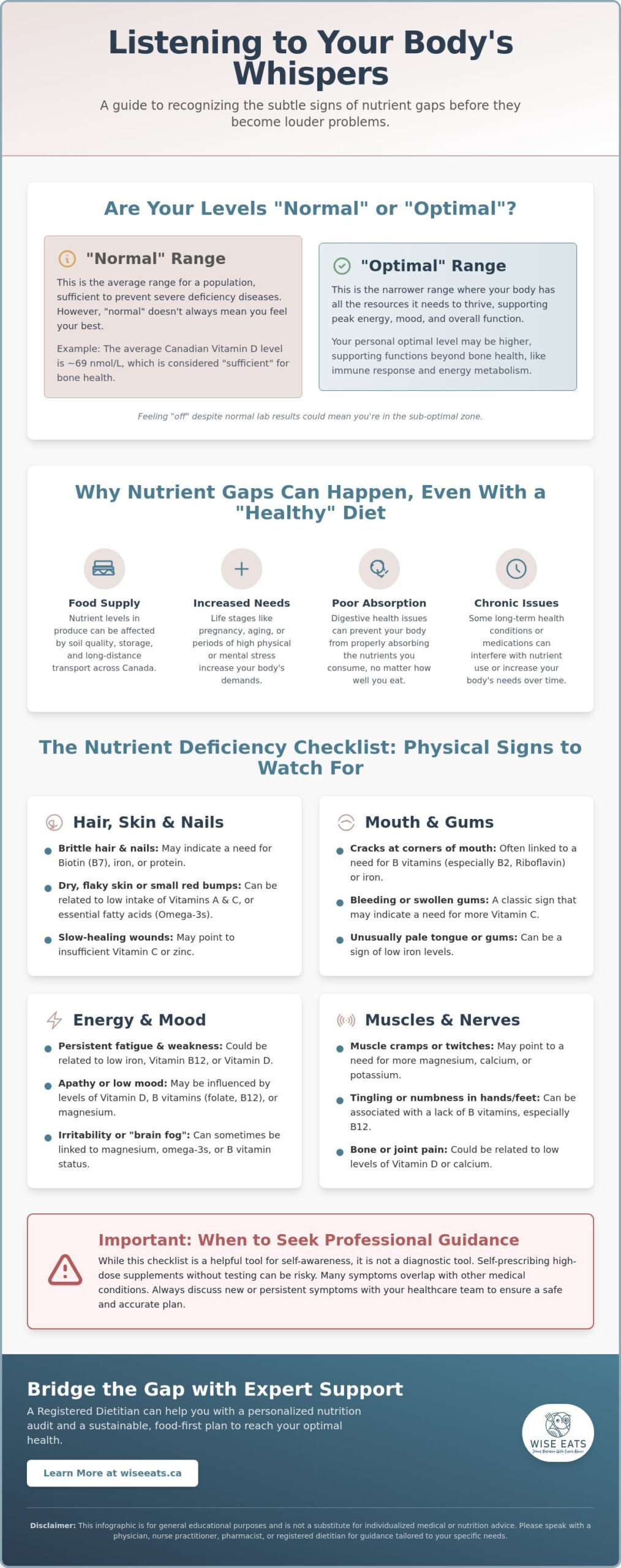
Nutrient gaps rarely happen overnight. They tend to develop slowly, sometimes over months or even years. When your intake of a specific vitamin or mineral drops, your body makes a strategic choice. It prioritizes your vital organs like your heart and brain to keep you alive. This means "non-essential" tissues like your hair, skin, and nails are often the first places to show changes. You might notice your nails becoming brittle or your skin feeling unusually dry. These are physical signals that you might be in a "subclinical" state. According to Statistics Canada data from March 2026, while many biomarker levels have remained stable, individual needs vary significantly. For instance, the average vitamin D level in Canadians was 69 nmol/L, but what is "normal" for the population may not be "optimal" for your specific energy levels and health goals.
To better understand how your body signals its needs, watch this helpful video:
Why Nutrient Gaps Happen Even on a "Healthy" Diet
It’s frustrating to feel like you’re doing everything right and still feel "off." Even with a balanced plate, several factors can influence your nutrient status. For example, how food is stored and transported across Canada can impact its vitamin content. Soil depletion in some areas may also play a role in the density of minerals in our produce. Beyond the food itself, your own body’s ability to absorb what you eat is crucial. High stress levels or certain life stages, such as pregnancy or aging, significantly increase what your body requires to function. In some cases, digestive health issues can prevent you from fully utilizing the nutrients you’re consuming.
The Role of Micronutrients in Daily Function
Think of micronutrients, which include vitamins and minerals, as the "spark plugs" for your body’s engines. They don’t provide energy themselves like carbohydrates do, but they’re essential for the enzymes that make your metabolism run. A vitamin deficiency can disrupt these internal processes, leading to the varied symptoms we see on the surface. Some vitamins are water-soluble, meaning your body doesn’t store them and needs a fresh supply daily. Others are fat-soluble and can be stored for longer periods. This is why eating a wide variety of colourful foods is so helpful; different pigments often represent different protective compounds and nutrients.
The Nutrient Deficiency Checklist: Physical Signs to Watch For
Identifying the physical signs of a nutrient deficiency can feel like solving a puzzle where your body provides the pieces. While many of these signals are subtle, they offer valuable insight into your internal health. It is important to remember that this article is for general educational purposes and is not a substitute for individualized medical or nutrition advice. Many of these symptoms can stem from non-nutritional causes, so you should always speak with a physician, nurse practitioner, pharmacist, or registered dietitian for guidance tailored to your specific needs.
According to the experts at Rush University, certain Signs of Nutrient Deficiency like hair loss or bone pain can be significant indicators that your diet needs a closer look. In Canada, we often see gaps in nutrients like iron, vitamin B12, and vitamin D, particularly during our long winter months when sun exposure is limited.
Hair, Skin, and Nail Changes
Your exterior often reflects your interior. Thinning hair or excessive shedding may be associated with low iron stores or inadequate protein intake. If you notice dry, scaly skin or small "chicken skin" bumps on the back of your arms, it could be linked to a need for more vitamin A or zinc. Brittle nails may indicate a need for more protein or iron to support the healthy growth of nail tissue. In some cases, nails that are spoon-shaped or have significant ridges may also suggest a gap in B-vitamins or iron status.
Energy Levels and Cognitive Function
Do you struggle with persistent fatigue that doesn’t improve even after a good night’s sleep? This type of exhaustion is a common signal for iron or vitamin B12 insufficiency. Research shows that 10.4% of women of reproductive age in Canada are affected by anemia, which can leave you feeling drained and short of breath. You might also experience brain fog or difficulty concentrating, which can sometimes be linked to your omega-3 or B-vitamin status. If you find yourself feeling unusually cold or notice a persistent low mood, your vitamin D levels might be worth discussing with a professional. If these signals feel familiar, you might find it helpful to connect with a professional to discuss your specific concerns.
Mouth and Muscle Signals
The tissues in your mouth regenerate quickly, making them sensitive indicators of your nutrient status. Cracks at the corners of the mouth or a swollen, "strawberry-coloured" tongue can be associated with various B-vitamin gaps. Lower down in the body, frequent muscle cramps or "restless legs" at night may indicate an imbalance in magnesium or calcium. Finally, keep an eye on how your body heals; slow-healing wounds or easy bruising can sometimes be linked to a need for more vitamin C or vitamin K. Observing these signals without judgment is the first step toward better support for your body.
Why "Normal" Lab Results Might Not Tell the Full Story
Have you ever received a "normal" lab report only to feel just as exhausted as before? It’s a common and often frustrating experience. Reference ranges on blood tests are typically based on broad population averages, which might not reflect what your unique body requires to feel its best. There’s a significant difference between "surviving"—having just enough of a nutrient to avoid a clinical disease—and "thriving," where your body functions at its peak. Lab results are just one piece of the clinical puzzle, and they should be interpreted alongside your lived experience and physical symptoms.
For instance, iron deficiency without anemia is a frequent gap for many Canadians. You might have low iron stores (ferritin) while your red blood cell count (hemoglobin) remains within the standard range. Similarly, because vitamin D testing is not always routinely covered or tested across every province unless specific criteria are met, many people remain unaware of their status during the darker months. Even if you haven’t noticed the telltale signs of vitamin and mineral deficiencies, your levels could still be suboptimal for your lifestyle and energy demands.
The Grey Area of Subclinical Deficiency
Subclinical deficiency represents a grey area where your levels are low enough to cause symptoms but high enough to avoid a formal disease diagnosis. Your body often shows signs of a nutrient deficiency through your energy, mood, or skin long before blood markers drop significantly. This is why we encourage you to track your symptoms alongside your lab work. It’s about looking at the whole picture rather than just a single data point on a page. This article is for general educational purposes and is not a substitute for individualized medical or nutrition advice. Please speak with a physician, nurse practitioner, pharmacist, or registered dietitian for guidance tailored to your specific needs.
Understanding Your Lab Report
Reading a lab report can feel like learning a new language. Terms like "ferritin" refer to your body’s stored iron, while "hemoglobin" measures the iron currently in your blood cells. Inflammation from a recent cold or a chronic condition can sometimes "hide" a deficiency by temporarily raising certain markers, making things look better than they actually are. Working with a dietitian allows you to interpret these results through a nutritional lens, focusing on how your food intake and absorption impact those numbers.
When to Seek Help: Safety and Professional Guidance
While identifying the signs of a nutrient deficiency is a great first step, it’s vital to handle these signals with care. It’s tempting to try every new supplement you see on social media or in the health aisle. However, "supplement hopping" without a professional plan can mask underlying health issues or lead to unnecessary spending. This article is for general educational purposes and is not a substitute for individualized medical or nutrition advice. Please speak with a physician, nurse practitioner, pharmacist, or registered dietitian for guidance tailored to your specific needs.
Certain symptoms require immediate medical attention. If you experience an irregular heartbeat, severe hair loss, or extreme muscle weakness, please contact your healthcare provider right away. These can be high-risk signals that need a prompt clinical assessment. Your health is best supported by a coordinated care team, including your physician, pharmacist, and registered dietitian. This ensures that any nutritional support you choose doesn’t conflict with your current health status or prescriptions. For instance, some supplements that interact with medications can cause unintended side effects, so having your pharmacist and dietitian review your list is a smart safety step.
Preparing for Your Healthcare Appointment
To make the most of your time with your doctor, try keeping a three-day food and symptom journal. This provides a tangible record of what you’re eating and how you’re feeling. When you go, bring all your current supplement bottles with you. This helps your team see exactly what doses you’re taking. You might ask your doctor: "Based on my fatigue, which specific nutrient levels should we test?" or "Are there tests for my iron and vitamin D status that we can review together?" Having these specific questions ready can help you feel more confident during your visit.
The Dangers of High-Dose Self-Supplementation
In the world of nutrition, more is not always better. Some vitamins can actually be toxic if taken in high doses over a long period. Additionally, certain minerals compete for the same "doorway" into your body. Taking too much zinc, for example, can actually cause a copper deficiency because they use the same absorption pathways. To stay safe, it’s best to choose third-party tested brands that guarantee the quality of their ingredients. If you’re ready to build a safe, evidence-informed plan tailored to your body’s needs, reach out to our team today.
How a Registered Dietitian Can Help You Bridge the Gap
If you’ve spent weeks wondering about the signs of a nutrient deficiency, you’re likely tired of the conflicting advice found online. We want to help you find clarity. At Wise Eats, we use a methodical approach called a "Dietitian Audit" to look at the whole person. This means we don’t just look at a single lab result in isolation. We look at your daily food intake, how well your body might be absorbing those nutrients, and the physical symptoms you’ve noticed. By connecting these dots, we can help you move from a state of uncertainty toward a clear, actionable plan.
Recognizing the signs of a nutrient deficiency is the first step toward feeling like yourself again. Our goal is to translate complex nutritional science into simple, everyday steps that fit your life. We believe in a collaborative approach where you are the expert on your own body. We provide the clinical expertise to help you interpret what your body is trying to tell you. This article is for general educational purposes and is not a substitute for individualized medical or nutrition advice. Please speak with a physician, nurse practitioner, pharmacist, or registered dietitian for guidance tailored to your specific needs.
The "Food First" Philosophy
We believe that food should be your primary source of nourishment whenever possible. Nutrients from whole foods are often more bioavailable than those in supplement form. This means your body recognizes and uses them more easily because they come packaged with other helpful compounds. We teach you how to use "nutrient pairings" to your advantage. For instance, pairing a source of vitamin C with plant-based iron can significantly boost your absorption. Our custom meal plans focus on these small, impactful changes rather than rigid restriction or "perfect" eating. It’s about making your diet work for you, not against you.
Personalized Supplement Audits
It’s easy to end up with a cupboard full of expensive vitamins that you might not even need. We provide a professional second opinion through our personalized supplement audits. We review your current supplements to ensure they’re high-quality, necessary, and safe for your specific health profile. We also check for any potential interactions with medications you may be taking. This process ensures you aren’t wasting money on products that aren’t serving your goals. If you’re feeling overwhelmed by the choices at the pharmacy, don’t hesitate to ask a dietitian for a clear, evidence-based recommendation.
When exploring your options for professional support, you may also find it helpful to look at specialized international clinics like Enas Wellness, which offers transparent information on 個人化營養諮詢與治療方案費用 for their clinical nutrition services.
Our team at Wise Eats is here to support you with compassion and warmth. We don’t believe in shame or complicated rules. Instead, we offer a steady hand to help you navigate your health journey with confidence. Whether you’re dealing with persistent fatigue or just want to ensure your "healthy" diet is actually meeting your needs, we’re here to help you bridge the gap between where you are and where you want to be.
Moving Toward Nutritional Clarity
Our team of Canadian Registered Dietitians is here to provide evidence-based care through a compassionate, weight-neutral lens. We can help you build personalized supplement and meal planning strategies that actually fit your unique lifestyle. This article is for general educational purposes and is not a substitute for individualized medical or nutrition advice. Please speak with a physician, nurse practitioner, pharmacist, or registered dietitian for guidance tailored to your specific needs.
If you’re ready to stop wondering and start feeling more supported, we invite you to book a personalized nutrition audit with a Registered Dietitian today. It’s possible to feel clear and confident about your nutrition again. Let’s work together to help you thrive.
Frequently Asked Questions
This article is for general educational purposes and is not a substitute for individualized medical or nutrition advice. Please speak with a physician, nurse practitioner, pharmacist, or registered dietitian for guidance tailored to your specific needs.
Can I tell if I have a nutrient deficiency without a blood test?
While physical symptoms offer valuable clues, a blood test is the most reliable way to confirm a deficiency. You can’t always know for certain based on symptoms alone because many signs of a nutrient deficiency overlap with other health conditions. Tracking your symptoms in a journal can help your healthcare team decide which tests are necessary. This combined approach ensures you are treating the root cause rather than just guessing based on surface-level changes.
How long does it take to notice an improvement after addressing a deficiency?
The timeline for feeling better varies depending on the specific nutrient and how low your levels were initially. In some cases, you might notice an energy boost within a few weeks of starting a targeted plan. For physical changes like hair growth or nail strength, it often takes three to six months to see visible results. Consistency with your food and supplement routine is key to allowing your body’s stores to replenish and support new tissue growth.
Is it possible to have a nutrient deficiency if I take a daily multivitamin?
Yes, it is possible to have a deficiency even if you take a daily multivitamin. Multivitamins usually contain small amounts of many nutrients, but they may not provide enough of a specific one if your needs are high. Additionally, your body might struggle with absorption due to digestive health or interactions with other foods. A personalized audit can help determine if your current supplement is actually meeting your unique requirements or if you need a different approach.
What are the most common nutrient deficiencies for Canadians in the winter?
Vitamin D is the most common concern for Canadians during the winter because our northern latitude prevents us from making it through sun exposure. Statistics Canada reported in March 2026 that average vitamin D levels remain stable, but many still fall below optimal thresholds in the darker months. Iron and vitamin B12 are also frequently discussed with healthcare teams during this time to help manage seasonal fatigue and support immune function when fresh produce variety may be lower.
Can digestive issues like IBS cause nutrient deficiencies even if I eat well?
Digestive conditions like IBS, Crohn’s, or Celiac disease can impact how well you absorb the nutrients in your food. Even if your diet is packed with variety, inflammation or rapid transit time in the gut may prevent vitamins and minerals from entering your bloodstream. This is why looking at digestive health is a core part of a nutrition audit. We focus on supporting your gut so you can actually use the fuel and nutrients you are consuming every day.
Should I see a dietitian or a doctor first if I suspect a deficiency?
Seeing either professional is a great starting point, but a coordinated approach is often best. A doctor can order the necessary blood work to check your clinical levels and rule out other medical issues. A Registered Dietitian can then help you interpret those results through a nutritional lens and create a practical plan. We work together with your physician to ensure your transition from "normal" to "optimal" is safe, evidence-informed, and effective for your lifestyle.
Can a nutrient deficiency cause anxiety or low mood?
Research suggests that certain nutritional gaps, such as low vitamin D, B12, or Omega-3 fatty acids, can be associated with changes in mood or increased anxiety. While nutrition is only one piece of the mental health puzzle, ensuring your brain has the "spark plugs" it needs can support overall emotional well-being. Identifying the signs of a nutrient deficiency early allows you to provide your nervous system with the foundational support it requires to function at its best.
Do vertical ridges on my fingernails always mean I have a vitamin deficiency?
Vertical ridges on the fingernails are often a normal sign of aging and don’t always indicate a lack of vitamins. While they can sometimes be linked to iron or B-vitamin status, they are frequently just a result of the nail matrix slowing down over time. If you notice other changes like spooning, brittleness, or horizontal ridges, it’s worth discussing these with a professional. We look at the whole picture of your health rather than one single physical trait.

Article by
Rachel McBryan, Dietitian
Rachel McBryan is a licenced Dietitian in British Columbia offering comprehensive nutrition counselling as virtual and/or in-person counselling sessions to suit your needs and preferences. With a Bachelor of Science in Nutrition and Food Science, Rachel has over 20 years experience helping people address their health through nutrition. She was awarded Human Nutrition and Food Science BSc.from University of Alberta followed by post-grad course work at UBC in guidance counselling.
An eating disorder is a serious mental health illness.
If you are in immediate distress or crisis, please contact emergency services by dialing 911 or calling Vancouver Island Crisis Line: 1-888-494-3888. This article is educational information only, not professional diagnosis or treatment. Content is AI generated and may not be reviewed for accuracy.