

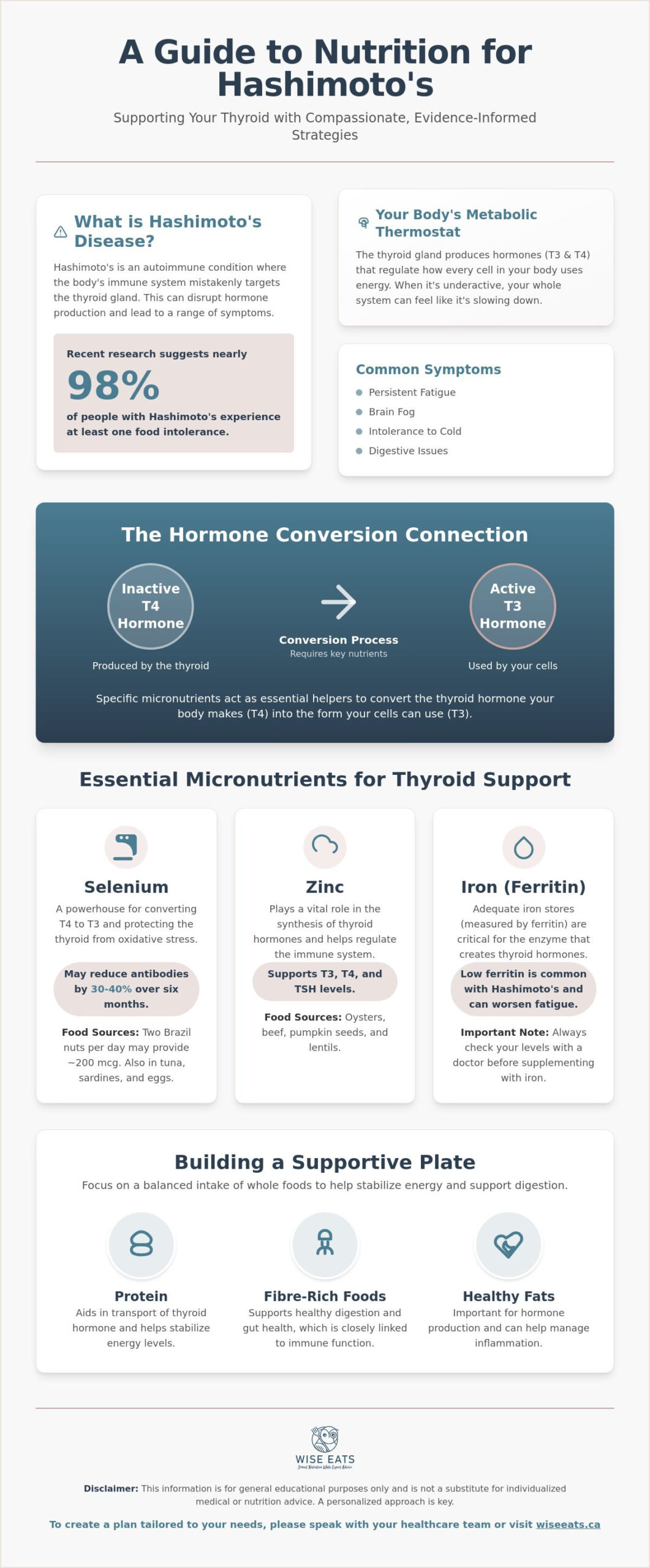
Did you know that recent research suggests nearly 98% of people living with Hashimoto’s experience at least one food intolerance? It’s incredibly frustrating to be told your lab results are “normal” while you’re still struggling with persistent fatigue and brain fog. You might feel like you’re constantly guessing which foods to cut out or even feeling blamed for symptoms that feel out of your control. We understand how overwhelming the search for clarity can be when you just want to feel like yourself again.
This guide explores nutrition for Hashimoto’s disease through a compassionate, evidence-informed lens. Our goal is to help you find relief and support your thyroid health without the stress of a restrictive “diet” mentality. We will look at how specific nutrients like selenium may help lower antibodies, the current evidence regarding gluten and dairy, and how to build a sustainable way of eating that nourishes your body. This article is for general educational purposes and is not a substitute for individualized medical or nutrition advice. Please speak with a physician, nurse practitioner, pharmacist, or registered dietitian for guidance tailored to your specific needs.
Key Takeaways
- Understand how your thyroid acts as a metabolic thermostat and why certain nutrients are vital for supporting its daily function.
- Explore the roles of selenium and zinc in hormone conversion and how these minerals can help protect your thyroid from oxidative stress.
- Evaluate the evidence behind popular strategies like gluten-free diets to determine if they are a helpful tool for your own nutrition for Hashimoto’s disease.
- Gain practical tips for meal planning with enough protein and fibre to help stabilize your energy and support healthy digestion.
- Learn how to collaborate effectively with your healthcare team to ensure your nutritional choices complement your medical care.
Understanding Hashimoto’s Disease and the Thyroid-Nutrition Connection
Living with an autoimmune condition often feels like your body is speaking a language you can’t quite translate. Understanding Hashimoto’s Disease involves recognizing that it is an autoimmune condition where your immune system mistakenly targets the thyroid gland. This tiny, butterfly-shaped gland acts as your body’s metabolic thermostat. It produces essential hormones, specifically T3 and T4, which regulate how every single cell in your body uses energy. When this thermostat is disrupted, your metabolism can slow down, leading to a variety of symptoms that often feel hard to pin down.
Many Canadians experience a frustrating “grey zone” before receiving a formal diagnosis. You might struggle with persistent brain fog, an unusual intolerance to the cold, or fatigue that a good night’s sleep just won’t fix. These symptoms are common, yet they are frequently dismissed because they seem vague. While medication is the standard way to replace missing hormones, nutrition for Hashimoto’s disease acts as a supportive framework to help you feel better day-to-day. It is not a “cure” for the autoimmune response itself, but rather a way to nourish your system and manage the inflammation that often accompanies the condition.
To better understand this concept, watch this helpful video:
How Autoimmunity Impacts Your Nutritional Needs
Autoimmunity creates a unique environment of systemic inflammation. This inflammation can sometimes make it harder for your body to convert thyroid hormones into their active forms or absorb nutrients effectively from your food. Because everyone’s immune system reacts differently, a “one-size-fits-all” diet often fails to provide relief. A personalized approach is necessary to identify which foods support your energy and which might be adding to your inflammatory load. We focus on evidence-informed strategies that prioritize variety and nutrient density rather than rigid, stressful restriction.
The Role of the Registered Dietitian in Thyroid Care
There is a meaningful difference between general healthy eating advice and clinical nutrition counselling for medical conditions. A Registered Dietitian helps you navigate the confusing space between what your lab results show and how you actually feel. We work alongside your GP or Endocrinologist to ensure your dietary choices complement your medical treatment. This article is for general educational purposes and is not a substitute for individualized medical or nutrition advice. Please speak with a physician, nurse practitioner, pharmacist, or registered dietitian for guidance tailored to your specific needs.
Essential Micronutrients for Thyroid Health: Beyond Iodine
Supporting your thyroid requires more than just general healthy eating. It needs specific building blocks to function. When we look at nutrition for Hashimoto’s disease, we focus on micronutrients that act as co-factors for hormone production and immune balance. These small but mighty nutrients help your body process thyroid hormones more effectively. Selenium is a powerhouse in this category. It’s a key component of Essential Micronutrients for Thyroid Health because it helps convert the inactive T4 hormone into the active T3 hormone that your cells can actually use. Clinical meta-analyses from 2026 suggest that 200 mcg per day of selenium may reduce anti-TPO antibodies by 30 to 40% over six months. In Canada, you can often reach this goal by simply eating two Brazil nuts a day, though your needs may vary based on your baseline levels.
Zinc also plays a vital role, with recommended intakes often ranging between 15 to 30 mg per day to support hormone synthesis and immune regulation. Iron is another critical piece of the puzzle. Low ferritin levels are common in those with Hashimoto’s, especially if you experience heavy menstrual cycles. Without enough iron, your thyroid peroxidase enzyme cannot function correctly. This can lead to ongoing fatigue even if your other lab results look fine. Vitamin D is a major concern here in the North. Research indicates that 85% of people with Hashimoto’s are deficient in Vitamin D, with levels often falling below 30 ng/mL. Because our Canadian sun isn’t strong enough for most of the year, many individuals may require 2,000 to 5,000 IU per day to reach optimal blood levels of 40 to 60 ng/mL.
The Iodine Debate: Proceed with Caution
While iodine is essential for making thyroid hormones, more is not always better. Excess iodine can sometimes trigger a flare-up or worsen the autoimmune attack on the thyroid. Most Canadians get enough iodine through iodized salt, dairy products, and seafood. It’s best to speak with a healthcare provider before adding an iodine supplement to your routine. Balancing your intake is key to avoiding unnecessary stress on your thyroid gland.
Personalized Vitamin and Mineral Supplementation
Choosing the right products matters for your long-term health. Off-the-shelf thyroid “support” blends often contain hidden fillers or doses that aren’t right for your specific needs. They might even contain ingredients that interfere with your levothyroxine absorption. A professional audit can help you find evidence-based supplement recommendations tailored to your blood work. If you’re feeling stuck on where to start, you can always reach out to us for a chat about your unique nutritional needs.
Evaluating Popular Hashimoto’s Diets: Fact vs. Fiction
If you’ve spent any time searching for nutrition for Hashimoto’s disease online, you’ve likely encountered a long list of “forbidden” foods. It’s enough to make anyone feel anxious about their next meal. One of the most common recommendations is to go gluten-free. While 2026 systematic reviews show that a gluten-free diet can lower anti-TPO antibodies by an average of 40% in six months, this isn’t a mandatory rule for everyone. It’s often most beneficial for those who also have Celiac disease or a confirmed non-celiac gluten sensitivity. Similarly, the Autoimmune Protocol (AIP) is frequently discussed. While AIP can be a helpful short-term tool to identify sensitivities, it is often too restrictive to maintain as a permanent lifestyle. For many, the Mediterranean or DASH patterns offer a more sustainable way to include key nutrients for thyroid health without the mental burden of constant tracking.
We often see a “binge-restrict” cycle emerge when people try the AIP without professional support. The pressure to be “perfect” can lead to intense cravings and a sense of failure if you “slip up.” This cycle of restriction and overeating creates significant stress, which can ironically worsen the very symptoms you’re trying to manage. Dairy is another area of confusion. While some people react to cow’s milk casein, there is no strong evidence that every person with Hashimoto’s must be dairy-free. It’s about finding what works for your unique body rather than following a generic list of rules.
The Risks of Over-Restriction
Extreme diets can lead to nutrient deficiencies and increased cortisol levels. Your thyroid is sensitive to stress; when you’re constantly worried about food, your body stays in a state of high alert. This can actually hinder your progress. Maintaining a positive relationship with food is a vital part of the recovery process. You can read more about why diets fail long term to understand how a weight-neutral, compassionate approach can better support your health goals.
Identifying Your Personal Triggers
Instead of following a “forbidden foods” list, try using a food and symptom journal. This allows you to see patterns in how you feel after eating certain things. A systematic reintroduction phase is the most reliable way to see what actually affects your energy levels. A Registered Dietitian can guide you through this process, ensuring you don’t cut out foods unnecessarily. This article is for general educational purposes and is not a substitute for individualized medical or nutrition advice. Please speak with a physician, nurse practitioner, pharmacist, or registered dietitian for guidance tailored to your specific needs.
Actionable Meal Planning for Stable Energy
When you’re managing nutrition for Hashimoto’s disease, the primary goal is often to reclaim the vitality that fatigue has taken away. It’s not just about what you remove from your plate; it’s about what you proactively include to keep your energy steady throughout the day. Prioritizing adequate protein is a vital first step. Protein supports your muscle mass and helps maintain a healthy metabolic rate, which can sometimes feel sluggish with thyroid concerns. We also focus heavily on fibre-rich carbohydrates. These provide a slow, consistent release of glucose into your bloodstream, helping you avoid the “sugar crashes” that often mimic thyroid-related exhaustion. Fibre is also your best friend for managing constipation, a common and frustrating symptom of a slow-working thyroid.
Healthy fats are the final piece of the energy puzzle. Incorporating Omega-3 fatty acids can help manage the systemic inflammation associated with autoimmunity. Aiming for 2,000 to 3,000 mg of Omega-3s daily through food can support your overall well-being. By eating regular, balanced meals, you create a stable environment for your hormones to function. This consistency helps your body realize it is safe and nourished, which is essential for calming the autoimmune response.
Canadian-Made Foods to Support Your Thyroid
We are fortunate in Canada to have access to nutrient-dense staples right in our own backyard. You can discover nutritious Canadian-made foods that fit seamlessly into a thyroid-supportive lifestyle. Flaxseeds from the Prairies are an excellent source of both fibre and healthy fats. Cold-water fish, such as BC salmon or Atlantic mackerel, provide high-quality protein and those essential Omega-3s. Pulses, including lentils and beans grown in Western Canada, offer a budget-friendly way to boost your protein and zinc intake. You can easily source selenium-rich Brazil nuts or zinc-rich pumpkin seeds in the bulk sections of most Canadian grocers to round out your mineral needs.
Meal Planning for Fatigue
Cooking complex meals is the last thing you want to do when you’re struggling with brain fog and low energy. We advocate for “low-energy” cooking strategies that take the pressure off. Use frozen vegetables; they are flash-frozen at peak ripeness and require zero prep work. Canned beans and lentils are fantastic protein shortcuts. Just give them a quick rinse to reduce the sodium content. A slow cooker or one-pot meal can do the heavy lifting for you while you rest. If the thought of organizing your week feels like too much, our custom meal planning services can provide a clear, manageable roadmap. This article is for general educational purposes and is not a substitute for individualized medical or nutrition advice. Please contact us to speak with a registered dietitian for guidance tailored to your specific needs.
Navigating Your Journey: When to Seek Professional Help
We’ve explored how nutrition for Hashimoto’s disease can support your energy and immune health, but it’s vital to remember that food is just one piece of a complex puzzle. Your thyroid health is best managed through a collaborative approach between you, your GP, your Endocrinologist, and your Registered Dietitian. Medication, such as levothyroxine, is often essential for replacing the hormones your thyroid can no longer produce sufficiently. Diet doesn’t replace medication. It complements it by addressing the systemic inflammation and nutrient gaps that medication alone might not reach.
Have you ever been told your lab results are “normal” but you still feel completely drained? You aren’t alone. These standard ranges are often quite broad, and they don’t always reflect how you actually feel. Sometimes, feeling your best requires looking closer at specific markers like Ferritin or Vitamin D, which we discussed earlier as common areas of deficiency. Don’t be afraid to advocate for yourself. If your symptoms persist despite your TSH being in the “green,” ask your healthcare team for a more comprehensive assessment. You deserve to feel well, not just “fine” on paper.
Clinical Red Flags: When to See Your Doctor
While dietary changes can help manage symptoms, some situations require immediate medical attention. Please see your doctor right away if you experience a rapid or irregular heart rate, severe depression, or a sudden growth in the front of your neck. These could indicate your medication needs urgent adjustment or that another underlying issue is present. It’s also crucial that you never adjust your thyroid medication based on dietary changes without medical supervision. Your doctor needs to monitor your levels to ensure your dosage remains safe and effective as your body’s needs shift. Preparing a list of nutrition-related questions for your next appointment can help you get the most out of your time with your medical team.
The Wise Eats Approach to Hormonal Health
We believe that your health journey should be a partnership, not a series of rigid rules. Our team provides a non-judgmental, evidence-informed space where you can explore how food affects your unique body. Through nutrition counselling for medical conditions, we help you translate complex science into practical daily habits that fit your lifestyle. If you’re ready to move away from confusion and toward a clear, supportive plan, we invite you to book a discovery call with us today. Let’s find a sustainable path forward together.
This article is for general educational purposes and is not a substitute for individualized medical or nutrition advice. Please speak with a physician, nurse practitioner, pharmacist, or registered dietitian for guidance tailored to your specific needs.
Moving Forward with Confidence and Clarity
Managing your thyroid health doesn’t have to mean living with a long list of “forbidden” foods. We’ve explored how a balanced approach to nutrition for Hashimoto’s disease focuses on what you can add, such as thyroid-supportive minerals and fibre-rich local staples. By prioritizing your energy and working in harmony with your medical team, you can build a sustainable way of eating that feels supportive rather than stressful. It’s about progress, not perfection.
Our team of Licensed Registered Dietitians provides compassionate, evidence-based care tailored to your unique Canadian lifestyle. We use a weight-neutral approach to autoimmune health that respects your body and your peace of mind. Ready to support your thyroid health without the stress of restrictive dieting? Book a consultation with a Registered Dietitian today. You deserve a partner who can help you translate complex science into a clear, manageable path toward feeling better.
This article is for general educational purposes and is not a substitute for individualized medical or nutrition advice. Please speak with a physician, nurse practitioner, pharmacist, or registered dietitian for guidance tailored to your specific needs.
Frequently Asked Questions
Can I reverse Hashimoto’s disease with diet alone?
Hashimoto’s is a chronic autoimmune condition that typically requires long-term management alongside a healthcare team. While nutrition for Hashimoto’s disease is a powerful tool for managing symptoms and supporting thyroid function, it is not a standalone “cure” or a replacement for prescribed thyroid hormone medication. Diet acts as a supportive framework to help you feel your best while your medication manages your hormone levels.
Is it necessary to go 100% gluten-free if I have Hashimoto’s?
A strictly gluten-free diet is not a universal requirement for every person with this condition. It is most clearly evidence-backed for those who also have Celiac disease or a confirmed non-celiac gluten sensitivity. For others, reducing gluten may help lower thyroid antibodies in some cases, but it is important to assess your own response rather than following a rigid rule that might cause unnecessary stress.
Are cruciferous vegetables like broccoli and kale ‘bad’ for my thyroid?
No, you can safely enjoy cruciferous vegetables as part of a varied diet. The idea that these “goitrogenic” foods are harmful is largely a myth when they are consumed in normal amounts. Cooking vegetables like broccoli, kale, and Brussels sprouts further reduces any potential interference with iodine uptake. These foods provide essential fibre and antioxidants that support overall health and digestion.
What are the best Canadian food sources for selenium?
You can find excellent sources of selenium in many foods common to the Canadian landscape. Beyond Brazil nuts, selenium is found in sunflower seeds, turkey, and eggs produced across the country. Grains grown in the mineral-rich soils of the Canadian Prairies also contribute to your daily intake. These whole-food options provide a natural way to support the enzymes that convert thyroid hormones into their active form.
How long does it take to see improvements in energy after changing my nutrition?
The timeline for feeling a difference is unique to every individual, but many people begin to notice subtle shifts in their energy and mental clarity within four to eight weeks. It takes time for the body to correct nutrient gaps and for systemic inflammation to calm down. Consistency with balanced meals and adequate protein is key to seeing these gradual, sustainable improvements in your daily well-being.
Should I take an iodine supplement if I’ve been diagnosed with Hashimoto’s?
It is best to avoid iodine supplementation unless it is specifically recommended by your doctor or dietitian based on lab testing. While your thyroid needs iodine to function, taking too much can sometimes trigger an autoimmune flare or worsen thyroid inflammation in those with Hashimoto’s. Most Canadians meet their needs through iodized salt, dairy, and seafood without needing additional supplements.
Can a dietitian help me if I’m also struggling with my relationship with food?
Yes, a Registered Dietitian can support you in finding a peaceful way of eating that doesn’t feel like a “diet.” We use a compassionate, weight-neutral approach that focuses on how food makes you feel rather than following a list of “good” or “bad” foods. This is especially helpful if you feel overwhelmed by the restrictive advice often found online regarding nutrition for Hashimoto’s disease.
This article is for general educational purposes and is not a substitute for individualized medical or nutrition advice. Please speak with a physician, nurse practitioner, pharmacist, or registered dietitian for guidance tailored to your specific needs.

Article by
Rachel McBryan, Dietitian
Rachel McBryan is a licenced Dietitian in British Columbia offering comprehensive nutrition counselling as virtual and/or in-person counselling sessions to suit your needs and preferences. With a Bachelor of Science in Nutrition and Food Science, Rachel has over 20 years experience helping people address their health through nutrition. She was awarded Human Nutrition and Food Science BSc.from University of Alberta followed by post-grad course work at UBC in guidance counselling.
An eating disorder is a serious mental health illness.
If you are in immediate distress or crisis, please contact emergency services by dialing 911 or calling Vancouver Island Crisis Line: 1-888-494-3888. This article is educational information only, not professional diagnosis or treatment. Content is AI generated and may not be reviewed for accuracy.