

An eating disorder is a serious mental health illness.
If you are in immediate distress or crisis, please contact emergency services by dialing 911 or calling Vancouver Island Crisis Line: 1-888-494-3888. This article is educational information only, not professional diagnosis or treatment. Eating disorders require professional care. If you or someone you know is experiencing: *Severe food restriction or malnutrition *Uncontrollable binge eating or purging *Significant physical symptoms (dizziness, fainting, irregular heartbeat, severe pain) *Thoughts of self-harm or suicide related to eating or body image* Please seek immediate professional help. Contact your physician, local emergency services, or a mental health crisis line. A registered dietitian, psychologist, psychiatrist, and medical team work together to support eating disorder recovery.
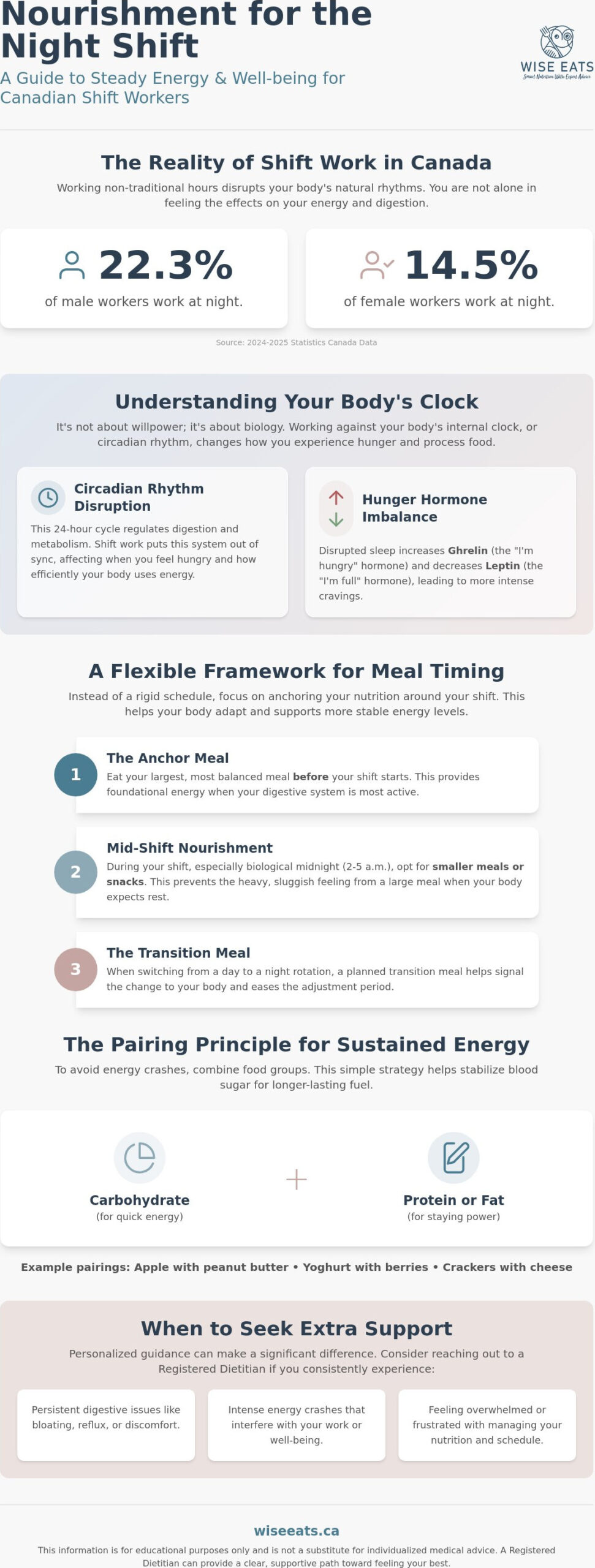
Did you know that according to 2024-2025 Statistics Canada data, 22.3% of male workers and 14.5% of female workers work at night at least once a month? If you’re one of them, you likely know the heavy fog of fatigue that hits during a long shift or the frustration of digestive issues like bloating and reflux when your meals feel out of sync. Finding a sustainable approach to nutrition for shift workers Canada is often a major challenge when your schedule constantly shifts. It’s exhausting to feel like you’re fighting your own body just to stay alert.
We understand that balancing your health can feel overwhelming when standard advice doesn’t account for your 2:00 a.m. “lunch” break. You deserve a plan that prioritizes your well-being without rigid rules or the pressure of “perfect” eating. In this guide, we promise to provide evidence-based strategies and practical resources to help you nourish your body and maintain steady energy while working non-traditional hours. We’ll explore how to time your meals for better digestion, manage caffeine reliance, and embrace food flexibility so you can feel your best, no matter what the clock says.
Key Takeaways
- Understand how your circadian rhythm influences hunger and metabolism, helping you navigate cravings with more compassion and clarity.
- Master the art of meal timing, including the use of transition meals to help your body adapt more comfortably when switching between different work schedules.
- Apply the Pairing Principle to your snacks by combining carbohydrates with protein or fats to promote sustained energy and nourishment throughout your shift.
- Learn how to manage common digestive issues like bloating and reflux while using caffeine effectively to support alertness without sacrificing sleep quality.
- Recognize the signs of when to seek extra support and how personalized nutrition for shift workers Canada can provide a clear, supportive path toward feeling your best.
Understanding Shift Work and Your Circadian Rhythm
Have you ever wondered why your stomach growls at 3:00 a.m. even if you ate before your shift started? It isn’t a lack of willpower or a “bad” habit. It’s biology. Your body operates on a 24-hour internal clock known as the circadian rhythm. This rhythm doesn’t just decide when you feel sleepy; it acts as a master conductor for your digestion, body temperature, and metabolism. When you work non-traditional hours, Shift work and your circadian rhythm can feel out of sync, making it harder for your body to know when to expect fuel and when to rest.
Understanding these biological cues is a vital part of mastering nutrition for shift workers Canada. Instead of fighting against your body, we can learn to work with these natural signals to find a rhythm that feels supportive. When we acknowledge that our internal systems are trying to adapt to a challenging schedule, we can approach our eating habits with more compassion and less frustration.
To better understand this concept, watch this helpful video:
The Role of Hunger Hormones
When you’re sleep-deprived, your body’s chemical communication system shifts. Two key hormones, ghrelin and leptin, play a major role here. Ghrelin acts like a “go” signal for hunger, while leptin tells your brain you’re satisfied. Research shows that even a few nights of disrupted sleep can cause ghrelin levels to rise and leptin levels to drop. This creates a physiological “perfect storm” that increases cravings for quick energy.
That 3:00 a.m. hunger is a valid signal that your body needs fuel to stay awake and perform its duties. It’s also important to realize how timing affects our internal chemistry. Disruptions to the circadian rhythm can temporarily decrease insulin sensitivity, meaning the body may not process carbohydrates as efficiently during typical sleeping hours. Knowing this allows us to choose types of nourishment that support our bodies more effectively during the night.
Metabolic Health vs. The Scale
In the world of shift work, the focus often drifts toward the scale, but we believe your metabolic health and energy levels are far more important indicators of well-being. Focusing on blood sugar stability can help you avoid the intense energy crashes that make a long night shift feel impossible. When you prioritize consistent nourishment, you’re giving your brain the glucose it needs to stay sharp and your body the resources to manage stress.
Restrictive dieting often backfires during high-stress rotations. If you don’t eat enough, your body may perceive this as an added stressor, which can worsen fatigue and lead to more intense cravings later on. Embracing food flexibility allows you to honour your hunger without guilt. By viewing late-night hunger as a legitimate need for fuel, you can choose snacks that provide steady energy rather than a quick, fleeting spike. This sustainable approach to nutrition for shift workers Canada supports long-term health and your overall peace of mind.
Strategic Meal Timing for Night and Evening Shifts
Finding a rhythm when your clock is constantly spinning feels like a puzzle. Strategic timing is often just as important as what’s on your plate. A helpful rule of thumb is to treat your largest meal as an “anchor” consumed before your shift begins. This gives your body the energy it needs while your digestive system is still most active. If you’ve ever felt that heavy, sluggish feeling after a large meal at 3:00 a.m., that’s your body telling you it’s ready for rest, not a three-course dinner.
The “transition meal” is another powerful tool. This is the meal you eat when moving from a day schedule to a night rotation. It helps signal to your body that a change is coming. Embracing this kind of flexibility is a core part of sustainable nutrition for shift workers Canada. If a shift runs late or a break is missed, it’s okay to adapt. Nourishment is about meeting your needs in the moment, not following a rigid schedule.
The Night Shift Strategy
For those on the graveyard shift, the goal is to sustain energy without overtaxing your digestion during “biological midnight,” which usually falls between 2:00 a.m. and 5:00 a.m. During these hours, your metabolism naturally slows down. Instead of a heavy meal, try small, frequent snacks that are easy to digest. You can find excellent ideas for portable options in this Dietitians of Canada Nutrition Guide. When you get home, a light pre-sleep snack, like a small bowl of cereal or toast, can prevent you from waking up due to hunger. This helps you get the restorative rest you need to function the next day.
The Evening and Swing Shift Strategy
Evening shifts often allow for a more “normal” mid-day lunch, which can serve as your primary anchor point. This timing helps you stay fueled for the afternoon while still allowing for a lighter meal after work. If you’re coming home late, focus on nourishment that feels satisfying but won’t cause reflux or keep you awake. This might also be a great time to share a simplified version of a family meal. It helps you stay connected with loved ones even when your hours are different. If you find yourself struggling to find a pattern that works for your unique rotation, booking a session with a dietitian can help you create a personalized timing plan that fits your life.
Practical Nutrition Resources and Snack Ideas
When your break is only fifteen minutes long, you need food that works as hard as you do. Generic nutrition advice often focuses on what to avoid, but we believe in focusing on what you can add to feel satisfied and energized. Finding snacks that are both portable and nutrient-dense is a practical way to manage the unique demands of your schedule. We’re here to help you build a toolkit of options that feel like a support system rather than another chore on your to-do list.
A successful approach to nutrition for shift workers Canada involves looking at your pantry as a resource for ease. By stocking up on versatile staples, you can assemble a satisfying meal even when your energy is low after a long night. This isn’t about following rigid rules; it’s about making nourishment as accessible as possible during those demanding rotations. Choosing Canadian-made foods can also simplify your grocery list and ensure you have high-quality, familiar ingredients ready to go.
One of the most effective strategies we recommend is the “Pairing Principle.” This involves matching a carbohydrate with either a protein or a healthy fat. Think of carbohydrates as the spark that gives you immediate fuel, while protein and fats act like the log that keeps the fire burning steadily. This balance helps stabilize your blood sugar and prevents the intense energy crashes that often lead to a cycle of caffeine and sugary snacks. It’s a simple way to honour your body’s need for sustained energy without the stress of complex recipes.
Grab-and-Go Snack Pairings
Having a few reliable combinations ready can save you from the vending machine when hunger hits unexpectedly. These pairings are designed to be satisfying and easy to eat in a hurry:
- Fibre-rich crackers with hummus or a slice of cheese: This duo provides a great crunch along with the staying power of fibre and protein to keep your blood sugar steady.
- Greek yogurt with berries or a handful of nuts: This is a protein-packed boost that feels like a treat while providing essential nutrients.
- Hard-boiled eggs and a piece of fruit: An apple or a pear paired with eggs is a mess-free, portable option that works well for busy nurses or tech workers who may need to eat between tasks.
The 15-Minute Shift Meal
Meal prep doesn’t have to mean spending your entire day off in the kitchen. You can create a balanced plate in minutes by using “shortcut” ingredients that require minimal effort. Keeping a rotisserie chicken or canned beans in the fridge allows for quick protein additions to simple wraps or salads. Frozen vegetable blends are another fantastic resource; they add vibrant colour and nutrients to your meals without any need for peeling or chopping. Utilizing custom meal planning can significantly reduce decision fatigue by providing a clear, supportive roadmap for your week, allowing you to focus on your rest and well-being.
Managing Digestive Comfort and Hydration
Have you ever noticed your stomach feels a bit “off” halfway through a night shift? You aren’t alone. Digestive issues like bloating, reflux, and constipation are incredibly common when your eating schedule doesn’t align with your body’s natural clock. Because your digestive system naturally slows down during the night, it can feel overwhelmed by heavy or complex meals. Finding a balance in nutrition for shift workers Canada means learning how to support your gut so you can stay focused on your work rather than your discomfort.
Hydration also plays a massive role in how you feel during a rotation. Even mild dehydration can lead to brain fog, irritability, and a drop in alertness, which are the last things you need when you’re responsible for important tasks. By focusing on gentle ways to support your digestive health and staying consistently hydrated, you can significantly improve your daily well-being and energy levels.
Taming the “Shift Work Bloat”
During the biological night, your body produces fewer digestive enzymes and stomach acid. This is why a meal that feels fine at noon might cause intense bloating or reflux at 2:00 a.m. To manage this, try choosing “gentle” foods that are easier for your system to process. Think of warm, soothing options like a simple vegetable soup, a piece of toast, or a banana. These provide nourishment without demanding too much from your resting digestive tract. Building a grocery list for gut health stocked with these gentle, gut-supporting staples can make it much easier to reach for the right foods when you’re tired and short on time.
How you eat is just as important as what you eat. Even if you only have a ten-minute break, try to prioritize mindful chewing. Breaking your food down thoroughly in your mouth takes some of the labour off your stomach. If you find that digestive distress is a constant companion despite these changes, it may be time to consider professional support to explore your unique needs further.
Smart Hydration and Caffeine Tapering
Caffeine is a helpful tool for many, but it’s all about strategic use. Relying on it too late in your shift can create a frustrating cycle where you’re too wired to sleep when you finally get home. A helpful strategy is the “Caffeine Cut-off.” Try to stop your caffeine intake about 6 hours before you plan to go to sleep. This gives your body enough time to process the stimulant so it doesn’t interfere with your restorative rest.
Staying hydrated in Canadian hospitals and office buildings can be a challenge due to the notoriously dry air. Plain water is great, but you don’t have to stop there. Consider these options to keep your fluids up:
- Herbal teas: Peppermint or ginger teas can be double-duty, providing hydration while also soothing an upset stomach.
- Electrolyte-rich snacks: Foods like cucumbers, oranges, or a small container of yogurt can contribute to your hydration goals.
- Refillable bottles: Keep a bottle at your station as a visual reminder to take small sips throughout your shift.
If you’re tired of feeling like your digestion is a hurdle you have to clear every day, connecting with a dietitian for personalized support can help you find a path toward lasting comfort and steady energy.
When to Seek Help: Red Flags and Professional Support
Navigating a non-traditional schedule is a significant feat. You’re doing your best in a system that doesn’t always prioritize your natural biological rhythms. While the strategies we’ve discussed can offer a great starting point, sometimes the fog of fatigue or digestive distress feels like too much to handle alone. It’s okay to admit when you’re feeling overwhelmed. Seeking support isn’t a sign of failure; it’s a proactive step toward your long-term well-being and peace of mind. Improving nutrition for shift workers Canada often requires a team approach to ensure you’re getting the nourishment you truly need.
Recognizing the Signs of Burnout
It’s helpful to know when your relationship with food or your physical health might need a little extra care. If you find yourself feeling obsessive or fearful about food choices or the exact timing of your meals, this is a signal to pause. Does the thought of missing a scheduled snack cause you significant anxiety? Food should be a source of nourishment and connection, not a source of stress. Physical symptoms are also powerful communicators. If you’re experiencing extreme dizziness, fainting, or chronic pain, your body is telling you that your current routine isn’t quite meeting its needs.
Another common struggle is the urge to use restriction to “compensate” for night-shift eating habits. You might feel like you need to skip meals during the day because you ate during the night. This cycle can be incredibly draining. It often leads to more intense fatigue and can make it harder for your body to regulate its energy levels. Remember, your body needs fuel to function regardless of what the clock says or whether the sun is up. Treating your hunger as a valid need is the first step toward reconnection with yourself.
Personalized Support for Canadians
A Registered Dietitian can act as a knowledgeable partner in your journey. They carry the expertise to translate complex nutritional data into actionable, simple steps that fit your life. Virtual counselling is a fantastic resource because it fits into an irregular shift worker’s schedule. You don’t have to worry about rushing to an office during your “sleeping hours.” You can connect from the comfort of your home at a time that works for you. You can also benefit from custom meal planning that is specifically tailored to your unique rotation, food preferences, and cultural background.
Your worth is not tied to your productivity, your shift length, or what is on your plate. Be kind to yourself as you navigate the challenges of your career. You deserve to feel supported and energized. By prioritizing self-compassion and seeking expert guidance when needed, you can find a sustainable way to nourish your body and thrive.
Disclaimer: This content is for educational purposes only and is not a substitute for individualized medical advice.
Empowering Your Journey Toward Better Well-being
You now have a toolkit of strategies to help you navigate the unique demands of your schedule. By understanding your body’s internal clock and using the Pairing Principle for snacks, you can support your energy levels without the stress of rigid rules. Remember that prioritizing digestive ease and staying hydrated are small steps that make a significant difference in how you feel during a long rotation. Finding a sustainable path for nutrition for shift workers Canada is about food flexibility and listening to your body’s valid needs for fuel.
If you’re ready for a more personalized approach, we are here to help. Our team offers evidence-based care from Canadian Registered Dietitians who practice a weight-inclusive and non-dieting philosophy. Whether you need specialized support for digestive health or specific medical conditions, we can help you create a roadmap that works for your life. You don’t have to figure this out alone. Book a consultation with a Registered Dietitian to build your shift work nutrition plan today. You deserve to feel energized and supported throughout every shift.
Disclaimer: This content is for educational purposes only and is not a substitute for individualized medical advice.
Frequently Asked Questions
Should I eat a full meal during my night shift break?
Most people find that smaller, frequent snacks work better than a full meal during the biological night. Since your digestion naturally slows down between 2:00 a.m. and 5:00 a.m., a large meal can often lead to bloating or a “heavy” feeling that causes sluggishness. Focusing on light, easy-to-digest options helps you maintain energy without overtaxing your system during its natural rest period.
How can I stop relying on energy drinks to get through my shift?
Reducing energy drink reliance starts with stabilizing your blood sugar through consistent nourishment. Instead of a quick sugar spike, use the “Pairing Principle” by matching a carbohydrate with a protein or healthy fat. This provides a steady stream of energy that lasts longer. Gradually tapering your caffeine intake and switching to water or herbal tea in the final hours of your shift can also help you break the cycle.
What are the best foods to eat before going to sleep after a night shift?
The best pre-sleep snacks are light, carbohydrate-based options that are easy for your system to process. A small bowl of cereal, a piece of toast with nut butter, or a banana can be very soothing. These foods provide enough fuel to prevent you from waking up due to hunger pangs, allowing for the deep, restorative sleep you need after a long rotation.
Is it normal to feel more hungry on my days off after a rotation?
It is completely normal to experience increased hunger on your days off. Sleep deprivation temporarily shifts your hunger hormones, often making you feel like you can’t get enough to eat. Your body is also working hard to repair and recover from the stress of an irregular schedule. Honouring this hunger with compassion is a key part of nutrition for shift workers Canada.
How do I handle “potlucks” or diet-talk in the staff breakroom?
Navigating breakroom diet-talk can be challenging, but you have the right to protect your peace of mind. You can try changing the subject or stepping away if the conversation feels uncomfortable. When it comes to potlucks, remember that food flexibility allows you to enjoy shared meals without guilt. Treating all foods as morally neutral helps you focus on the joy of connection rather than rigid rules.
Can supplements help with the fatigue caused by shift work?
While certain supplements can support your health, they are most effective when used as part of a broader plan for nutrition for shift workers Canada. Some people find that vitamin D or magnesium may be helpful, but needs vary greatly between individuals. It’s always best to consult with a professional to ensure any supplement you choose is safe and appropriate for your specific health history.
How do I stay hydrated when I can’t always have a water bottle with me?
If you can’t keep a bottle nearby, focus on “pre-loading” your hydration before your shift and during every scheduled break. You can also increase your fluid intake by choosing water-rich snacks like cucumbers, oranges, or melon. Even small, consistent sips when you do have access to water can help maintain your cognitive function and prevent the headaches often associated with dehydration.
What should I eat if I have IBS and work night shifts?
Managing IBS during a night shift involves choosing low-intensity foods that won’t overtax your digestive system. Stick to familiar, “safe” foods that you know your body handles well during the day. Since night shifts can increase gut sensitivity, avoiding very spicy or high-fat foods during your rotation can help minimize symptoms. If you find your symptoms are worsening, personalized support can help you find a comfortable path forward.
Disclaimer: This content is for educational purposes only and is not a substitute for individualized medical advice.


With a Bachelor of Science in Nutrition and Food Science, Rachel has over 20 years experience helping people address their health through nutrition. She attended the University of Alberta and UBC. She started with chemistry and then focused on Human Nutrition and Food Science. Her career rounded out with guidance counselling post-grad course work at University of British Columbia. She has a teen aged son and 2 cats and loves the beauty of the Oceanside Area of Qualicum, Parksville and Naniamo - yes! the home of the famous Naniamo Bar!