

An eating disorder is a serious mental health illness.
If you are in immediate distress or crisis, please contact emergency services by dialling 911 or calling Vancouver Island Crisis Line: 1-888-494-3888. This article is educational information only, not professional diagnosis or treatment. Eating disorders require professional care. If you or someone you know is experiencing: *Severe food restriction or malnutrition *Uncontrollable binge eating or purging *Significant physical symptoms (dizziness, fainting, irregular heartbeat, severe pain) *Thoughts of self-harm or suicide related to eating or body image* Please seek immediate professional help. Contact your physician, local emergency services, or a mental health crisis line. A registered dietitian, psychologist, psychiatrist, and medical team work together to support eating disorder recovery.
What if the secret to a happy gut isn’t about what you cut out, but what you add in? It’s completely normal to feel overwhelmed by the flood of conflicting nutrition advice found online. You might worry that certain foods are ruining your digestion or feel frustrated by constant bloating and discomfort. It’s exhausting to feel like you’re walking on eggshells while trying to build a grocery list for gut health. We understand how heavy that pressure feels, and we want to help you replace that anxiety with a sense of clarity and hope.
This guide is designed to help you lower your defenses and find a genuine sense of peace with your plate. You’ll learn how to stock your kitchen with variety, flavour, and nourishment instead of restriction or fear. We’re diving into versatile, gut-supporting staples and sharing practical Canadian shopping tips to make your next trip to the store feel simple and supportive. It’s time to focus on how food can help you feel your best without the stress of a rigid diet.
Key Takeaways
- Shift your focus from restrictive “detox” myths to supporting a diverse ecosystem of beneficial microbes in your gut.
- Learn how to build a grocery list for gut health that emphasizes variety and fibre without the stress of rigid rules.
- Discover how to reach the goal of 30 different plants a week by including colourful produce, seeds, and whole grains.
- Explore the value of frozen and canned staples to make nourishing meals more accessible, affordable, and convenient.
- Move toward flexible meal frameworks that prioritize your comfort and help you reconnect with your body’s unique needs.
Understanding Gut Health Beyond the “Detox” Myths
If you’ve spent even five minutes on social media lately, you’ve likely seen ads for “gut-cleansing” juices or restrictive “reset” programmes. These messages can make us feel like our bodies are somehow dirty or broken. The truth is much more reassuring. Your body is already equipped with a sophisticated internal system designed to process and filter what you eat. True gut health isn’t about drinking charcoal or skipping meals; it’s about supporting the gut microbiota, a vast and diverse ecosystem of trillions of microbes living in your digestive tract. When we talk about a grocery list for gut health, we’re looking for ways to nourish this internal community, not “scrub” it clean.
Research from 2026 shows that 68% of people are actively looking for products that support their gut. This interest is wonderful, but it often comes with the stress of food rules. In our weight-inclusive approach, we view food as morally neutral. No single food is “good” or “bad” for your gut. Instead, we focus on the big picture of microbial diversity. Think of your gut like a garden. A healthy garden doesn’t just have one type of flower; it thrives when there are many different species working together. By choosing a wide variety of foods, you provide the different types of “fuel” that various microbes need to flourish. This variety is what helps manage digestive symptoms and supports your overall well-being.
To better understand how specific foods can support your digestion, watch this helpful video:
The Role of the Microbiome in Well-being
Your gut bacteria do so much more than just digest your lunch. They’re constantly communicating with your brain through the gut-brain axis. This connection means that your gut health can influence your mood, energy levels, and even how you handle stress. A 2024 study in Nature Communications even suggested that certain prebiotic fibres can support cognitive performance. When your microbes are well-fed with a variety of gut microbiota, they produce beneficial compounds that support your immune system and keep your energy steady throughout the day. It’s a beautiful, symbiotic relationship.
Why Restriction Often Backfires
It’s a common trap to think that cutting out food groups will solve digestive issues. However, unless you have a diagnosed medical condition like Celiac disease or a specific food allergy, restriction can actually do more harm than good. When you limit the types of food you eat, you’re essentially “starving” certain groups of beneficial bacteria. Over time, this can reduce the diversity of your microbiome, which may lead to more bloating or discomfort. Plus, the psychological stress of “forbidden foods” can trigger the body’s stress response, which often makes digestive symptoms worse. Choosing food flexibility over rigid rules allows you to build a sustainable grocery list for gut health that feels good for both your mind and your body.
The Core Principles of a Gut-Friendly Grocery List
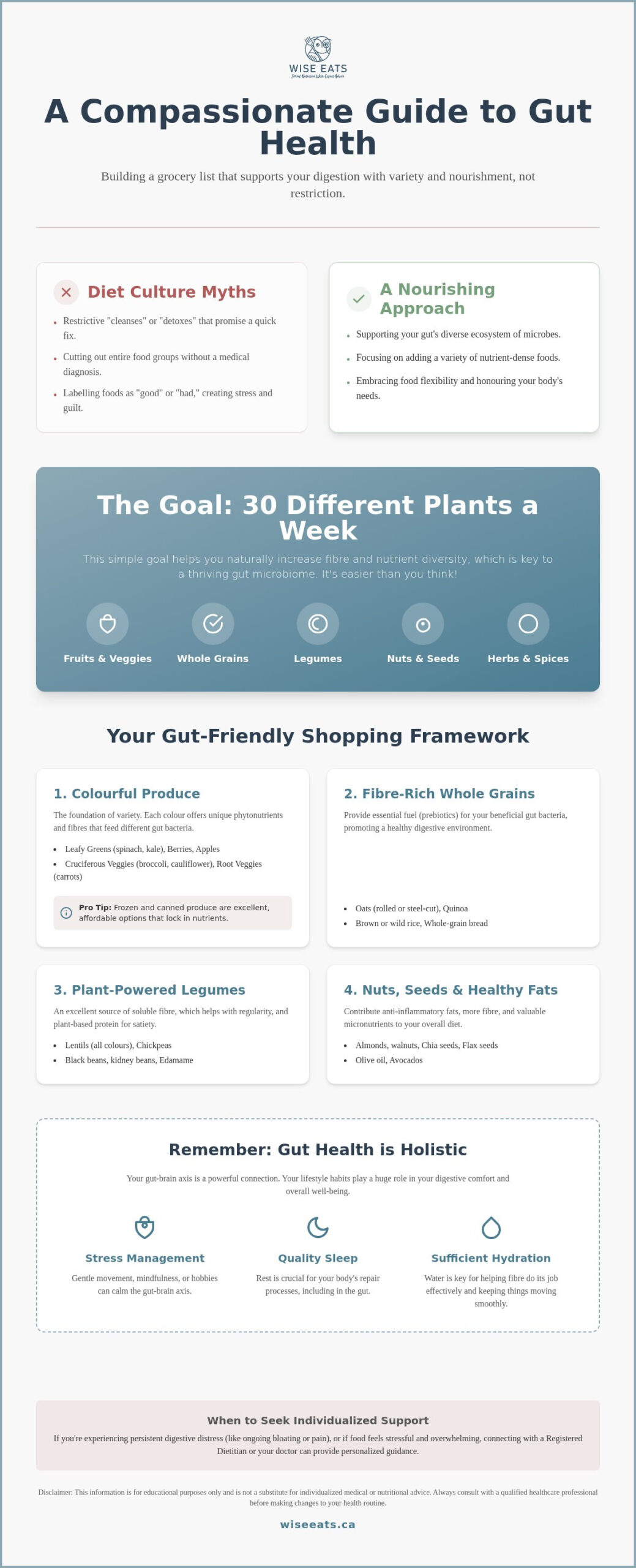
Building a grocery list for gut health is less about following a strict set of rules and more about embracing the power of variety. One of the most effective ways to support your microbiome is to aim for “30 plants a week.” While that number might sound daunting at first, it’s much easier to achieve when you realize that plants include everything from colourful fruits and vegetables to whole grains, nuts, seeds, beans, and even dried spices. Each different plant provides a unique type of fibre or polyphenol that feeds a specific strain of bacteria in your gut. By focusing on addition rather than subtraction, you can naturally increase the diversity of your internal ecosystem. Using a dietitian-designed meal plan can be a gentle way to discover new plant-based options without the stress of planning every detail yourself.
Fibre is the foundational fuel for your beneficial microbes. Most Canadians don’t get enough fibre, but slowly increasing your intake can make a significant difference in how you feel. It’s helpful to remember that lifestyle factors like sleep and stress also impact gut health, so a holistic approach is always best. If you find yourself feeling overwhelmed by all the choices at the supermarket, connecting with a professional can provide the personalized guidance you need to find a routine that works for your unique body.
Prebiotics: Feeding Your Good Bacteria
Think of prebiotics as the “fertilizer” for your gut garden. These are non-digestible fibres that pass through your upper digestive tract to the colon, where your beneficial bacteria feast on them. Common staples like onions, garlic, slightly under-ripe bananas, and oats are excellent prebiotic sources. When your bacteria break down these fibres, they produce short-chain fatty acids (SCFAs). These compounds are vital because they provide energy for the cells lining your colon and help maintain a healthy gut barrier. It’s a simple way to let your body do what it does best.
Probiotics and Fermentation
While prebiotics are the food, probiotics are the live, beneficial bacteria themselves. You don’t always need expensive supplements to get them; many fermented foods are naturally rich in these microbes. Staples like plain yogurt, kefir, sauerkraut, and miso are wonderful additions to your cart. When shopping in Canada, look for “live and active cultures” on the label to ensure the product contains the beneficial bacteria you’re looking for. These foods help introduce new, friendly residents to your gut community, working in synergy with the prebiotic fibres you’re already eating. This balance is the heartbeat of a sustainable grocery list for gut health.
The Essential Gut Health Grocery List Categories
Building your grocery list for gut health doesn’t need to be complicated or expensive. In Canada, we have access to a wonderful variety of staples that can support your digestion year-round. Instead of looking for “perfect” foods, try to think about building a flexible foundation that allows for variety and enjoyment. This approach helps you move away from the stress of restrictive dieting and toward a way of eating that feels sustainable. You can find many nutritious Canadian-made foods that fit perfectly into these categories, whether you’re shopping at a large supermarket or a local market.
Produce Aisle Staples
Aim for a “rainbow” of colours in your cart to capture a wide range of polyphenols. These plant compounds act as antioxidants and provide unique fuel for different bacterial strains. Leafy greens like spinach and kale are excellent sources of folate and magnesium, which support overall metabolic function. Don’t overlook root vegetables like carrots and sweet potatoes; they’re rich in soluble fibre that can help soften stools and support regular bowel movements. During Canadian winters, frozen berries and citrus fruits are fantastic alternatives to fresh produce, providing the same Vitamin C and antioxidant benefits for your immune system and gut lining.
The Gut-Friendly Pantry
A well-stocked pantry is your best tool for maintaining food flexibility. Canned legumes, such as lentils and chickpeas, are budget-friendly powerhouses that provide both protein and significant amounts of fibre. They’re easy to toss into soups, salads, or stews to instantly increase plant diversity. Seeds and nuts are another essential pantry item. Flaxseeds, walnuts, and chia seeds are rich in Omega-3 fatty acids, which may help support a healthy inflammatory response in the digestive tract. You can also keep a variety of dried herbs and spices on hand. Ginger and turmeric are particularly helpful for their soothing properties, making them great additions to both sweet and savoury dishes.
Dairy and Alternatives
When you’re in the dairy or refrigerated aisle, look for fermented options that contain live cultures. Kefir and Greek yogurt are classic choices that introduce beneficial bacteria directly to your system. If you prefer plant-based alternatives, choose milks that are fortified with calcium and Vitamin D. Calcium is particularly important because it plays a role in the function of digestive enzymes. Whether you choose traditional dairy or a fortified plant-based version, these foods provide essential nourishment that supports your body’s natural digestive processes. Remember, the goal of your grocery list for gut health is to provide your body with the variety it needs to thrive without the pressure of perfection.
Practical Tips for Grocery Shopping Without Perfectionism
You might have heard the advice to “only shop the perimeter” of the store. This is a common diet-culture myth that we’d love to help you unlearn. While the produce section is wonderful, the middle aisles often contain the most essential components of a grocery list for gut health. Canned beans, whole grain pasta, and frozen fruits are all incredible tools for nourishment. These staples are often more accessible and last longer, making it easier to keep your kitchen stocked with variety. We want you to feel confident exploring every corner of the supermarket without the fear of making a “wrong” choice.
We suggest using the “Add, Don’t Subtract” method. Instead of worrying about what to take away from your plate, ask yourself what you can add to support your microbes. Can you sprinkle hemp seeds on your morning toast? Could you stir a handful of canned lentils into your favourite pasta sauce? This shift in mindset replaces the stress of restriction with a sense of curiosity. It makes eating feel like a positive, proactive way to care for your body. When we focus on addition, we naturally increase the diversity of our plant intake, which is the ultimate goal for a resilient microbiome.
Navigating the Canadian Grocery Store
In Canada, our seasons change quickly. Fresh berries in February can be expensive and may lose some nutrients during their long journey to our shelves. Frozen vegetables and fruits are often flash-frozen at their peak ripeness. This means they’re just as nutritious, if not more so, than fresh options in the off-season. When you’re checking labels, try to ignore the calorie count and look at the % Daily Value for fibre. A product with 15% DV or more is considered “high in fibre” by Canadian standards. You can discover nutritious Canadian-made foods that make hitting these targets simple and delicious.
Budget-Friendly Gut Health
Supporting your microbiome doesn’t have to be expensive. Buying grains, nuts, and seeds from bulk bins is a cost-effective way to increase your plant variety. Versatile staples like dried or canned lentils can be used in everything from salads to stews, providing a massive fibre boost for very little cost. Proper storage is also key to saving money. Keeping your leafy greens in a sealed container with a paper towel helps them stay fresh longer. This reduces food waste and ensures your groceries actually make it onto your plate. If the thought of organizing all these options feels like too much, book a personalized consultation with a dietitian to help simplify your shopping routine.
Integrating Your Grocery List into a Sustainable Routine
Once you’ve filled your cart, the next step is bringing that grocery list for gut health to life in your kitchen. This isn’t about following a strict schedule or eating things you don’t enjoy. It’s about creating a rhythm that supports your energy and your digestion without feeling like a chore. We want you to feel empowered to use these ingredients in ways that make sense for your busy life. When we treat food as a tool for nourishment rather than a set of rules, we lower our stress levels, which is one of the kindest things we can do for our digestive system.
As you gradually increase the variety of plants on your plate, remember that hydration is your best friend. Fibre needs plenty of water to move smoothly through your system. If you add more fibre without increasing your fluid intake, you might actually feel more bloated or uncomfortable at first. Listen to your body’s signals. How do different types of beans or grains feel for your digestion? There’s no one-size-fits-all answer, and your personal experience is the most valuable guide you have. Taking it slow allows your microbiome to adjust comfortably to its new, diverse fuel sources.
Meal Planning Without the Stress
Instead of rigid recipes, try using meal “frameworks.” This approach allows for food flexibility and helps you build “mix and match” bowls that satisfy your unique cravings. You might start with a base grain like quinoa or brown rice, add a protein like canned chickpeas or grilled fish, and top it with whatever colourful produce you have on hand. Our ultimate nutrition guide to meal planning offers more ways to simplify this process while keeping it fun. Always prioritize your own satisfaction and pleasure alongside nourishment. Food should taste good and help you feel your best.
When to Seek Help: Red Flags for Digestive Health
While adding variety to your grocery list for gut health is a wonderful starting point, some digestive struggles need a closer look. It’s okay to ask for support if your symptoms feel unmanageable or if you’re feeling anxious about your food choices. We’ve listed a few red flags that might suggest it’s time for professional guidance:
- Unintended weight shifts or a sudden, intense focus on body size that interferes with your well-being.
- Persistent abdominal pain, significant changes in bowel habits, or discomfort that doesn’t resolve with gentle changes.
- Extreme food fear or feeling like your grocery shopping has become a source of anxiety rather than a way to care for yourself.
Working with a Registered Dietitian can help you navigate nutrition for digestion problems with a compassionate, weight-neutral lens. We’re here to act as a steady hand as you navigate these changes, ensuring you feel supported every step of the way. You don’t have to figure this out alone.
Finding Peace and Variety in Your Digestive Journey
Building a sustainable grocery list for gut health is an act of kindness toward your body. It’s about moving away from the loud, confusing world of “detox” myths and toward a quiet, steady reconnection with yourself. You now have the tools to stock your kitchen with a rainbow of produce, versatile pantry staples, and nourishing fermented foods. Remember that your microbiome thrives on the diversity you add. By embracing food flexibility and the “Add, Don’t Subtract” mindset, you can support your digestion while still finding genuine joy in every meal.
You don’t have to navigate these changes alone. If you’re looking for evidence-based nutrition care that respects your body and your history with food, we’re here to help. Our weight-inclusive and non-dieting approach provides specialized support for IBS and other digestive health concerns. We can work together to create a personalized plan that fits your life. Book a consultation with Wise Eats Registered Dietitians for personalized gut health support today. You deserve to feel clear, hopeful, and well-nourished.
Disclaimer: This content is for educational purposes and is not a substitute for individualized medical advice.
Frequently Asked Questions
What are the best foods to support gut health for beginners?
Focusing on accessible, gentle fibres and fermented staples is a wonderful way to start. You might begin by adding oats, bananas, and yogurt to your cart. These foods are generally well-tolerated and provide the prebiotics and probiotics your microbes need to thrive. Canned lentils are another excellent beginner-friendly option because they are already softened and easy to add to your favourite soups or salads.
Can I improve my gut health on a budget in Canada?
You can absolutely support your microbiome without spending a fortune. In Canada, frozen fruits and vegetables are often more affordable than fresh produce during the winter and are just as nutritious. Buying staples like brown rice, dried beans, and seeds in bulk can also significantly lower your costs. A grocery list for gut health is most effective when it relies on these versatile, long-lasting pantry items.
Is coffee bad for gut health?
Coffee is not inherently “bad” for your gut and actually contains polyphenols that can feed beneficial bacteria. While some people may find that caffeine irritates their digestive tract or increases urgency, others tolerate it quite well. It’s all about listening to your body’s unique signals. If you enjoy coffee and it doesn’t cause you discomfort, there is no evidence-based reason to remove it from your routine.
How much fibre should I aim for daily?
Health Canada recommends that adult women aim for 25 grams of fibre per day, while adult men should aim for 38 grams. Most Canadians currently get about half of that amount. It’s important to increase your fibre intake slowly while drinking plenty of water. This gradual approach helps your digestive system adjust comfortably and reduces the likelihood of temporary gas or bloating.
Do I need to take a probiotic supplement for a healthy gut?
Many people can support a diverse microbiome through food alone without ever needing a supplement. Fermented foods like kefir, sauerkraut, and miso provide natural sources of beneficial bacteria. While supplements can be helpful in specific cases, they are not a requirement for everyone. If you’re considering a supplement, it can be helpful to discuss your specific needs with a Registered Dietitian to ensure you’re choosing the right strain.
What is the “30 plants a week” rule and how do I start?
This is a flexible goal to include 30 different types of plant foods in your diet each week to maximize microbial diversity. You can start by counting everything from grains and legumes to nuts, seeds, and even dried spices. Adding a seed blend to your yogurt or using a mix of leafy greens instead of just one type can help you reach this target quickly. It’s a fun way to embrace food flexibility.
Can I have a healthy gut if I eat processed foods?
Yes, you can certainly maintain a healthy gut while including processed foods in your grocery list for gut health. Many processed items, such as canned beans, frozen vegetables, and fortified whole grain breads, are excellent sources of nourishment. We treat all foods as morally neutral. The focus should remain on the overall variety and fibre content of your patterns rather than the exclusion of specific items.
How long does it take to see changes in gut health from diet?
Some people may notice improvements in their digestive comfort within just a few days of increasing fibre and hydration. However, significant changes in the diversity of your microbiome typically take several weeks or even months of consistent variety. Patience is key as your internal ecosystem shifts. Focusing on how you feel and the pleasure you find in your meals is often the best way to track your progress.


With a Bachelor of Science in Nutrition and Food Science, Rachel has over 20 years experience helping people address their health through nutrition. She attended the University of Alberta and UBC. She started with chemistry and then focused on Human Nutrition and Food Science. Her career rounded out with guidance counselling post-grad course work at University of British Columbia. She has a teen aged son and 2 cats and loves the beauty of the Oceanside Area of Qualicum, Parksville and Naniamo - yes! the home of the famous Naniamo Bar!