
An eating disorder is a serious mental health illness.
If you are in immediate distress or crisis, please contact emergency services by dialling 911 or calling Vancouver Island Crisis Line: 1-888-494-3888. This article is educational information only, not professional diagnosis or treatment. Eating disorders require professional care. If you or someone you know is experiencing: *Severe food restriction or malnutrition *Uncontrollable binge eating or purging *Significant physical symptoms (dizziness, fainting, irregular heartbeat, severe pain) *Thoughts of self-harm or suicide related to eating or body image* Please seek immediate professional help. Contact your physician, local emergency services, or a mental health crisis line. A registered dietitian, psychologist, psychiatrist, and medical team work together to support eating disorder recovery.
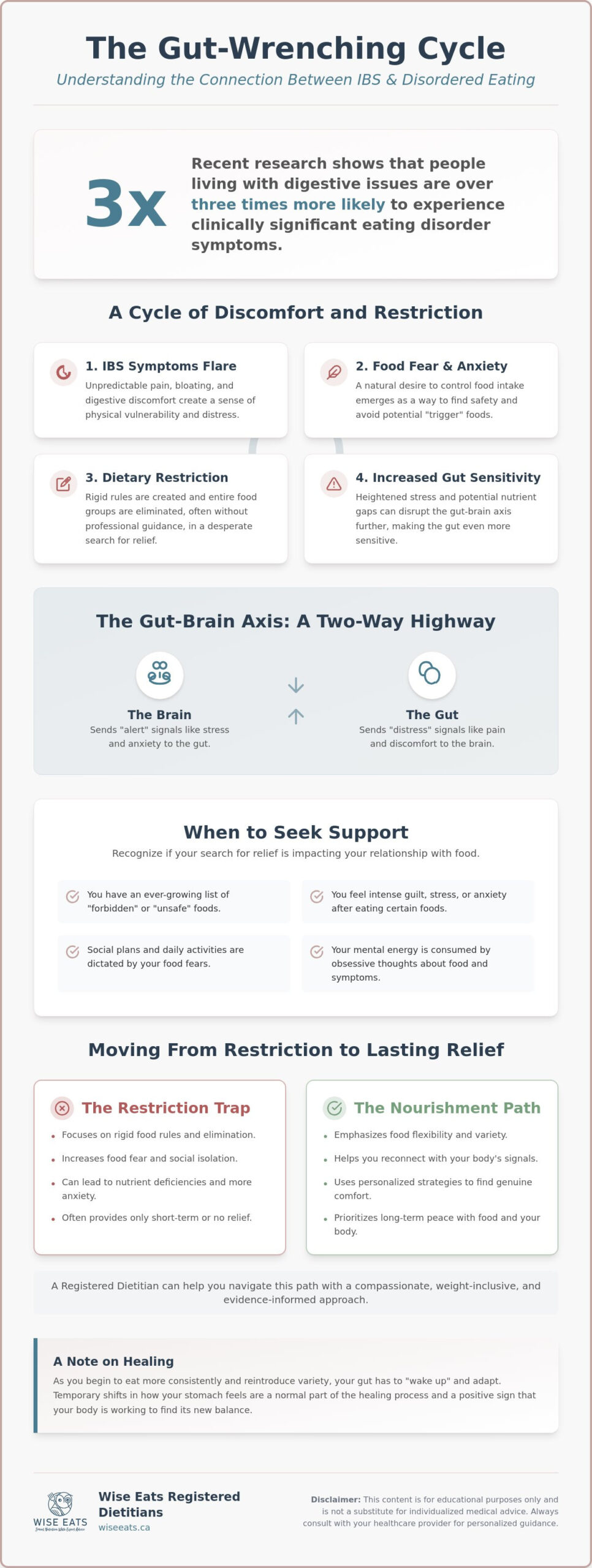
What if the restrictive diet meant to “fix” your gut is actually the very thing keeping you stuck in a cycle of pain and food fear? It’s exhausting to wake up every day wondering how your stomach will behave or which “trigger” food might cause a flare-up. If you feel unheard by providers who only offer more rules, you aren’t alone. Recent research shows that people living with digestive issues are over three times more likely to experience clinically significant eating disorder symptoms. The link between IBS and disordered eating is a complex, bidirectional loop where physical discomfort and nutritional anxiety constantly feed into one another.
We believe you deserve a life that isn’t defined by the bathroom or a list of forbidden ingredients. You can find relief without falling back into the trap of restriction. This article explores how digestive health and eating behaviours intersect, offering a compassionate, weight-inclusive path toward genuine gut comfort. You’ll learn about the physical connection between stress and the gut, why your symptoms might feel so unpredictable, and how to rediscover food flexibility. Let’s move away from rigid rules and toward a sense of peace and nourishment that respects both your body and your mind.
Key Takeaways
- Understand how the gut-brain axis acts as a “two-way highway,” where your stress levels and digestive symptoms can influence each other in real-time.
- Explore the complex link between IBS and disordered eating to understand why rigid food rules often create more anxiety than relief.
- Recognize the subtle signs that your eating behaviours may be impacting your relationship with food and when to reach out for professional support.
- Learn how working with a Registered Dietitian can help you achieve gut comfort through personalized strategies like custom meal planning that focus on nourishment and safety.
- Discover a weight-inclusive approach to recovery that prioritizes food flexibility and helps you reconnect with your body’s natural signals for long-term peace.
Understanding the Overlap: What is the Connection Between IBS and Disordered Eating?
Understanding the link between IBS and disordered eating starts with recognizing how your body tries to protect you. Irritable Bowel Syndrome (IBS) is a functional gut disorder where the communication between your brain and your digestive system is out of sync. It isn’t just in your head; it’s a physical reality that can cause significant discomfort. For many Canadians, the unpredictable nature of these symptoms leads to a natural desire to control food intake as a way to find safety.
Disordered eating refers to a range of irregular eating behaviours that might not meet the strict criteria for a clinical eating disorder but still impact your well-being. This can include chronic dieting, food anxiety, or rigid rules about what you “can” eat. When your gut feels like an unpredictable storm, tightening your grip on food often feels like the only umbrella available. If you’ve been looking for nutrition for digestion problems, you likely know how exhausting this cycle can be.
To better understand this concept, watch this helpful video:
Defining the Spectrum of Disordered Eating
Disordered eating often flies under the radar because it doesn’t always look like a clinical diagnosis. It might manifest as an obsession with “safe” foods or intense guilt after eating something you’ve labelled as a trigger. These behaviours are frequently a coping mechanism for physical pain. We view all food and bodies as morally neutral; no food is “bad” and no body size is “wrong.” Recovery is about shifting away from these rigid rules and moving toward food flexibility and nourishment that respects your body’s needs.
IBS Symptoms vs. Recovery-Related Digestive Shifts
Common IBS symptoms include bloating, gas, and changes in bowel habits. However, it’s helpful to know that the process of recovery itself can temporarily increase digestive sensitivity. When you begin to eat more consistently or reintroduce variety, your gut has to “wake up” and learn how to process different nutrients again. You might notice temporary shifts in how your stomach feels as you move toward a more flexible way of eating. These sensations are a natural part of the healing process and a sign that your body is working to find its new balance.
The Gut-Brain Axis: Why Digestive Symptoms and Eating Behaviours Are Linked
Think of the connection between your gut and your brain as a busy, two-way highway. Messages travel constantly in both directions. If you’re feeling anxious about a meal, your brain sends “alert” signals down to your digestive tract. Conversely, if your gut is experiencing a flare, it sends “distress” signals back up to your brain. This constant chatter is why stress and food anxiety can physically manifest as painful IBS flares. Your gut is highly sensitive to both emotional shifts and nutritional consistency. When these signals get crossed, it can feel like your body is constantly on high alert.
Current research on IBS and disordered eating highlights how this communication loop can become a cycle of discomfort. When you’re stuck in this loop, your digestive system may react more intensely to everyday triggers. It’s a frustrating experience, but understanding the biological “why” can be the first step toward finding relief. If you’re feeling overwhelmed by these physical sensations, you might find it helpful to book a supportive consultation to explore a personalized path forward.
How the Mind and Gut Communicate
Your gut actually has its own nervous system, often called the “second brain” or the enteric nervous system. The vagus nerve acts as the main cable for this highway, regulating everything from how fast food moves to how much acid your stomach produces. When we become hyper-vigilant, constantly scanning our bodies for the first sign of a cramp or bloat, we actually lower our pain threshold. The brain starts to amplify sensations that it might otherwise ignore, making the discomfort feel even more intense and unpredictable. It’s a physical response to a state of high internal stress.
The Physical Impact of Restriction and Chaos
Irregular eating patterns, like restriction or bingeing, throw a wrench into the gears of your digestive system. When the body doesn’t receive enough fuel consistently, it tries to conserve energy by slowing down. This can lead to gastroparesis, where food stays in the stomach too long, often causing increased bloating, nausea, and a premature sense of fullness. Additionally, a lack of food variety can change your microbiome, as the helpful bacteria in your gut thrive on a diverse range of nutrients. Providing your body with consistent nourishment is a powerful way to soothe your nervous system and encourage your gut to move at a healthy, comfortable pace. Nourishment is not just about fuel; it’s a form of healing for your entire nervous system.
The “Chicken or the Egg” Dilemma: Can IBS Lead to Disordered Eating?
Is it the stomach or the plate that starts the trouble? For many, the physical pain of IBS acts as the primary catalyst for disordered patterns. While some people enter this cycle through a pre-existing eating disorder, many others develop these habits as a direct response to their symptoms. After receiving an IBS diagnosis, it’s common to be handed a list of foods to avoid. This often triggers a period of obsessive food tracking where you look for a culprit in every meal. This hyper-focus can quickly morph into a situation where IBS and disordered eating coexist, as the desire for physical comfort turns into a rigid, anxiety-driven relationship with food.
This path is often overlooked in traditional medical settings. When a person restricts food to manage pain, their behaviour is often praised as “disciplined” rather than recognized as a potential risk. However, the psychological toll of constantly scanning every ingredient can be just as heavy as the physical symptoms themselves. We believe that food and bodies are morally neutral; your worth isn’t tied to how “perfectly” you follow a diet. Finding nutrition for digestion problems that prioritizes your mental well-being is just as vital as managing your gut comfort.
Food Fear and Avoidance in IBS Management
The “Symptom-Restriction-Anxiety” cycle is a powerful trap. You eat something, you feel pain, and then you restrict that food. Over time, your list of “safe” foods gets smaller and smaller. This avoidance doesn’t just impact your nutrition; it creates deep-seated food fear. When every bite feels like a potential threat, your brain stays in a state of high alert. This pursuit of “perfect” gut health can sometimes lead to Orthorexia, where the obsession with eating only “correct” foods becomes a source of distress itself. Research on the Eating Disorders and IBS Connection shows that this path is more common than many realize. It’s a natural human response to pain, but it’s one that requires a compassionate approach to break.
The Risks of Restrictive “Gut Healing” Diets
Social media is full of “gut-healing” protocols that promise relief through “clean eating” or “detoxes.” These terms aren’t based on scientific standards and often do more harm than good. Labelling foods as “toxic” or “inflammatory” only increases the psychological toll on someone already struggling with digestive pain. These restrictive diets usually fail in the long run because they ignore the body’s need for variety and the mind’s need for flexibility. Instead of healing the gut, they often cement disordered patterns. We encourage a shift toward food flexibility and inclusion. True nourishment isn’t about what you take away; it’s about finding a way to eat that feels safe and satisfying for you.
Recognizing the Signs: When to Seek Professional Support
Identifying the overlap between IBS and disordered eating can be difficult because our culture often masks restrictive behaviours as “health-conscious.” You might feel like you’re just being careful with your gut, but if your thoughts about food are starting to feel heavy or intrusive, it may be time to lean on professional support. Health is multifactorial. It’s influenced by your genetics, sleep, and stress levels, not just the specific ingredients you consume. If you’ve been trying to manage your symptoms alone and feel stuck, remember that you don’t have to carry this burden by yourself.
In Canada, the most effective way to navigate this intersection is through a multi-disciplinary team. This typically includes a physician to rule out other medical concerns, a therapist to support your emotional well-being, and a Registered Dietitian who specializes in both digestive health and recovery. This team approach ensures that all aspects of your health are considered. We prioritize weight-inclusive care, which means we focus on your comfort, energy levels, and relationship with food rather than using a number on a scale as a measure of success.
Physical and Emotional Red Flags
It can be helpful to check in with yourself and see if any of these patterns feel familiar. Seeking help is a brave step toward a more comfortable life. You might consider reaching out to a professional if you notice the following red flags:
- You feel intense guilt or shame after eating foods you’ve previously labelled as “triggers” or “forbidden.”
- You’ve started to withdraw from social situations, like birthdays or dinners out, because the anxiety over the menu feels overwhelming.
- You’re experiencing physical symptoms that interfere with your daily life, such as extreme fatigue, fainting spells, or persistent pain that doesn’t improve with restriction.
If these experiences resonate with you, our team is here to help you find a path back to nourishment. You can book a supportive consultation to start exploring your options in a safe, non-judgmental space.
Moving Toward a Neutral Relationship with Food
A major part of recovery is learning that food has no moral value. It’s neither “good” nor “bad.” When we strip away the labels, we can start the process of reconnection with self. This involves learning to trust your body’s signals again rather than following a rigid set of external rules. While it takes time, the goal is to move toward food flexibility. Eventually, many people find that Intuitive Eating becomes a sustainable way to honour their hunger and their gut health simultaneously. This isn’t about “perfect” eating; it’s about finding a rhythm that allows you to enjoy your life without constant digestive distress or food-related anxiety.
Navigating Recovery: How a Registered Dietitian Supports Both Gut Health and Food Flexibility
Recovery from the combined burden of IBS and disordered eating is not a straight line; it is a winding path that requires both patience and professional guidance. You’ve likely spent a long time trying to “fix” your gut by taking things away. Working with a Registered Dietitian allows you to shift that focus toward what you can add back in. We act as an expert guide, helping you translate complex digestive science into a personalized plan that prioritizes your peace of mind. Our goal is to help you find that sweet spot where your gut feels settled and your relationship with food feels free.
One of the most effective tools we use is custom meal planning. In the context of recovery, this isn’t a rigid set of rules or a restrictive diet. Instead, it serves as a scaffold for safety and consistency. When your gut-brain axis is sensitized, unpredictable eating patterns can actually increase discomfort. By establishing a rhythm of regular nourishment, we send a signal of safety to your nervous system. This helps stabilize gut motility and reduces the “alarm” signals your brain sends to your stomach. It’s about creating a reliable foundation so your body can finally stop being on high alert.
Personalized vitamin and mineral supplements may also be a helpful part of your healing journey. Chronic digestive distress or limited food variety can sometimes lead to gaps in your nutrition. We take a careful, evidence-informed look at your specific needs to ensure your body has the raw materials it requires for repair. This isn’t about a “detox” or a quick fix; it’s about targeted support that respects your unique biology and recovery goals.
Evidence-Based Nutrition Without the Rules
We utilize a “gentle nutrition” approach to help you reintroduce variety at a pace that feels manageable for your body. This means we look at the science of how different foods interact with the gut without attaching any moral value to those foods. If you are seeking nutrition for digestion problems, our focus is on expansion rather than restriction. We help you identify which foods might be contributing to your symptoms while simultaneously working to keep your food world as large and joyful as possible. It is a delicate balance, but it’s one that leads to sustainable, long-term comfort.
Your Journey to Nourishment and Joy
Throughout this process, it’s vital to remember that you are the ultimate expert on your own body. You know your sensations and your history better than anyone else. Our role is to provide the clinical expertise and supportive tools that empower you to have informed conversations with your entire healthcare team. We want you to move away from the “Symptom-Restriction-Anxiety” cycle and toward a life defined by food flexibility and reconnection with self.
Recovery is absolutely possible. You can reach a place where eating is once again a source of joy and social connection rather than a source of fear. While the journey takes time, the relief that comes with a settled gut and a peaceful mind is worth the effort. We are in this together, and we are here to hold the lantern as you find your way back to nourishment.
Disclaimer: This content is for educational purposes only and is not a substitute for individualized medical advice. Please consult with a qualified healthcare professional regarding your specific health needs.
Finding Your Path to Food Flexibility and Gut Comfort
The journey toward a settled gut shouldn’t have to come at the expense of your relationship with food. We’ve explored how the gut-brain axis functions as a bidirectional highway and why the physical pain of digestive symptoms so often leads to restrictive patterns. By recognizing the red flags and moving away from the “Symptom-Restriction-Anxiety” cycle, you can begin to reclaim a sense of peace during mealtimes. Navigating the intersection of IBS and disordered eating requires more than just a list of safe foods; it requires a compassionate, evidence-based approach that treats your body with respect.
Our team of Canadian professionals is dedicated to providing weight-inclusive care that bridges the gap between digestive health and eating disorder recovery. You don’t have to navigate these complex signals alone. Whether you need custom meal planning or specialized vitamin support, we are here to guide you toward nourishment and joy. Ready to take the next step toward reconnection with yourself? Book a supportive consultation with a Registered Dietitian today to start your personalized recovery journey. We are in this together.
This content is for educational purposes and is not a substitute for individualized medical advice.
Frequently Asked Questions
Can IBS cause an eating disorder?
Yes, the physical discomfort of IBS can lead to an eating disorder in some cases. Research from 2025 indicates that individuals with IBS have a 3.6 times higher risk for clinically significant eating disorder symptoms compared to those without the condition. This often happens when the natural desire to avoid physical pain turns into a rigid, anxiety-driven cycle of restriction and food fear.
Is it normal to feel bloated when I start eating more regularly in recovery?
Feeling bloated is a very common and normal part of the early recovery process. Your digestive system has likely slowed down due to previous restriction or irregular eating patterns, a process sometimes called gastroparesis. As you reintroduce consistent nourishment, your gut needs time to “wake up” and learn how to process food efficiently again. This sensitivity usually settles as your body begins to trust the regular intake of fuel.
Can I use the Low FODMAP diet if I have a history of disordered eating?
Using a restrictive protocol like the Low FODMAP diet can be risky for someone with a history of disordered eating. These diets often involve strict elimination phases that can trigger old patterns of food anxiety and obsession. It’s often safer to work with a Registered Dietitian to find “gentle nutrition” strategies that improve gut comfort without relying on rigid rules or long lists of forbidden ingredients.
How long does it take for digestion to normalize during recovery?
There is no set timeline for when digestion will normalize, as every body responds differently to the healing process. For some, it may take several weeks of consistent eating; for others, it might be several months. Your enteric nervous system needs time to find a new rhythm and for your gut microbiome to adjust to a wider variety of nutrients. Patience and consistency are your best tools during this transition.
What is the difference between a food sensitivity and disordered eating?
A food sensitivity is a physical reaction in the gut, while disordered eating involves the psychological rules and anxiety surrounding food. In the context of IBS and disordered eating, these two often become tangled. You might have a genuine sensitivity to a specific ingredient, but the fear and rigid avoidance that develop around it are what characterize the disordered pattern. Distinguishing between the two requires a compassionate, professional perspective.
How do I talk to my Canadian doctor about both IBS and my relationship with food?
You can start by telling your doctor that your digestive symptoms are impacting your relationship with food and causing you significant anxiety. Be clear that you are looking for a weight-inclusive approach to management that doesn’t rely on further restriction. Asking for a referral to a Registered Dietitian who understands the IBS and disordered eating connection can help ensure you get the multi-disciplinary support you deserve.
Will I ever be able to eat “trigger” foods again without pain?
Many people find they can eventually enjoy “trigger” foods again as their gut-brain axis becomes less sensitized. As you work on food flexibility and reduce the stress associated with eating, your physical tolerance for different ingredients may improve. While it might not happen overnight, the goal of recovery is to help you eat a wide variety of foods with minimal discomfort and maximum joy.
What should I do if my gut symptoms are making me want to restrict my food again?
If you feel the urge to restrict, try to recognize it as a protective response to pain rather than a biological necessity. It is a natural reflex to want to pull back when you feel unwell. Instead of cutting out more foods, focus on maintaining a consistent rhythm of meals that feel safe and nourishing. Reaching out to your healthcare team for support during a flare can help you stay on track without falling back into a cycle of restriction.


With a Bachelor of Science in Nutrition and Food Science, Rachel has over 20 years experience helping people address their health through nutrition. She attended the University of Alberta and UBC. She started with chemistry and then focused on Human Nutrition and Food Science. Her career rounded out with guidance counselling post-grad course work at University of British Columbia. She has a teen aged son and 2 cats and loves the beauty of the Oceanside Area of Qualicum, Parksville and Naniamo - yes! the home of the famous Naniamo Bar!