
Did you know that Canada has one of the highest rates of Irritable Bowel Syndrome (IBS) in the world? With 18% of our population affected, you aren’t alone in your struggle with chronic bloating or unpredictable bowel habits. When you’re looking for relief, the question of a dietitian vs naturopath for IBS often comes up as you try to find a clear, reliable path forward.
It’s completely normal to feel overwhelmed by the conflicting advice found online. You might feel anxious about restrictive diets or confused about which foods are actually causing your symptoms. We understand that managing your gut health should feel supportive, not stressful. This article will help you understand the key differences in training, regulation, and evidence-based approaches between these two professionals in Canada to help you find the best support for your journey. We’ll explore how professional credentials and clinical expertise can lead to a compassionate, non-restrictive approach to food that fits your lifestyle. This information is for educational purposes and is not a substitute for professional medical advice; please consult your own healthcare team for individualized support.
Key Takeaways
- Identify the specific training and clinical practice hours that distinguish Registered Dietitians from Naturopathic Doctors in Canada.
- Learn how professional regulation protects you as a patient and how this oversight impacts your access to extended health insurance coverage.
- Compare the clinical, food-focused strategies of a dietitian vs naturopath for IBS to determine which support model aligns with your health goals.
- Gain clarity on the difference between a food-first clinical approach and an integrative model that may include herbs or lifestyle changes.
- Discover how different healthcare providers can work together to create a supportive, non-judgmental plan for managing your digestive health.
Navigating the Confusion: Why the Choice Matters for IBS
Living with chronic bloating and unpredictable bathroom trips can feel like a full-time job. It is exhausting to constantly scan every menu for hidden triggers. You just want to feel “normal” again, but the path to relief isn’t always clear. This is where the debate of a dietitian vs naturopath for IBS often begins. Both professionals aim to help you feel better, yet they approach your gut health from different angles. Understanding these differences is the first step toward finding a plan that actually works for your life.
To help you visualize these different paths, watch this video on conventional versus holistic treatments:
The Challenge of Managing IBS Symptoms
Irritable Bowel Syndrome (IBS) is a complex condition. Because it’s a functional disorder, your gut often looks perfectly normal on a scope, but it doesn’t function correctly. This makes it incredibly frustrating to manage. A “one-size-fits-all” diet rarely works because your triggers are as unique as your fingerprint. Navigating this alone often leads to overly restrictive eating. That restriction can increase anxiety and impact your social life. Finding a professional who understands nutrition for digestion problems is a vital step toward reclaiming your peace of mind and your relationship with food.
Defining the Professional Landscape in Canada
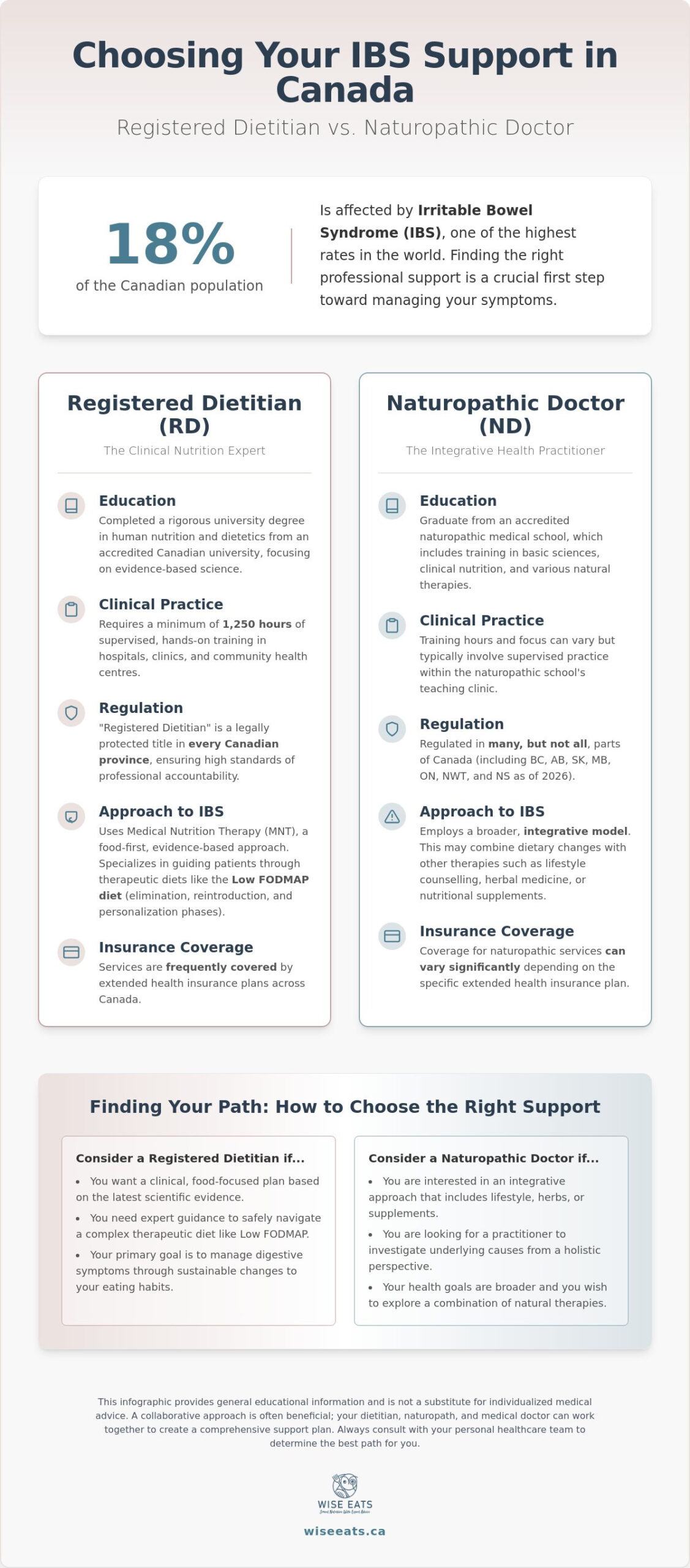
In Canada, the titles these professionals use carry specific legal weight. “Registered Dietitian” is a protected title in every province. You can trust they have met rigorous university standards and completed over 1,250 hours of supervised clinical training. Naturopathic Doctors are also regulated in many parts of the country. As of 2026, this includes British Columbia, Alberta, Saskatchewan, Manitoba, Ontario, the Northwest Territories, and Nova Scotia. While both groups are held accountable by regulatory colleges, their training backgrounds heavily influence their treatment approach. Dietitians focus deeply on evidence-based medical nutrition therapy. Naturopaths typically use an integrative model that may combine lifestyle changes with supplements or herbal supports. When weighing a dietitian vs naturopath for IBS, it’s helpful to consider which style of support feels most sustainable for you.
The “best” choice really depends on what you need right now. Are you looking for a clinical, food-focused plan to manage symptoms? Or are you interested in a broader range of natural therapies? Understanding these roles helps you build a healthcare team that truly supports your goals. This information is for educational purposes and is not a substitute for professional medical advice. Always consult your own healthcare team for individualized support.
The Role of a Registered Dietitian in Managing IBS
A Registered Dietitian (RD) acts as your clinical expert in food and nutrition science. In Canada, this title represents a high standard of professional accountability. To earn it, one must complete a rigorous university degree followed by at least 1,250 hours of supervised clinical practice in hospitals and community settings. This background allows RDs to provide Medical Nutrition Therapy (MNT). MNT is a structured, evidence-based approach used to manage health conditions like IBS through food. When you look at the choice between a dietitian vs naturopath for IBS, the RD’s role is specifically centered on translating complex nutritional science into sustainable, everyday eating habits.
Expertise in Therapeutic Diets and FODMAPs
One of the most effective tools for symptom relief is the dietary management of IBS, particularly the Low FODMAP diet. RDs are trained to guide you through the three vital phases: elimination, reintroduction, and personalization. It’s common for people to try this on their own and feel frustrated when they don’t see results. An RD helps you identify specific triggers without causing unnecessary restriction. We focus on maintaining nutritional adequacy so you don’t miss out on essential vitamins and minerals during the process. This clinical guidance can help you find the widest variety of foods that your body can tolerate comfortably.
A Compassionate, Non-Judgmental Approach
Beyond the science of food, many Canadian RDs adopt a compassionate, weight-neutral approach. We recognize that living with unpredictable bowel habits can create significant anxiety around eating. It’s easy to fall into the trap of “good” and “bad” foods, but this often leads to more stress. Understanding why diets fail long term helps us build a plan that focuses on your well-being rather than just a number on a scale. We work to help you repair your relationship with food while managing your physical symptoms. This personalized support is often the key difference when comparing a dietitian vs naturopath for IBS for long-term success. If you’re ready to explore how a personalized plan can support your gut health, you can reach out to us to start a conversation.
This information is for educational purposes and is not a substitute for professional medical advice. Please consult your own healthcare team for individualized support and to ensure any dietary changes are safe for your specific needs.
Understanding the Naturopathic Approach to Gut Health
Naturopathic Doctors (NDs) provide an integrative perspective that many Canadians find helpful when managing chronic digestive issues. If you are comparing a dietitian vs naturopath for IBS, it’s useful to know that NDs in Canada complete a four-year post-graduate program at an accredited naturopathic medical college. Their philosophy often centres on identifying the root cause of symptoms by looking at the “whole person.” This means they don’t just look at what’s on your plate. They might explore how your stress levels, sleep quality, and even hormonal balance could be influencing your digestion. What does this look like in practice? It often involves a longer initial consultation to map out your entire health history.
In several provinces, including British Columbia, Alberta, and Ontario, NDs are regulated health professionals. In BC, the Health Professions and Occupations Act recently updated how these roles are overseen to prioritize your safety. Because their scope can include ordering diagnostic tests or prescribing certain treatments, they offer a different set of tools than a dietitian. This “wide lens” approach is designed to create a comprehensive picture of your health. Does your stress level peak right before your symptoms flare? An ND might look at that connection closely. This information is for educational purposes and is not a substitute for professional medical advice. Always consult your own healthcare team before starting new treatments.
Integrative Modalities and IBS
NDs often use a variety of tools to support gut health. You might discuss herbal antimicrobials, specific probiotic strains, or lifestyle interventions like acupuncture. These modalities are frequently used alongside dietary shifts to provide a multi-layered approach. When exploring these options, ask about the quality of evidence supporting each suggestion. Some natural health products have strong research behind them. Others might be based on emerging studies that aren’t yet definitive. A knowledgeable partner will always be transparent about what the current science says.
The Focus on Supplementation
A significant part of the naturopathic model involves personalized vitamin and mineral strategies. This can be particularly relevant if your IBS symptoms have led you to avoid certain food groups, potentially creating nutrient gaps. Checking professional supplement reviews can help you understand which products are high-quality and safe. A key part of your journey is transparency. Always tell your entire healthcare team, including your doctor and dietitian, about any supplements you take. This prevents potential interactions and ensures everyone is working toward the same goal for your well-being.
Key Differences: Training, Regulation, and Insurance
Choosing a professional to guide your gut health often comes down to the details of their training. When you compare a dietitian vs naturopath for IBS, the primary difference lies in the depth of nutrition-specific education. Registered Dietitians spend their entire academic and clinical career, usually five to six years, studying food science and medical nutrition therapy. In contrast, Naturopathic Doctors are trained as primary care providers with a broader focus. While they certainly study nutrition, it is one part of a larger curriculum that includes botanical medicine and lifestyle counselling. This means an RD often has significantly more clinical hours dedicated solely to therapeutic diets and food-based interventions.
In Canada, regulation acts as a safety net. It ensures that the person you’re trusting with your health is held to high standards. Every province in Canada regulates Registered Dietitians. For Naturopathic Doctors, regulation varies by region. As of May 2026, NDs are regulated in British Columbia, Alberta, Saskatchewan, Manitoba, Ontario, the Northwest Territories, and Nova Scotia. These regulatory bodies provide a clear path for accountability. This is essential when you’re navigating something as personal as your digestive health. It gives you the peace of mind that your provider is following established safety protocols.
Regulatory Standards and Public Safety
Provincial colleges exist to protect you. They ensure that RDs follow a strict code of ethics and stay up to date with the latest evidence-based practices. This oversight is why the title “Registered Dietitian” is protected by law. It is quite different from unregulated titles that anyone can use. You can learn more about these distinctions in our guide on the dietitian vs nutritionist in Canada. Choosing a regulated professional means you have a steady hand guiding you through the often-confusing world of health information. It replaces uncertainty with a sense of clarity and professional support.
Insurance and Accessibility in Canada
Practicality matters when you’re seeking long-term support. Most extended health benefit plans in Canada, such as those from Sun Life, Manulife, or Canada Life, provide coverage for Registered Dietitians. Naturopathic services are also frequently covered under their own specific category. While these services are not currently part of provincial health plans, having private coverage can make professional support much more accessible. We always recommend checking your specific policy to see how much coverage you have for “Registered Dietitian” services specifically. This helps you plan your journey without any financial surprises. If you have questions about how our services might fit into your health plan, please reach out to us. We are here to help you find the clearest path to relief.
This information is for educational purposes and is not a substitute for professional medical advice. Always consult your own healthcare team for individualized support and to ensure any new approach is right for your specific health history.
Finding Your Path: How to Choose the Right Support
Deciding between a dietitian vs naturopath for IBS often comes down to the primary tools you want to use for your recovery. If you are looking for a clinical, food-focused plan to manage your symptoms, a Registered Dietitian offers the specialized training needed to navigate therapeutic diets safely. If your interest lies in combining lifestyle shifts with herbal supports, a Naturopathic Doctor can be an excellent partner. Many Canadians find the greatest relief by using a collaborative approach where all providers communicate with their GP. This ensures that the Wise Eats approach to digestive health is integrated into your broader medical care.
When to Seek Help: Red Flags and Medical Safety
While nutrition education is a powerful tool, it’s not a substitute for an individualized medical assessment. Before starting any new protocol, it’s essential to rule out other medical conditions with your primary healthcare provider. Please consult your doctor immediately if you experience “red flag” symptoms such as blood in your stool, unexplained weight loss, or symptoms that wake you up at night. Empower yourself by asking any professional about their specific experience with IBS and their commitment to evidence-based practice. A knowledgeable guide will always prioritize your safety first.
The Wise Eats Registered Dietitians Perspective
Our team provides evidence-informed, personalized nutrition counselling that respects your unique needs and preferences. We focus on custom meal planning and managing medical conditions with food through a non-judgmental, weight-neutral lens. We know that navigating gut health can be overwhelming; we are here to act as your steady hand through the process. Whether you are looking for help with the Low FODMAP diet or simply want to understand your triggers better, we offer practical steps that fit your lifestyle. If you’re ready to start your journey toward better digestive health, you can visit our contact page to book a discovery call.
This article is for educational purposes and is not a substitute for professional medical advice. Always consult your own healthcare team for individualized support and to ensure any changes are safe for your specific health history.
Reclaiming Your Digestive Health
Finding the right balance between a dietitian vs naturopath for IBS is a personal decision that depends on whether you seek clinical food science or an integrative approach. By understanding the differences in training and regulation across Canada, you can choose the professional who best aligns with your goals. The ultimate aim is to move away from the frustration of chronic symptoms and toward a life where food feels like nourishment again.
Our team of licensed Registered Dietitians across Canada provides evidence-based Medical Nutrition Therapy with a compassionate, weight-neutral focus. This information is for educational purposes and is not a substitute for professional medical advice; please consult your own healthcare team for individualized support. We are here to act as your knowledgeable partner in navigating these choices and providing steady guidance during times of change.
Ready to take the next step toward relief? Book a consultation with Wise Eats Registered Dietitians to start your gut health journey today. Let’s work together to find a sustainable path forward that prioritizes your peace of mind.
Frequently Asked Questions
This information is for educational purposes and is not a substitute for professional medical advice. Please consult your own healthcare team for individualized support and to ensure any new approach is right for your specific health history.
Do I need a referral to see a dietitian or naturopath for IBS in Canada?
You don’t need a doctor’s referral to book an appointment with a private practice Registered Dietitian or a Naturopathic Doctor in most provinces. You can reach out directly to book a session. However, some insurance providers might require a doctor’s note for you to be reimbursed. It’s a good idea to check your specific benefits package before your first visit.
Is a dietitian or a naturopath better for the Low FODMAP diet?
Registered Dietitians are the clinical experts in therapeutic diets like the Low FODMAP approach. When weighing a dietitian vs naturopath for IBS, remember that RDs complete over 1,250 hours of supervised clinical practice. This training focus is specifically on managing medical conditions through food. They can help you navigate the elimination and reintroduction phases without compromising your nutritional health.
Are dietitian services covered by OHIP or other provincial health plans?
Most provincial health plans, like OHIP in Ontario or MSP in British Columbia, do not cover private dietitian services. However, these services are frequently covered by extended health insurance plans provided through employers. Many Canadians find that their benefits package includes a specific amount for “Registered Dietitian” or “Nutrition” services. Check with your insurance provider to see your annual limit.
Can a naturopath order the same blood tests as a dietitian or a GP?
Naturopathic Doctors in provinces like British Columbia and Ontario have the authority to order many diagnostic tests, though these are typically paid for out-of-pocket. Registered Dietitians focus on interpreting existing laboratory results and medical history to create a nutrition plan. Neither professional replaces your GP, who orders tests covered by provincial health insurance. Keep your entire medical team informed of any tests you receive.
How many sessions are typically needed to see improvement in IBS symptoms?
Many people start to notice a shift in their symptoms within three to six sessions spread over several months. Managing IBS is a journey that involves identifying triggers and finding a sustainable way of eating. Your first few visits often focus on assessment and the initial elimination phase. Later sessions help with reintroducing foods and fine-tuning your long-term plan. Everyone’s body responds differently.
What is the difference in cost between a dietitian and a naturopath in Canada?
Naturopathic Doctors often have higher initial consultation fees compared to Registered Dietitians. This is partly due to the length of their first assessments, which can last over an hour. Follow-up sessions for both professionals are usually shorter and more affordable. Since fees aren’t standardized across the country, it’s best to ask about the current rates when you call to book your first appointment.
Can I see both a dietitian and a naturopath at the same time?
You can certainly see both professionals at the same time to get a well-rounded support system. A Registered Dietitian can focus on your clinical nutrition and meal planning, while a Naturopathic Doctor might address stress management or other lifestyle factors. This collaborative approach ensures all aspects of your health are supported. Just make sure to tell both providers about any recommendations the other has suggested.
How do I know if my dietitian or naturopath is properly licensed?
You can verify a professional’s license by checking the online registry of their provincial regulatory college. For example, in British Columbia, you would check the College of Dietitians of BC or the College of Naturopathic Physicians of BC. These colleges exist to protect the public by ensuring every member meets strict education and safety standards. If a provider isn’t listed, they may not be properly licensed to practice in that province.
Article by
Rachel McBryan, Dietitian
Rachel McBryan is a licenced Dietitian in British Columbia offering comprehensive nutrition counselling as virtual and/or in-person counselling sessions to suit your needs and preferences. With a Bachelor of Science in Nutrition and Food Science, Rachel has over 20 years experience helping people address their health through nutrition. She was awarded Human Nutrition and Food Science BSc.from University of Alberta followed by post-grad course work at UBC in guidance counselling.
An eating disorder is a serious mental health illness.
If you are in immediate distress or crisis, please contact emergency services by dialing 911 or calling Vancouver Island Crisis Line: 1-888-494-3888. This article is educational information only, not professional diagnosis or treatment. Content is AI generated and may not be reviewed for accuracy.