

An eating disorder is a serious mental health illness.
If you are in immediate distress or crisis, please contact emergency services by dialling 911 or calling Vancouver Island Crisis Line: 1-888-494-3888. A dietitian, psychologist, psychiatrist, and medical team work together to support eating disorder recovery. This article provides educational information only, not professional diagnosis or treatment. Content is AI generated and may not be reviewed for accuracy.
Have you ever decided to improve your diet by adding more fruits, vegetables, and whole grains, only to be met with uncomfortable gas and bloating? If so, you’re not alone. It’s a frustrating experience that can make you feel like your body is betraying you for trying to do something healthy. You might even start to believe that high-fibre foods just aren’t for you.
We want to reassure you: this is a common and often temporary reaction. Your digestive system is an incredible, adaptable ecosystem, but it doesn’t always appreciate sudden changes. The good news is that you can absolutely increase your fibre intake and enjoy all its benefits—like improved energy, more regular bowel movements, and a happier gut—without the discomfort. It’s not about restriction or avoiding foods; it’s about introduction.
This guide will walk you through the ‘Low and Slow’ method, an evidence-based, gentle approach to increasing fibre. We’ll explore why gas happens, how to choose gut-friendly fibre sources, and how smart preparation can make all the difference. Your journey to digestive comfort starts here.
Table of Contents
Why Does Increasing Fibre Sometimes Lead to Gas and Bloating?
Before we dive into the ‘how,’ it’s helpful to understand the ‘why.’ Realising that gas is a normal part of digestion—not a sign that you’ve done something wrong—can be a powerful first step. When you eat fibre, you’re not just feeding yourself; you’re feeding the trillions of beneficial bacteria living in your gut.
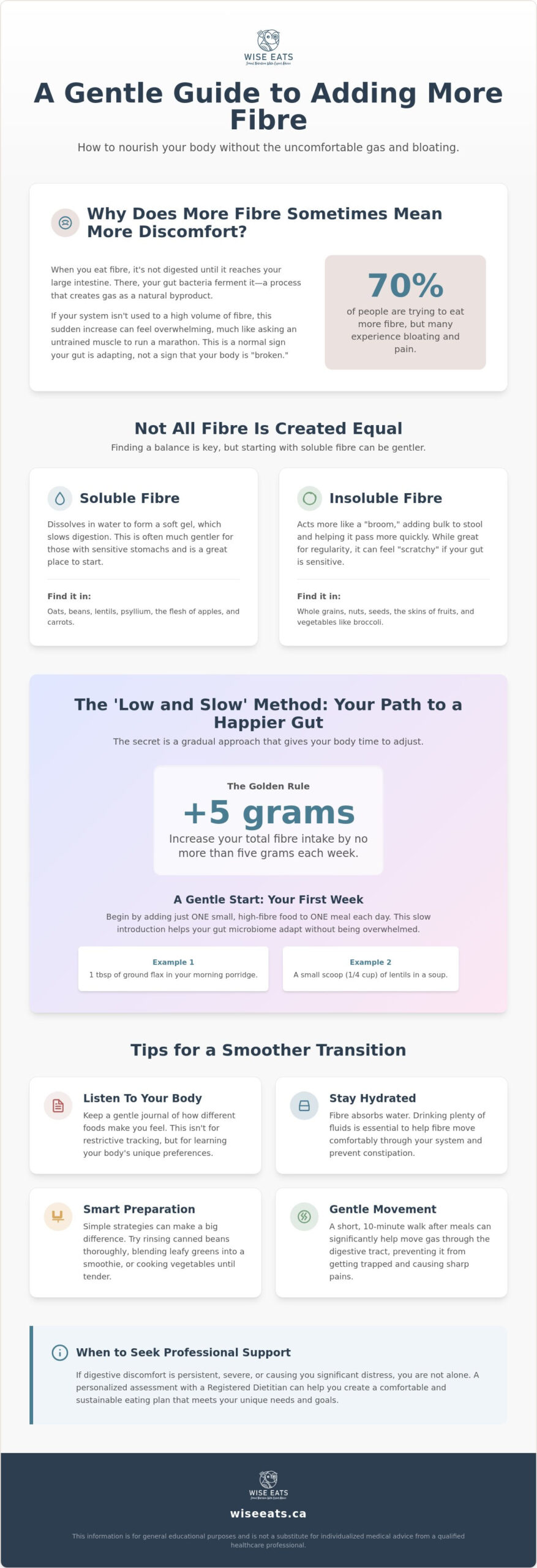
- Gas is a natural byproduct. Think of your gut bacteria as tiny chefs. When you send down fibre (their favourite ingredient), they ferment it. This fermentation process creates beneficial compounds called short-chain fatty acids (SCFAs) that nourish your gut lining, but it also releases gases like hydrogen, methane, and carbon dioxide. A little gas is a sign of a well-fed, functioning gut microbiome.
- There are different types of fibre. Fibre is broadly categorized into two types: soluble and insoluble. Soluble fibre dissolves in water to form a gel-like substance (think of oatmeal), which can slow digestion and help you feel full. Insoluble fibre, or ‘roughage,’ adds bulk to stool and helps things move along (think of vegetable skins). Both are important, but they affect your gut differently.
- A sudden increase can be overwhelming. If your gut is used to a lower-fibre diet, it may not have enough of the specific bacteria needed to efficiently break down a large influx of new fibre. This can lead to a temporary traffic jam, resulting in more fermentation and more gas than usual.
- For those in eating disorder recovery, this adjustment period is especially common. The digestive system may need extra time to heal and adapt. It’s important to approach this process with self-compassion, and it’s something we see often in our work with clients navigating the connection between IBS and disordered eating.
The Role of the Gut Microbiome
Imagine your gut microbiome as an ‘inner garden.’ A diverse garden with many different plants is more resilient and vibrant. Similarly, a gut with a wide variety of beneficial bacteria is better equipped to handle different foods and support your overall health. Different types of fibre feed different types of bacteria.
- Your inner garden needs time to adapt. When you introduce a new high-fibre food, you’re essentially planting a new seed. The specific bacteria that thrive on that fibre need time to multiply. This ‘population boom’ is a good thing for long-term gut health, but it can temporarily increase gas production.
- Fermentation is a sign of a working system. While it might feel uncomfortable, the fermentation that causes gas is the very process that creates those health-promoting SCFAs. The goal isn’t to stop fermentation but to help your body adapt to it so it happens more comfortably.
- Distinguishing normal adjustment from a problem. Mild to moderate gas and bloating that lessens as your body adjusts over a few weeks is typically normal. However, if your symptoms are severe, accompanied by sharp pain, or don’t improve, it’s a good idea to speak with a healthcare provider or a Registered Dietitian to rule out underlying issues.
Soluble vs. Insoluble Fibre: Finding the Balance
Understanding the two main types of fibre can help you make strategic choices as you begin to increase your intake. Most plant foods contain a mix of both, but some are richer in one type than the other.
- Soluble fibre is often gentler. Found in oats, barley, psyllium, beans, apples, and citrus fruits, soluble fibre forms a soothing gel in your digestive tract. This can be particularly helpful for those with sensitive stomachs or diarrhea, as it helps to slow transit time.
- Insoluble fibre acts like a ‘broom.’ Found in whole grains, nuts, and the skins of many fruits and vegetables like cauliflower and potatoes, insoluble fibre doesn’t dissolve. It adds bulk to stool, which can promote regularity. For some, a sudden increase in this ‘roughage’ can feel a bit ‘scratchy’ or irritating.
- A mix is key for long-term health. While you might start by emphasizing gentler, soluble fibres, the ultimate goal is a diet rich in both. The combination of soluble and insoluble fibre supports a diverse microbiome, promotes regular bowel movements, and contributes to overall digestive wellness.
The ‘Low and Slow’ Approach: How to Increase Fibre Intake Comfortably
The single most important principle for increasing fibre without gas is to do it gradually. The ‘Low and Slow’ method gives your gut microbiome and digestive enzymes the time they need to adapt, minimizing discomfort along the way. Think of it as training for a marathon; you wouldn’t run 42 kilometres on your first day.
- The Golden Rule: Aim to add no more than 5 grams of fibre per week. This might seem slow, but it’s the key to a comfortable transition. For context, a small apple or two tablespoons of chia seeds each contain about 4-5 grams of fibre.
- Hydration is Non-Negotiable: Fibre works like a sponge, absorbing water to create soft, bulky stool that’s easy to pass. Without enough fluid, increasing fibre can backfire and lead to constipation. Make sure you’re drinking plenty of water throughout the day.
- Monitor with Curiosity, Not Judgment: Consider keeping a simple journal. Note the new foods you try and how you feel, but resist the urge to turn it into a restrictive tracking app. The goal is to gather information with curiosity—”I noticed I felt a bit gassy after the black beans, but fine after the lentils”—not to label foods as ‘good’ or ‘bad.’
- Gentle Movement Helps: A short, 10-15 minute walk after meals can do wonders. Movement helps stimulate peristalsis, the muscular contractions that move food and gas through your digestive tract, which can help relieve feelings of bloating.
Step 1: Start with Small Portions
The journey begins with a single step—or in this case, a single spoonful. Instead of overhauling your entire diet overnight, focus on making one small addition at a time.
- Add one new high-fibre food to one meal. For the first week, you might add one tablespoon of ground flaxseed to your morning yogurt or a quarter-cup of cooked carrots to your dinner. Stick with that for a few days to a week and see how your body responds before adding something else.
- Embrace gentle nutrition. True gentle nutrition is about adding nourishment to your plate, not taking things away. This approach focuses on inclusion and abundance, which can help foster a more positive and sustainable relationship with food.
- Cook your vegetables first. The heat from cooking starts to break down some of the fibre and cellular structure in vegetables, making them easier for your body to digest than their raw counterparts. Steamed zucchini or roasted sweet potato are often better tolerated initially than a large raw salad.
Step 2: Prioritise Hydration
Water is fibre’s essential partner. Without adequate fluids, fibre can’t do its job properly. Increasing your fluid intake as you increase your fibre intake is crucial for digestive comfort.
- Sip consistently throughout the day. Chugging a large bottle of water at once isn’t as effective as steady sips. Your body can only absorb so much fluid at a time. Keeping a water bottle on your desk or setting reminders can help you build a consistent habit.
- Fluids help soluble fibre work its magic. Remember that helpful ‘gel’ that soluble fibre creates? It can’t happen without water. This gel-like consistency is what helps soften stool and move it smoothly through your system. Proper hydration is a cornerstone of overall nutrition for digestive health.
- Other fluids count, too. While water is the best choice, herbal teas, broths, and even hydrating foods like cucumber, celery, and melon can contribute to your daily fluid needs.
Choosing ‘Gentle’ Fibre Sources and Smart Preparation Strategies
Not all high-fibre foods are created equal when it comes to their potential for causing gas. Furthermore, how you prepare a food can dramatically change how your body tolerates it. These strategies can help you enjoy a wider variety of foods with greater comfort.
- Rinse and soak beans and lentils. Canned beans and lentils are often packed in a liquid containing oligosaccharides—complex sugars that are notorious for causing gas. Rinsing them thoroughly under running water can wash a significant amount of these away. If using dry beans, soaking them overnight and discarding the soaking water before cooking has the same effect.
- Use mechanical breakdown. Blending, mashing, and pureeing are forms of ‘pre-digestion.’ They do some of the physical work for your gut. Blending spinach into a smoothie or mashing chickpeas into hummus breaks down the tough cell walls, making the fibre more accessible and easier to digest.
- Peel your fruits and vegetables. The skins of foods like apples, cucumbers, and potatoes are a great source of insoluble fibre. However, this ‘roughage’ can be irritating if your gut is sensitive. Peeling them initially can reduce the fibre load, and you can try reintroducing them later as your tolerance improves.
- Opt for ‘gentler’ grains. While whole wheat bread is a fantastic source of fibre, it can feel heavy for some. Starting with sourdough bread (the fermentation process may make it easier to digest) or even white rice can be a good starting point. You can then gradually introduce heartier whole grains.
Cooking Methods for Easier Digestion
The way you cook your food can be just as important as the food itself. Heat alters the structure of fibre, making it less challenging for your digestive system.
- Steaming, roasting, and puréeing are your friends. These methods are generally better tolerated than eating vegetables raw. A raw broccoli floret in a salad is much tougher on the gut than a steamed or roasted floret. Soups and purées are excellent options as the vegetables are fully cooked and broken down.
- Incorporate fermented foods. Foods like kefir, plain yogurt, kimchi, and tempeh contain probiotics—beneficial bacteria that can support your existing gut microbiome. Including these foods in your diet can help create a more robust and resilient digestive environment.
- Use soothing spices and teas. Certain herbs have been traditionally used to soothe the gut. Adding ginger to a stir-fry or sipping on peppermint or fennel tea after a higher-fibre meal may help calm your digestive system and relieve gas.
High-Fibre Foods That Are Often Easier on the Gut
As you begin your journey, you may find it helpful to focus on foods that are generally well-tolerated. Remember, individual tolerance varies, but these are great places to start:
- Gentle Cooked Vegetables: Carrots, zucchini (peeled), green beans, spinach (cooked), and sweet potatoes (without skin).
- Gentle Fruits: Bananas, papaya, cantaloupe, and berries like raspberries (which offer a lot of fibre in a small, soft package).
- Other Gentle Sources: Oats, ground flaxseed, chia seeds (well-soaked), and smooth nut butters.
- A custom meal plan from a dietitian can be an invaluable tool, helping you identify your personal tolerance levels and build a varied, comfortable diet without the guesswork.
Beyond the Plate: When to Seek Professional Support
While the ‘Low and Slow’ approach is effective for most people, sometimes digestive discomfort can be a sign of an underlying issue. It’s important to know when to seek professional guidance. You don’t have to navigate this journey alone, and support is available.
- Understanding the ‘Red Flags’: It’s time to consult a doctor or dietitian if your bloating and gas are severe or accompanied by other symptoms, such as sharp or persistent abdominal pain, unintentional weight changes, changes in bowel habits (like ongoing diarrhea or constipation), fever, or blood in your stool.
- The Benefit of a Registered Dietitian: A Registered Dietitian can provide a personalized assessment of your diet, health history, and symptoms. They can help you create a tailored fibre-introduction plan, identify potential trigger foods without unnecessary restriction, and ensure your nutritional needs are being met.
- Bridging the Gap with Supplements: While your dietary intake is being adjusted, you may have concerns about meeting your nutrient needs. A service like VitaminLab allows for the creation of personalized supplements, which can help bridge any gaps with targeted, high-quality ingredients, avoiding the fillers often found in off-the-shelf products.
- You Are Not Alone: Feeling frustrated by digestive issues is valid. Working with a compassionate professional can provide clarity, validation, and a clear path forward, empowering you to build a better relationship with food and your body.
Mindful Eating for Better Digestion
How you eat can be as impactful as what you eat. Digestion doesn’t start in the stomach; it starts in the brain. Creating a calm environment for your meals can significantly improve your digestive process.
- Chew thoroughly. This is perhaps the simplest yet most overlooked tip. Your saliva contains enzymes that begin breaking down food. Chewing each bite until it’s nearly a liquid consistency reduces the amount of work your stomach has to do and minimizes the amount of air you swallow, which can reduce bloating.
–Activate your ‘rest and digest’ system. Your body can’t digest food efficiently when it’s in a state of stress (the ‘fight or flight’ response). Taking a few moments to relax before eating signals your parasympathetic nervous system—the ‘rest and digest’ system—to take over, increasing blood flow to your gut and optimizing digestion.
–Try a simple breathing exercise. Before your first bite, take three slow, deep breaths. Inhale through your nose for a count of four, hold gently for a moment, and exhale slowly through your mouth for a count of six. This simple act can shift your body into a more relaxed, digestion-ready state.
Personalised Supplementation with VitaminLab
While a food-first approach is always the priority, personalized supplementation can be a powerful ally on your journey to digestive comfort, especially in the beginning.
- Tailored to your unique needs. Working with a dietitian, you can create a bespoke VitaminLab formula that may include supportive ingredients like specific probiotic strains or digestive enzymes that are chosen based on your individual symptoms and needs.
- Avoiding unnecessary fillers. Many standard multivitamins contain binders, fillers, or forms of minerals (like magnesium oxide) that can actually increase gas and bloating in sensitive individuals. A personalized formula contains only the ingredients you need, in their most absorbable forms.
- Coordinated professional care. At Wise Eats, we can help coordinate your VitaminLab formula based on your clinical assessment, ensuring your supplement strategy is fully aligned with your dietary plan for a truly integrated approach to your health.
Increasing your fibre intake is a fantastic goal for your long-term health. By adopting a ‘Low and Slow’ mindset, listening to your body with compassion, and using smart preparation strategies, you can build a diverse, fibre-rich diet that nourishes your gut without the uncomfortable side effects. If you feel stuck or overwhelmed, our team of Canadian Registered Dietitians is here to help you create a gentle, personalized plan for digestive comfort.
Ready to find digestive peace and expand your diet with confidence? Book a consultation with a Wise Eats Registered Dietitian today to create your gentle fibre plan.
This content is for general educational purposes and is not a substitute for individualized medical advice. Always consult with a qualified healthcare professional before making changes to your diet or lifestyle.

Article by
Rachel McBryan, Dietitian
Rachel McBryan is a licensed Dietitian in British Columbia offering comprehensive nutrition counselling as virtual and/or in-person counselling sessions to suit your needs and preferences. With a Bachelor of Science in Nutrition and Food Science, Rachel has over 20 years' experience helping people address their health through nutrition. She was awarded a Human Nutrition and Food Science BSc. from the University of Alberta, followed by post-grad coursework at UBC in guidance counselling.