

An eating disorder is a serious mental health illness.
If you are in immediate distress or crisis, please contact emergency services by dialling 911 or calling Vancouver Island Crisis Line: 1-888-494-3888. This article is educational information only, not professional diagnosis or treatment. Eating disorders require professional care. If you or someone you know is experiencing: Severe food restriction or malnutrition Uncontrollable binge eating or purging Significant physical symptoms (dizziness, fainting, irregular heartbeat, severe pain) Thoughts of self-harm or suicide related to eating or body image Please seek immediate professional help. Contact your physician, local emergency services, or a mental health crisis line. A registered dietitian, psychologist, psychiatrist, and medical team work together to support eating disorder recovery.
What if your next vacation was defined by the sights you saw rather than the location of the nearest restroom? For many Canadians, the excitement of booking a flight is often shadowed by the anxiety of managing digestive issues while traveling. You might worry about finding comfortable foods in a new city or feel the physical frustration of your body’s rhythm shifting the moment you leave home. It’s understandable to feel overwhelmed when your gut doesn’t seem to cooperate with your itinerary.
We’re here to share that physical comfort and food flexibility are possible, even when you’re far from your own kitchen. This article provides a compassionate, evidence-informed checklist designed to help you reclaim your sense of adventure. You’ll discover practical strategies for transit, tips for confident dining out, and a clear plan to support your gut health without falling into the trap of restrictive dieting. Let’s shift the focus from fear to how you can feel supported and nourished on your journey.
Key Takeaways
- Learn how to organize a travel support kit and research local grocery options to build confidence before your journey begins.
- Discover how gentle movement and understanding physiological changes can assist in managing digestive issues while traveling during long transit days.
- Practice food flexibility by pairing new local flavours with familiar “anchor foods” to maintain digestive comfort without feeling restricted.
- Gain insight into the gut-brain connection and how addressing travel-related anxiety can physically soothe your digestive system.
- Recognize the value of a personalized roadmap, like a custom meal plan, to navigate your unique health needs while exploring the world.
Pre-Trip Planning: Setting the Stage for Digestive Comfort
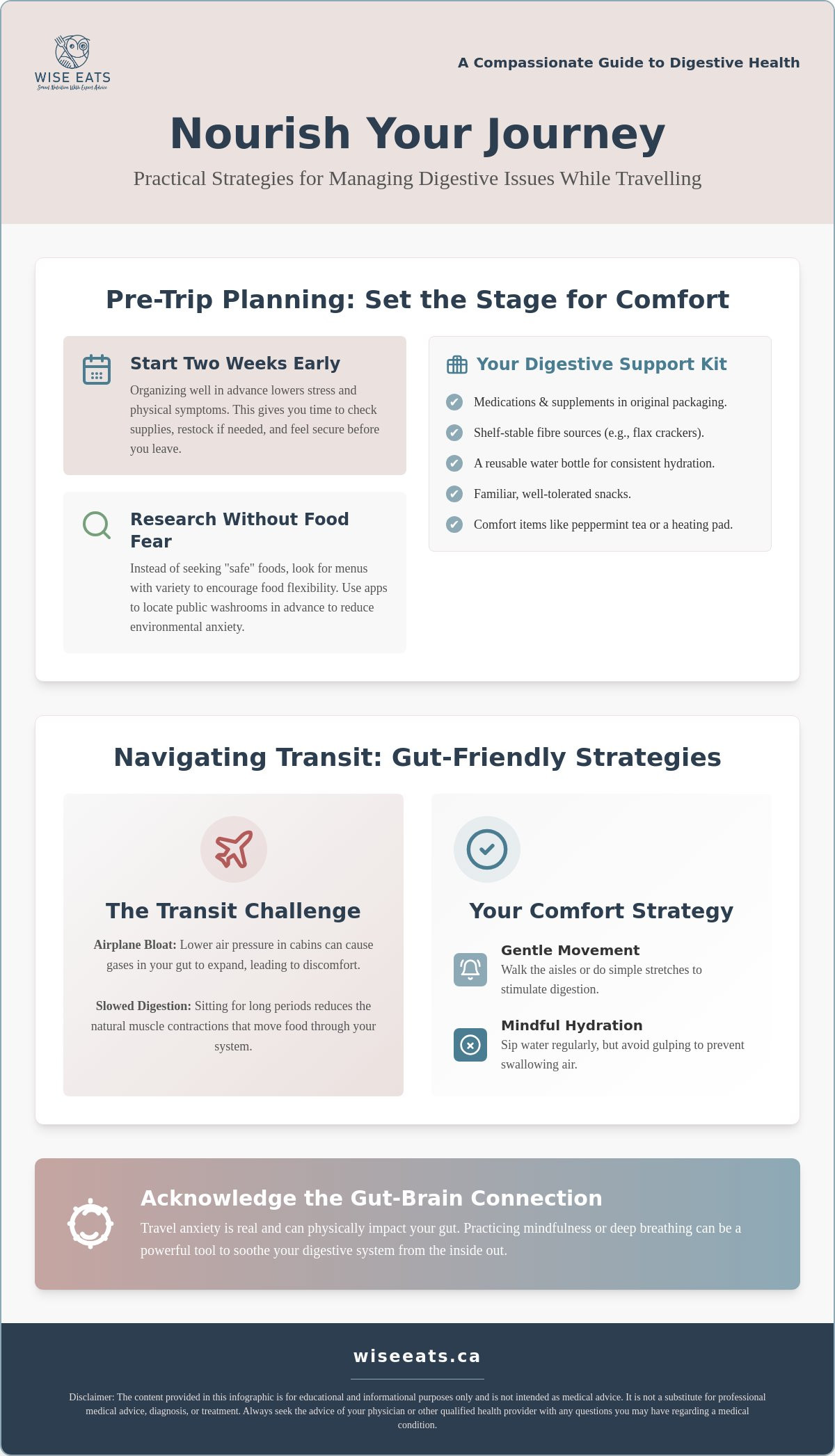
Planning a trip is an exciting milestone, but for many of us, it starts with a mental map of every pharmacy and restroom along the route. Preparing for your journey about two weeks before you leave can significantly lower your stress levels and your physical symptoms. Organizing your support kit early means you aren’t scrambling at the last minute, which is key for managing digestive issues while traveling. This proactive window allows you to check expiry dates on over the counter aids and ensure you have enough of your usual supplies to feel secure. It also gives you time to restock items that provide you with a sense of safety and predictability.
To better understand this concept, watch this helpful video:
A professional supplement review is another valuable step in your preparation. Working with a Registered Dietitian can help you determine if specific supports, such as Saccharomyces boulardii, might be beneficial for your specific needs. Since Health Canada recently approved new probiotic ingredients like Mycohsa in May 2026, there are more evidence-based options than ever to support your gut. These multi-kingdom blends are designed to address biofilms, which can be a factor for some individuals. If you use bespoke supplements through VitaminLab, remember to check their current shipping times to ensure your order arrives before you head to the airport. Taking these steps helps mitigate the risk of Traveler’s diarrhea and provides a sense of agency over your physical well-being.
Researching Your Destination Without Food Fear
Instead of searching for “safe” or “clean” restaurants, look for menus that offer a wide variety of choices. This encourages food flexibility and helps you focus on what you can enjoy rather than what you feel you must avoid. You might want to look for nutritious Canadian-made foods that you already enjoy at home to see if they are available at your destination. This can provide a sense of familiarity when you are far from your own kitchen. Additionally, using apps to locate public washrooms in advance can significantly reduce environmental anxiety. Knowing where facilities are located allows you to explore city centres with a clearer mind and less physical tension.
Packing Your Digestive Support Essentials
Your “comfort kit” should be a sanctuary for your gut. Pack items like a portable heating pad or your favourite peppermint tea to help you unwind at the end of a long day of exploring. Logistics also require a quick check; Health Canada regulations allow you to bring a 90-day supply of prescription medication for personal use. Just make sure everything stays in its original pharmacy packaging with the labels intact. If you are carrying controlled substances, remember the 30-day limit or single course of treatment rule. Having a clear plan for your carry-on is another essential part of managing digestive issues while traveling. Prioritize the following items:
- Personalized supplements and essential medications for easy access during flights or long drives.
- Shelf-stable fibre sources, like flax crackers or specific bars, that your body already tolerates well.
- A reusable water bottle to maintain consistent hydration, which is vital for nutrition for digestion problems.
- Familiar snacks from a local grocery store near your accommodation to bridge the gap between meals.
Navigating Transit: Keeping Your Gut Happy on the Move
Have you ever wondered why your abdomen feels tight or bloated before you’ve even reached your destination? The physical environment of transit, whether you are 30,000 feet in the air or on a cross-country train, has a direct impact on your gut. Lower air pressure in plane cabins can cause gases in the intestines to expand, leading to that familiar “airplane bloat.” Meanwhile, sitting for several hours reduces the natural muscle contractions that move food through your system. Recognizing these factors is the first step in managing digestive issues while traveling with more ease and less self-judgment.
Practising mindful eating during your journey can also make a significant difference. When we eat in a rush or while distracted by the stress of catching a connection, our bodies may stay in a “fight or flight” state, which diverts energy away from digestion. Taking a few deep breaths before you start your meal helps signal to your nervous system that it’s safe to process nourishment. This simple pause can be a game-changer for maintaining physical comfort during long transit days.
Movement and Hydration Strategies
Staying active doesn’t require a gym. Simple movements like ankle circles, seated leg lifts, or gentle torso twists can help stimulate circulation and the vagus nerve, which plays a major role in gut function. If you are on a long-haul flight, try to walk the aisle once an hour when it’s safe to do so. Hydration is equally vital, but the way you hydrate matters. Sipping water consistently throughout your journey is often more effective than gulping large amounts at once, which can sometimes worsen feelings of fullness. Many travellers find that choosing warm beverages, such as ginger or peppermint tea, provides a soothing effect on the digestive tract. Seeking expert advice on digestive health can help you understand how these small habits create a foundation for comfort.
Managing Travel Constipation and Rhythms
It’s quite common for your internal clock to feel out of sync when you cross time zones. This disruption often leads to “travel constipation,” a temporary slowing of bowel movements. To help your body stay on track, try to honour your usual meal and snack times as closely as possible. If your body is used to breakfast at 8:00 AM, providing nourishment at that time, even if it’s a small snack, helps maintain your digestive rhythm. Focus on “gentle nutrition” by incorporating fibre-rich options like fresh fruit, nuts, or seeds when they are available at transit hubs. Most importantly, remember that a temporary shift in your habits is a normal response to the stress of travel. If you’re looking for a roadmap tailored to your specific history, you might find it helpful to connect with a professional for personalized support.
Exploring Local Cuisine with Confidence and Flexibility
One of the most enriching parts of any journey is the chance to taste local flavours and traditions. However, when you’re managing digestive issues while traveling, a new menu can sometimes feel more like a list of risks than a list of delights. It’s common to feel a sense of hesitation when faced with unfamiliar ingredients. What if we shifted that perspective from one of fear to one of curiosity? Approaching a meal with a curious mind allows you to focus on the experience of nourishment rather than the potential for a “flare-up.”
Practising food neutrality is a powerful tool here. This means recognizing that all foods, whether they are a local pastry or a bowl of steamed rice, provide some form of energy, pleasure, or cultural connection. No food is inherently “good” or “bad.” By removing the moral weight from your choices, you can make decisions based on what your body actually needs in the moment. If you’ve been working with a dietitian meal plan, you already have a foundation of understanding how different foods interact with your unique system. You can use that knowledge as a compass rather than a cage.
Decoding Menus and Communicating Needs
Clear communication is your best ally when dining out in a new city. You have every right to ask about preparation methods if you know certain ingredients cause you significant physical discomfort. When speaking with restaurant staff, try using neutral, body-focused language. Instead of saying a certain ingredient is “bad” for you, try saying, “I feel my best when I avoid X,” or “Does this dish contain Y? My body handles it better without.” This keeps the conversation focused on your well-being rather than a rigid set of rules. Look for balanced plates that offer a mix of protein, fats, and fibre to provide sustained energy for your afternoon of sightseeing.
Balancing Novelty with Known Comforts
You don’t have to choose between total avoidance and total abandonment of your usual habits. A helpful strategy is to identify “anchor foods”, which are familiar items like rice, potatoes, or bread that you know your gut handles well. Pair a new, exciting local speciality with one of these anchors to create a sense of digestive stability. This approach allows for food flexibility without overwhelming your system. Remember to listen to your body’s fullness cues; sometimes the discomfort we attribute to a specific food is actually just our body’s response to being over-full. If you need more specific guidance on nutrition for digestion problems, remember that support is available to help you build a personalized strategy for your next trip.
Addressing the Gut-Brain Connection and Travel Stress
Have you ever felt “butterflies” in your stomach before a big trip or noticed that a stressful day at the airport leads to immediate cramping? This isn’t a coincidence. Your brain and your gut are in constant communication via the vagus nerve, acting like a high-speed data cable between your head and your digestive system. When we talk about managing digestive issues while traveling, we have to look beyond just what we eat. We must also consider how our nervous system perceives the environment around us. Travel anxiety can manifest as very real physical symptoms, including urgency, bloating, or discomfort, because your body is reacting to a perceived lack of routine or safety.
Understanding this connection helps remove the shame often associated with digestive flares. Your body isn’t “failing” you; it’s simply responding to a change in its environment. By learning to soothe your nervous system, you can often soothe your gut at the same time. This is a weight-neutral approach that focuses on your internal well-being and physical comfort rather than rigid external rules. Small, intentional shifts in how you manage stress can create a significant ripple effect on your digestive ease throughout your trip.
Nervous System Regulation Techniques
The gut-brain axis is the bidirectional link between the central and enteric nervous systems. To support this link, you can use simple tools to signal safety to your body. Before a meal, try “box breathing” or “belly breathing.” Inhale for four counts, hold for four, exhale for four, and hold again for four. This practice helps shift your body out of a stressed state and into a “rest and digest” mode. If you find yourself feeling overwhelmed in a crowded train station or busy market, grounding exercises like the 5-4-3-2-1 technique can help. Identify five things you see, four you can touch, three you hear, two you smell, and one you can taste. These moments of reconnection with yourself are vital for maintaining digestive rhythm.
Sleep and Digestive Regularity
Sleep is a foundational pillar of digestive health nutrition. When your sleep is disrupted, it can alter the hormones that control how quickly food moves through your system. To protect your gut lining and keep things moving regularly, try to maintain a consistent wake-up time even if you’ve crossed several time zones. Limit your caffeine intake in the afternoon, as it can interfere with deep sleep and potentially irritate a sensitive stomach. Creating a calming bedtime routine without screens can lower cortisol levels, allowing your body the rest it needs to process the day’s nourishment. If you feel that stress is a major barrier to your travel enjoyment, you can book a consultation for personalized support to help build a custom strategy for your next adventure.
Personalized Support for Your Unique Digestive Journey
While checklists provide a solid foundation, your digestive system is as unique as your passport stamps. Generic tips for managing digestive issues while traveling may not always account for your specific health history or the nuances of your relationship with food. Have you ever followed every standard travel suggestion only to find your gut still feels out of sync? This is where personalized support becomes a powerful navigational tool. It shifts the focus from “fixing” a problem to understanding your body’s specific language and needs.
Developing the skills to navigate new environments with ease is a process that often improves with expert guidance. A dietitian meal plan isn’t a set of rigid rules; rather, it acts as a roadmap for nourishment while you are away. It helps you identify which foods provide the most comfort and energy, allowing you to explore with confidence. Similarly, exploring how bespoke supplements can support your unique needs during transitions can offer an extra layer of reassurance. Professional guidance is a vital part of managing digestive issues while traveling, helping you build resilience for every future adventure.
When to Seek Help: Red Flags to Watch For
We want you to feel empowered and hopeful, but it’s also important to recognize when your digestive journey might benefit from a closer look. Reaching out for support can help you find a clearer path forward if you notice any of the following:
- Notice if digestive concerns are causing you to significantly restrict your food intake or avoid social dining altogether.
- Seek support if food-related anxiety is preventing you from enjoying your travel experiences or causing persistent distress.
- Consult a professional if you experience persistent physical symptoms like severe pain or unintended weight changes.
How a Registered Dietitian Can Help
A Registered Dietitian acts as a knowledgeable partner, helping you translate complex clinical data into actionable steps. They can help you build a “food flexibility” toolkit tailored to your favourite destinations, ensuring you don’t miss out on the joy of local cuisine. Often, working with a professional can help you differentiate between a true food sensitivity and a physical stress response from your nervous system. You can learn more about nutrition for digestion problems to prepare for your next trip with a sense of clarity and peace of mind.
Disclaimer: This content is for educational purposes and is not a substitute for individualized medical advice.
Embracing Your Next Adventure with Confidence
Your travel experiences should be defined by the memories you create rather than the physical discomfort you feel. By prioritizing thoughtful planning, understanding your nervous system, and embracing food flexibility, you can foster a sense of ease within your body. Managing digestive issues while traveling is a skill that grows with the right support and a focus on nourishment rather than restriction. You deserve to explore the world with a sense of curiosity and physical comfort.
Our team provides evidence-based digestive health support with a weight-inclusive, non-diet approach. With national coverage across Canada, we are here to help you navigate your unique health history with clarity and hope. If you are ready to move from uncertainty toward a concrete plan for your next trip, we invite you to book a consultation with a Registered Dietitian to build your travel nutrition plan. Let’s work together to ensure your next journey is as comfortable as it is memorable.
Disclaimer: This content is for educational purposes and is not a substitute for individualized medical advice.
Frequently Asked Questions
Is it normal for my digestion to change while I am traveling?
Yes, it is completely normal for your digestive rhythm to shift when you leave home. Your gut is highly sensitive to changes in your daily routine, sleep patterns, and even the different mineral content in local water. These shifts can lead to temporary changes in bowel habits or feelings of fullness. Acknowledging that these fluctuations are a natural response to a new environment can help lower your stress and support your body’s adaptation.
How can I manage bloating after a long flight?
Managing bloating after a flight often involves gentle movement and consistent hydration. Air pressure changes in the cabin can cause intestinal gas to expand, leading to physical discomfort. Once you land, try taking a short walk or performing gentle torso twists to encourage gas to move through your system. Sipping warm peppermint or ginger tea can also provide soothing relief. Remember to drink water steadily to help your body rebalance after the dry cabin air.
Should I take probiotics while I am on vacation?
Whether you should take probiotics depends on your unique health history and destination. Some evidence suggests that specific strains, like Saccharomyces boulardii, may help in preventing certain types of travel-related upset. However, it is best to discuss this with a professional before you depart. If you choose to use them, starting a week before your trip can help your system adjust. Always ensure they are stored correctly, as some varieties require refrigeration.
Can travel anxiety cause IBS flare-ups?
Yes, travel anxiety can certainly trigger digestive symptoms due to the bidirectional communication between your brain and gut. When you feel stressed about flight times or navigating a new city, your body may enter a “fight or flight” state, which can lead to cramping or urgency. Practising grounding techniques or deep breathing can help signal safety to your nervous system. Recognizing this connection is a key part of managing digestive issues while traveling with more compassion for yourself.
What are some gut-friendly snacks I can pack for a road trip?
Packing snacks that your body already tolerates well can provide a sense of digestive security on the road. Consider shelf-stable options like flax crackers, pumpkin seeds, or oranges, which provide gentle fibre and hydration. If you have access to a cooler, Greek yoghurt or pre-cut vegetables with hummus are excellent choices for sustained energy. Bringing these familiar “anchor foods” helps you maintain a sense of nourishment between stops at roadside diners or service centres.
How do I handle food sensitivities when eating at restaurants abroad?
Handling sensitivities abroad starts with clear, neutral communication with restaurant staff. You might find it helpful to carry a “chef card” translated into the local language that lists ingredients you feel best avoiding. Focus on food flexibility by looking for dishes that naturally feature ingredients your body handles well, such as grilled proteins or steamed rice. Remember that you have the right to ask questions about preparation methods to ensure your physical comfort while exploring new flavours.
What should I do if I experience travel constipation?
If you experience travel constipation, prioritizing hydration and gentle movement is often the most effective first step. Try to stick to your usual wake-up and meal times to help your internal clock stay synchronized. Incorporating a source of fibre, such as a piece of fruit or a handful of nuts, can also encourage regularity. If symptoms persist, it can be helpful to discuss gentle, evidence-based options with a healthcare professional to find a strategy that works for you.
How can a dietitian help me prepare for international travel?
A Registered Dietitian can help you create a personalized roadmap for your journey, making managing digestive issues while traveling feel much more approachable. They can provide a tailored supplement review and help you build a toolkit of meal ideas for your specific destination. By focusing on your unique history and needs, a dietitian supports you in finding food flexibility and physical ease. This partnership empowers you to focus on your travels rather than your digestive symptoms.
Disclaimer: This content is for educational purposes and is not a substitute for individualized medical advice.


With a Bachelor of Science in Nutrition and Food Science, Rachel has over 20 years experience helping people address their health through nutrition. She attended the University of Alberta and UBC. She started with chemistry and then focused on Human Nutrition and Food Science. Her career rounded out with guidance counselling post-grad course work at University of British Columbia. She has a teen aged son and 2 cats and loves the beauty of the Oceanside Area of Qualicum, Parksville and Naniamo - yes! the home of the famous Naniamo Bar!