

An eating disorder is a serious mental health illness.
If you are in immediate distress or crisis, please contact emergency services by dialing 911 or calling Vancouver Island Crisis Line: 1-888-494-3888. A dietitian, psychologist, psychiatrist, and medical team work together to support eating disorder recovery. This article is educational information only, not professional diagnosis or treatment. Content is AI generated and may not be reviewed for accuracy.
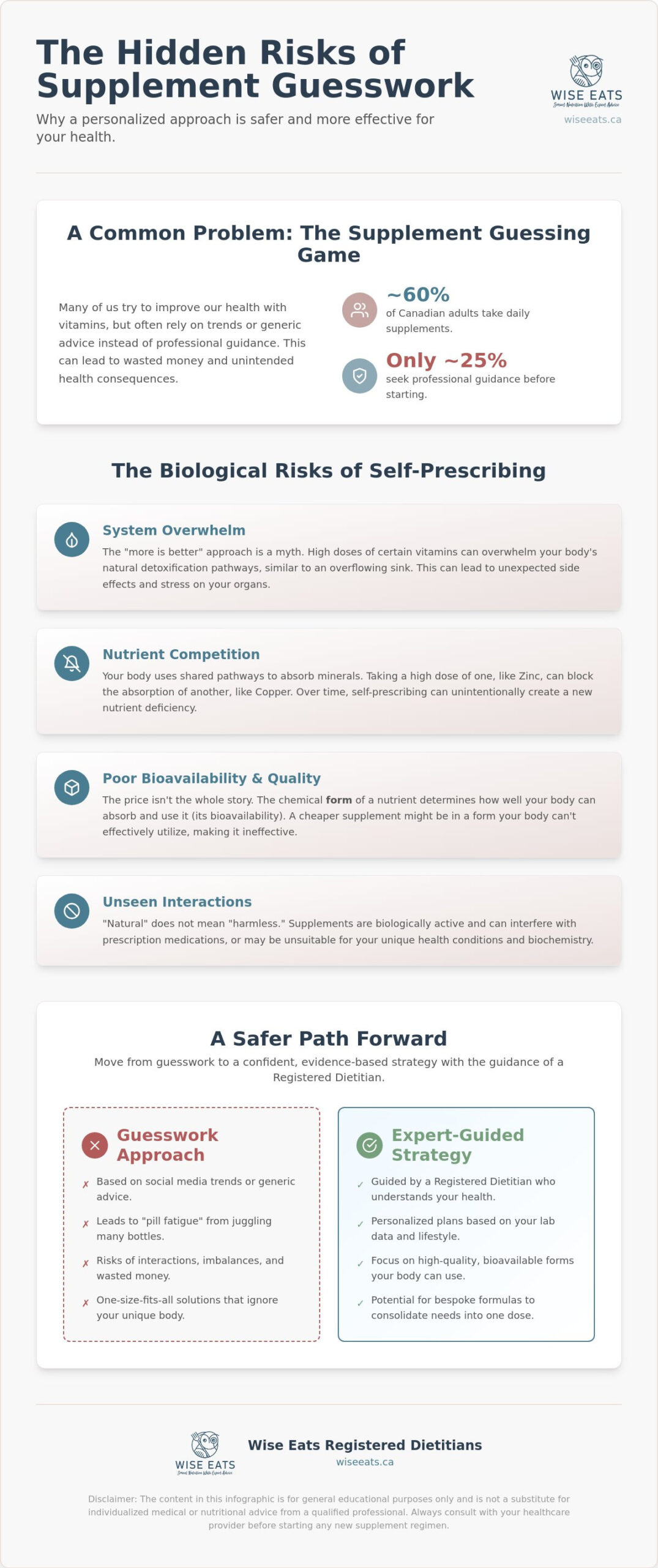
Have you ever stood in the pharmacy aisle, staring at rows of colourful vitamin bottles, and wondered if you’re actually choosing what your body needs? It’s a completely normal feeling. With nearly 60% of adults now taking daily supplements, most of us are simply trying our best to feel more vibrant and nourished. However, only about a quarter of people actually seek professional guidance before starting a new routine. It’s deeply frustrating to spend your hard-earned money on a cabinet full of pills only to feel no different, or worse, to feel anxious about the potential risks of self-prescribing supplements.
We believe you deserve better than guesswork. In this post, you’ll discover why a "one-size-fits-all" approach to vitamins can be risky and how a personalized, evidence-based strategy protects both your health and your wallet. We’ll look at how to identify hidden interactions, why "pill-stacking" might be backfiring, and how you can finally feel confident that your daily routine is safe, effective, and tailored specifically to your unique body. You don’t have to navigate these complex choices alone; let’s find a path to clarity together.
Key Takeaways
- Understand why “natural” doesn’t always mean safe and how relying on social media trends may lead to unintended biological imbalances.
- Learn about the specific risks of self-prescribing supplements, such as how excessive doses can overwhelm your system or cause hidden nutrient deficiencies.
- Discover the importance of bioavailability and why choosing the right form of a vitamin is more important for your body than simply finding the lowest price.
- Find out how bespoke formulas can help you move away from “pill fatigue” by consolidating multiple supplements into one personalized daily dose.
- Realize the value of having a Registered Dietitian as your expert guide to help you navigate conflicting advice and create a plan rooted in your unique data.
Table of Contents
The "Natural is Always Safe" Myth: Why We Self-Prescribe
When we talk about self-prescribing, we mean the common habit of choosing vitamins or minerals based on a quick online search, a friend’s recommendation, or a convincing social media post. It’s an understandable choice. In a busy world where we often feel rushed through medical appointments, taking charge of our own wellness feels empowering. We want to feel better, and we want to do it now. However, relying on guesswork instead of lab data or professional advice introduces the risks of self-prescribing supplements that many people don’t realize exist until they feel the side effects.
There is a powerful "halo effect" around anything labelled as natural. We often assume that because a substance comes from a plant or is already found in the body, it must be harmless. But nutrients are biologically active compounds. They change how our cells function and how our organs process information. They deserve the same level of respect and caution as any medication. Without a clear map of your internal biology, you might be taking something your body already has in abundance, or worse, something that clashes with your unique chemistry.
Wellness Culture and the Allure of the Quick Fix
Social media algorithms are designed to show us more of what we already like. If you search for "fatigue," you might find yourself in a "supplement bubble" where everyone is praising a specific herb or vitamin. It feels like a consensus, but it’s actually a filtered reality that ignores your individual health history. When you’re dealing with vague symptoms like bloating or low energy, the idea of a single pill fixing everything is incredibly tempting. We validate that desire for relief, but please remember that your body isn’t a "one-size-fits-all" machine. What helps an influencer might actually cause you discomfort. The risks of self-prescribing supplements often stem from this mismatch between public trends and private biology.
The Regulatory Reality: Health Canada vs. The Wild West
In Canada, we are fortunate to have a system where natural products are regulated. When you see a Natural Product Number (NPN) on a label, it means Health Canada has reviewed the product for safety and quality. This is a great starting point, but it isn’t the whole story. A product can be "safe for the general public" while still being wrong for you. For instance, a supplement might be high quality but contain a binder that upsets your digestion or a dose that interferes with a prescription you’re taking.
This is where the dangers of self-medication become real. Safety is personal. A Registered Dietitian acts as a filter, looking past the marketing to see if a specific formula aligns with your blood work and lifestyle. You can learn more about how we approach personalized supplement strategies to ensure your routine is actually working for you rather than against you. By moving away from guesswork, you protect your health and stop spending money on products your body doesn’t actually need.
Understanding the Biological Risks of Supplement Guesswork
We often assume that if a little of something is good, a lot must be even better. It’s a common trap to fall into, especially when you’re eager to feel your best. However, your body has a finely tuned balance that can be easily disrupted. When you take high doses of vitamins without a clear need, you might overwhelm your body’s natural detoxification pathways. Think of your system like a sink; if you turn the tap on too high, the drain can’t keep up and things start to overflow. This is one of the primary risks of self-prescribing supplements that can lead to unexpected health challenges.
Another biological reality is nutrient competition. Our bodies use the same "doorways" to absorb different minerals. For example, if you take a large amount of zinc to support your immune system, it can actually block your body from absorbing copper. Over time, this guesswork can create a new deficiency you didn’t have before. The risks of dietary supplements are often hidden in these complex interactions that happen beneath the surface of our skin.
Nutrient Toxicity: Can You Take Too Much Vitamin D or Iron?
Fat-soluble vitamins, which include vitamins A, D, E, and K, are stored in your body’s fat tissues and liver rather than being flushed out through urine, meaning they can build up to toxic levels over time. Iron is another nutrient that requires careful handling. While it’s essential for energy, having too much iron can be hard on your organs; this is why supplementation should only happen after a blood test confirms a low level. If you’ve noticed new nausea, unusual fatigue, or headaches after starting a new bottle, your routine may be doing more harm than good.
Dangerous Interactions with Medications and Conditions
Did you know that some common supplements can change how your body processes prescription medications? For instance, Vitamin K can interfere with how blood thinners work, while taking calcium or iron too close to your thyroid medication can prevent it from being absorbed properly. These interactions are why the risks of self-prescribing supplements are so much higher for individuals managing existing health conditions. If you live with digestive issues like IBS or IBD, your gut lining may already be sensitive; certain fillers or high doses of minerals can trigger the very symptoms you’re trying to soothe.
This is where a Registered Dietitian can help. By performing a professional supplement review, we can look at your medications, health history, and current routine to ensure everything is working in harmony. If you’re feeling overwhelmed by your current "pill stack," you can book a consultation to find a simpler, safer path forward. We’re here to help you move from guesswork to confidence.
Beyond the Label: Quality, Bioavailability, and Pill Fatigue
Have you ever wondered if the vitamins you’re taking are actually being absorbed? It’s a common worry. When we talk about bioavailability, we’re referring to how much of a nutrient your body can truly use. Unfortunately, the cheapest form of a vitamin on the shelf isn’t always the one your cells recognize. Think of it like a key and a lock; if the key doesn’t fit perfectly, the door stays shut. This lack of absorption often leads to what many call "expensive urine," where your body simply flushes out the nutrients you’ve paid for because it couldn’t process them.
There is also the issue of what else is inside that capsule. Many mass-produced supplements contain fillers, artificial colours, or additives that might not sit well with your digestive system. Research into the potential risks of self-medication suggests that using products without professional oversight can lead to unexpected reactions, especially when those products contain unlisted ingredients or low-quality binders. This is one of the hidden risks of self-prescribing supplements that marketing rarely mentions.
Why Generic Multivitamins Often Miss the Mark
Many people reach for a generic multivitamin as a "safety net." While the intention is good, these "shotgun" formulas often provide 100% of vitamins you might already get from your food, while providing 0% of what you actually need based on your lifestyle. For those of us living in British Columbia or Alberta, our unique climate means we often require specific support, like Vitamin D, that a generic bottle might not provide in the right dose or form. We prefer using standardized potency and branded ingredients, such as Albion Minerals®, to ensure your body gets a consistent, absorbable dose every single time.
The Hidden Burden of Pill Fatigue
Managing ten different bottles every morning can feel like a part-time job. This "pill fatigue" isn’t just a mental burden; it’s a practical one. When a routine becomes too complex, it’s much easier to miss doses or give up entirely. This inconsistency means you never truly see the benefits of the nutrients you are taking. One of the most significant risks of self-prescribing supplements is this cycle of starting and stopping, which leaves you feeling frustrated and no closer to your health goals.
We believe your morning routine should bring you peace of mind, not a headache. By moving away from "buying bottles" and toward a precision strategy, you can simplify your life. If you’re tired of the guesswork and the cluttered cabinet, you can book a consultation to create a streamlined, all-in-one supplement plan that fits your life perfectly. It’s time to trade the dozen bottles for one formula that actually works.
A Safer Path: Personalized Nutrition and Bespoke Formulas
Finding your way through the countless supplement options alone can feel like sailing without a compass. You’ve seen the risks of self-prescribing supplements, from nutrient competition to pill fatigue, but there is a steadier way forward. Instead of guessing which bottle might help, you can work with a partner who understands your unique biology. The team at Wise Eats Registered Dietitians acts as your expert guide, translating complex lab data into a clear, actionable plan that prioritizes your peace of mind. Your health journey doesn’t have to be a series of experiments; it can be a logical, supported process.
The Role of a Registered Dietitian in Supplement Safety
At Wise Eats Registered Dietitians, our professionals don’t just look at what’s popular on the pharmacy shelf. We dive deep into your health history, genetics, and current eating patterns to find where the actual gaps are. This personalized nutrition counselling is the foundation of everything we do. It’s about more than just pills; it’s about understanding how your body works as a whole. Because the internet is full of conflicting claims, having a professional filter is essential to help you spot red flags in nutrition advice and protect you from expensive misinformation.
From Guesswork to Precision: Bespoke Supplementation
The most exciting part of this journey is moving from the "try and see" method to true precision. Through our partnership with VitaminLab, we offer bespoke formulas that are hand-crafted just for you. Imagine taking one all-in-one capsule instead of managing five or more different bottles every morning. These formulas are built from your specific data, ensuring you get exactly what you need and nothing you don’t. There is no pre-made stock sitting on a warehouse shelf; your supplement is professionally encapsulated only when you order it.
As your life and health evolve, your formula can too. We believe in ongoing adjustments because your nutritional needs at thirty might be very different from your needs at fifty. By moving away from the risks of self-prescribing supplements, you save money and protect your long-term well-being. If you’re ready to stop the guesswork and start a routine you can trust, Connect with Wise Eats Registered Dietitians to start your personalized health journey today.
Moving Beyond the Guesswork for Lasting Wellness
Navigating your health shouldn’t feel like a solo trek through a dense forest. You’ve seen how the risks of self-prescribing supplements can lead to biological imbalances, hidden medication interactions, and the frustration of "pill fatigue." By moving away from generic bottles and toward data-driven precision, you’re not just protecting your wallet; you’re honouring your body’s unique needs. You deserve a routine that feels simple, safe, and effective.
Our team of licensed Registered Dietitians in BC and Alberta provides the non-judgmental, evidence-based care you need to feel confident. We act as your filter against misinformation, using Health Canada licensed precision formulas to streamline your wellness. If you notice red flags like persistent nausea, heart palpitations, or unusual digestive distress after starting new supplements, it’s a sign that your current routine may need a professional review. Let’s replace the anxiety of guesswork with the clarity of a personalized plan.
If you’re ready to simplify your morning and nourish your body with intention, book a consultation with a Registered Dietitian to review your supplements today. We’re here to help you find your path to peace of mind.
Disclaimer: This content is for general educational purposes only and is not a substitute for individualized medical advice, diagnosis, or treatment. Always seek the advice of a qualified health professional with any questions you may have regarding a medical condition.
Frequently Asked Questions
Can you take too much Vitamin D if you live in Canada?
Yes, you can certainly exceed safe levels of Vitamin D even if you live in northern regions like BC or Alberta. Since it is a fat-soluble nutrient, your body stores excess amounts in the liver and fat tissues rather than clearing it out daily. While many Canadians require support during the winter, taking high doses without a confirmed deficiency can lead to a buildup that may eventually impact your long-term health.
How do I know if my supplements are interacting with my medications?
The most reliable way to know is through a professional supplement review with a qualified expert. Labels often lack details on how a nutrient might alter the metabolism of your specific prescriptions. Because these interactions are often invisible, the risks of self-prescribing supplements are significantly higher for those managing chronic conditions. A dietitian can cross-reference your routine to ensure your vitamins support rather than hinder your medications.
What is the difference between a generic vitamin and a bespoke formula?
The main difference is customization based on your actual biological data. While generic vitamins use a one-size-fits-all formula, the professionals at Wise Eats Registered Dietitians partner with VitaminLab to create a single capsule tailored to your blood work. This approach eliminates the need for multiple bottles and ensures you aren’t taking unnecessary fillers or doses that don’t align with your specific health requirements.
Do I really need a blood test before taking vitamins?
A blood test provides the essential data needed to remove the guesswork from your routine. It acts as a clear map of your internal health, showing exactly where you have gaps and where you are already well-nourished. For nutrients like iron or Vitamin D, having this data helps your dietitian determine a dose that is both safe and effective, preventing you from spending money on nutrients you don’t actually need.
Are supplements regulated by Health Canada?
Yes, they are regulated for general quality and safety through the Natural Product Number (NPN) system. While this ensures the product contains what it claims, it does not account for the risks of self-prescribing supplements that aren’t right for your body. A regulated product can still be unsafe if it interacts with your medications or provides a dose that exceeds your personal tolerance levels.
What are the signs of nutrient toxicity I should watch for?
Signs are often subtle and can be easily mistaken for other health issues or even the symptoms you are trying to soothe. You might experience persistent nausea, unusual headaches, or a general sense of fatigue that doesn’t improve with rest. In some cases, excessive intake can lead to digestive upset or a rapid heartbeat. If you feel "off" after starting a new routine, it is a good idea to pause and seek professional guidance.

Article by
Rachel McBryan, Dietitian
Rachel McBryan is a licensed Dietitian in British Columbia, offering comprehensive nutrition counselling through virtual and/or in-person sessions to suit your needs and preferences. With a Bachelor of Science in Nutrition and Food Science, Rachel has over 20 years of experience helping people address their health through nutrition. She earned her BSc in Human Nutrition and Food Science from the University of Alberta, followed by post-graduate coursework at UBC in guidance counselling.