

Did you know that nearly 1 in 7 people experience that heavy, uncomfortable feeling of pressure in their abdomen every single week? It can feel incredibly isolating when your favourite jeans suddenly feel too tight or when you start feeling anxious about attending a dinner party. You’ve likely spent hours searching for what to eat for chronic bloating, only to find restrictive lists that leave you feeling more confused than when you started. It’s completely normal to feel overwhelmed by conflicting nutrition advice that seems to change every day.
We’re here to help you find a path forward that feels supportive and sustainable. It’s important to realize that your body isn’t failing you; it’s just communicating a need for a different kind of care. Think of your digestion like a garden that needs the right soil to bloom rather than a problem that needs to be fixed. This guide focuses on a gentle, evidence-informed approach that prioritizes your comfort without the need for rigid rules. You’ll discover nourishing food choices that are kind to your system and learn why your body might be reacting with such sensitivity. We’ll also explore simple lifestyle shifts that can help lower that feeling of pressure. You deserve to feel good.
Key Takeaways
- Learn that bloating is a real physical sensation related to pressure in the abdomen, rather than a matter of willpower or personal choice.
- Understand the “fibre paradox” and why introducing high-fibre foods slowly, while staying hydrated, can support a more comfortable digestive flow.
- Discover practical suggestions for what to eat for chronic bloating, including why gentle, cooked foods may be easier for your system to process than raw ones.
- Explore the connection between your nervous system and your gut to see how stress management can be a helpful tool for physical relief.
- See how personalized tools, like custom meal planning, can help simplify your routine and reduce the mental energy spent on managing your digestion.
Understanding Chronic Bloating: Why Your Gut Feels Uncomfortable
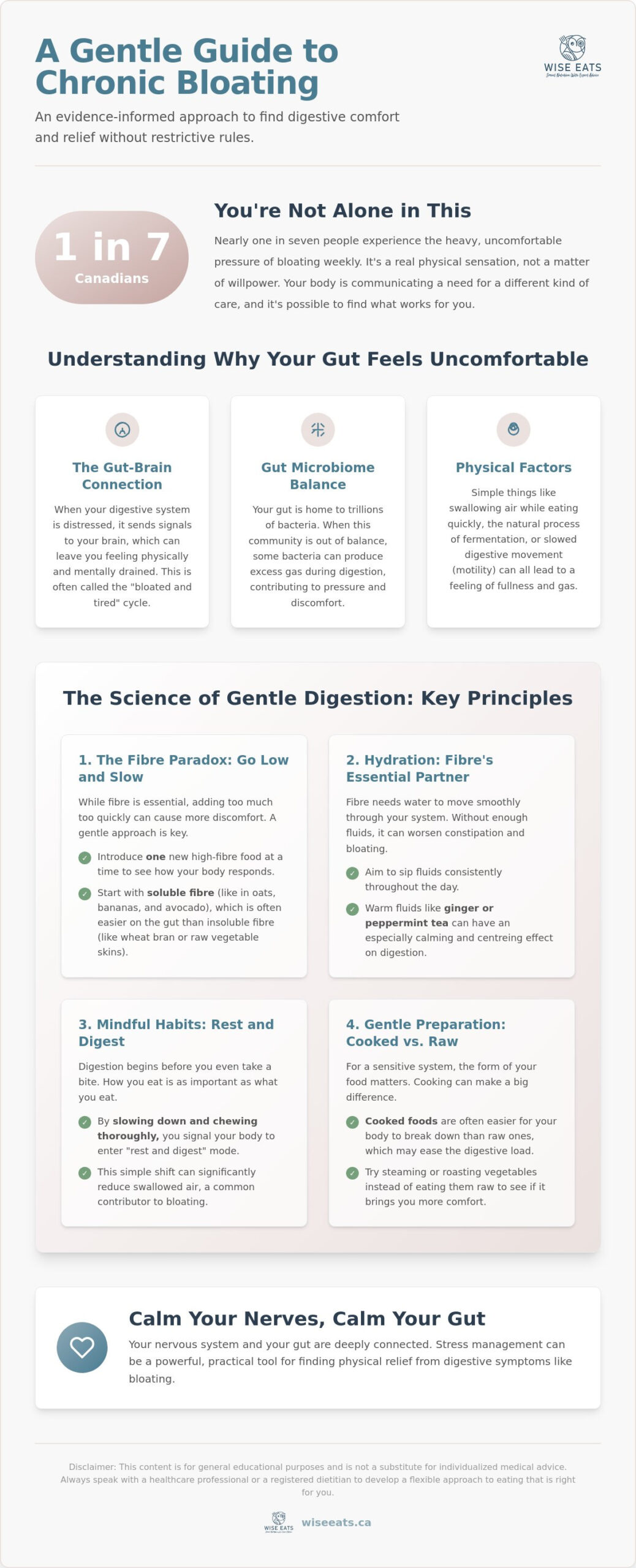
Have you ever felt like your stomach is a balloon that has been inflated just a bit too much? That sensation of pressure or trapped gas is a common experience. To begin Understanding Chronic Bloating, we must look at it as a physical reality that can make even your favourite clothes feel restrictive. For many people, this isn’t just an occasional occurrence; it’s a daily hurdle that affects how they move through the world.
It’s easy to feel like you’re doing something wrong; we want you to know that’s not the case. It isn’t your fault. Bloating can happen for many reasons, such as swallowing air while eating, the natural process of fermentation in your gut, or slowed motility. When you’re searching for what to eat for chronic bloating, it helps to first understand that your body is sending you a signal, not a critique.
To help visualize why this happens, watch this brief explanation:
Why Am I Always Bloated and Tired?
The connection between your gut and your brain is a two-way street. When your digestive system is working overtime to manage pressure and discomfort, it can leave you feeling physically and mentally drained. This “bloated and tired” cycle is often linked to the gut-brain axis. If you’ve been following irregular eating patterns, which is common during recovery, your body might be struggling to find its rhythm. This leads to both digestive distress and low energy. These symptoms are signals that your body needs gentle, consistent support.
The Role of the Gut Microbiome
Inside your digestive tract lives a vast community of bacteria known as the microbiome. These tiny helpers play a huge role in breaking down the food you eat. However, when the balance of these bacteria shifts, they can produce excess gas as a byproduct of their work. This is especially relevant when looking at the IBS and Disordered Eating pillar, as our relationship with food directly impacts these bacterial neighbours. Understanding this balance is a key step in deciding what to eat for chronic bloating to support your unique system.
The Science of Gentle Digestion: Fiber, Fluid, and Flow
Digestion is a rhythmic process that works best when we provide the right environment for it to thrive. When exploring what to eat for chronic bloating, many people are told to simply “eat more fibre.” While fibre is essential, adding too much too quickly can actually lead to more discomfort. This is often called the fibre paradox. If your gut isn’t used to a high volume of plant material, it can feel like a traffic jam in your digestive tract. Understanding how diet affects digestion helps us see that the speed of these changes matters just as much as the food itself.
Health Canada suggests using a balanced plate model to ensure you’re getting a variety of nutrients. This typically involves filling half your plate with vegetables and fruits, a quarter with protein, and a quarter with whole grains. However, the way we eat is just as important as the contents of our bowl. Digestion actually begins before you take your first bite through the cephalic phase. By slowing down and chewing thoroughly, you signal to your body that it’s time to “rest and digest.” This simple shift can significantly reduce the amount of air you swallow, which is a common contributor to physical pressure.
Increasing Fibre Without the Gas
The best way to support your gut is through a “low and slow” approach. Try adding just one high-fibre food at a time to see how your body responds. You might find that soluble fibre, found in the flesh of fruit or oats, feels much gentler than the insoluble fibre found in wheat bran or vegetable skins. Fibre is the non-digestible part of plants that acts like a “broom” for the gut. By choosing softer options first, you give that “broom” a chance to work without causing extra friction or gas.
Hydration and Digestive Movement
Fibre needs a partner to work effectively: water. If you increase your fibre intake without drinking enough fluids, it can lead to constipation and increased bloating. Think of water as the lubricant that helps everything move through the system smoothly. Sipping on room temperature or warm fluids, such as ginger or peppermint tea, can have a centreing and calming effect on your digestive tract. Because everyone has unique requirements, working with a dietitian can help you find the specific fluid balance that feels right for your body. If you are ready for a personalized plan, you can book a consultation with our team to get started.
What to Eat for Chronic Bloating: Gentle Food Ideas
When you’re struggling with discomfort, it’s natural to want a list of rules. However, we prefer to focus on nourishing additions that support your body rather than rigid restrictions. Finding foods that reduce bloating is a personal journey. What works for one person might not be the right fit for you. Think of these suggestions as a starting point for exploration. Your body’s feedback is the most valuable guide we have.
Have you noticed that a large raw salad sometimes leaves you feeling heavy? This is because raw vegetables have tough cell walls that require more work to break down. Steaming, roasting, or sautéing your vegetables can do some of that “pre-digestion” work for you. Zucchini and carrots are wonderful examples of vegetables that become incredibly gentle when cooked. By softening the fibre through heat, you make it much easier for your digestive tract to process the meal without extra pressure.
For protein, you might find that options like eggs, firm tofu, or white fish feel lighter in your system. These are less likely to ferment rapidly in the gut compared to some other sources. Regarding grains, rice and quinoa are often well-tolerated and provide a steady source of energy. Some people also find that sourdough bread is easier to digest. The fermentation process used to make sourdough helps break down certain compounds before the bread even reaches your plate, which can be a helpful shift for those sensitive to standard wheat products.
Fruit and Vegetable Swaps
If you enjoy fruit, you might try swapping apples or pears for berries and citrus fruits. Berries and oranges are often lower in the specific sugars that can lead to excess gas. While you explore these Nutrition for Digestion Problems ideas, remember that there is no “perfect” list. Your body’s response is the most important data point we have. Every person’s gut is a unique ecosystem that deserves a tailored and compassionate approach.
Herbs and Natural Soothers
Nature provides several tools that can help relax the muscles in your digestive tract. Ginger and peppermint are two of the most well-studied options. You can incorporate fresh ginger into your stir-fries or enjoy a warm cup of peppermint tea after a meal. These rituals aren’t just about the nutrients; they also provide a moment of calm for your nervous system. This helps create the “rest and digest” state we discussed earlier. Learning what to eat for chronic bloating often involves finding these small, soothing rituals that work for your unique lifestyle.
A Holistic Path to Gut Comfort and Recovery
Managing your physical comfort involves more than just selecting specific ingredients. While knowing what to eat for chronic bloating is a major piece of the puzzle, your nervous system plays an equally vital role. Have you ever noticed your symptoms flare up during a busy week or a stressful life event? This isn’t a coincidence. When your body is in a “fight or flight” state, digestion often takes a back seat, leading to that familiar feeling of pressure. By focusing on nervous system regulation alongside gentle nutrition, you create a supportive environment for your gut to find its balance.
Our approach at Wise Eats combines medical nutrition therapy with weight-inclusive care. We believe that health is multifactorial and that your relationship with food is just as important as the nutrients you consume. We move away from the “fix-it” mentality and instead focus on sustainable shifts that respect your body’s unique signals. You don’t have to navigate this journey alone.
Personalized Support with VitaminLab
One-size-fits-all probiotics often fall short because your gut microbiome is as unique as your fingerprint. This is why we utilize bespoke supplement strategies tailored to your specific needs. Through our partnership with VitaminLab, we can help you create a formula based on your lab results or clinician input. This approach helps reduce “pill fatigue” by consolidating your requirements into one simple, all-in-one routine. It simplifies your day and ensures your body receives exactly what it needs to support gentle digestion.
When to Seek Help
It’s important to recognize when your body needs more than just a change in routine. While many people experience occasional discomfort, certain signals suggest it’s time for a professional clinical eye. We want you to feel empowered to seek support if you notice any of these red flags:
- Unintentional changes in your weight
- Persistent or severe abdominal pain that doesn’t go away
- Noticing that thoughts about food and bloating are starting to take over your daily life
- Feelings of anxiety or a frequent urge to restrict food groups to find relief
If you’re feeling overwhelmed by conflicting advice or physical distress, we warmly encourage you to reach out for a contact with Rachel McBryan or our team. We provide a non-judgmental space to explore your concerns and help you develop a flexible, nourishing approach to eating. You deserve to feel comfortable and at peace in your body.
This article is for general educational purposes and is not a substitute for individualized medical advice.
Taking Your Next Steps Toward Gut Comfort
Navigating digestive discomfort can feel like a full-time job; however, you don’t have to do it alone. We’ve explored how gentle shifts in your routine, like choosing cooked vegetables over raw ones and prioritizing hydration, can help ease the pressure. Remember that your body’s signals are a guide for nourishment rather than a set of rules to follow. Learning what to eat for chronic bloating is a journey of befriending your system through curiosity and compassion.
Our team of Registered Dietitians, licensed in British Columbia and Alberta, is here to provide weight-inclusive and trauma-informed care. Whether you’re looking for custom meal planning to reduce the mental load of triggers or interested in precision formulas through our partner, VitaminLab, we focus on what works for your unique life. You deserve to eat with joy and feel at ease in your body.
We are here to support you as you move toward a more comfortable and peaceful relationship with food. You have the strength to take the next step toward the relief you deserve.
This article is for general educational purposes and is not a substitute for individualized medical advice.
Frequently Asked Questions
Is it normal to be bloated every day?
Daily bloating isn’t something you just have to live with. While many people experience occasional gas, feeling this way every day suggests your body is asking for a bit of extra support. It is a physical reality that can feel quite draining and frustrating. We want to help you move from a state of constant pressure to one of physical ease. You deserve to feel good in your body.
Can I take probiotics for chronic bloating?
Probiotics can be a useful tool, but they don’t work the same way for every person. Since your gut bacteria are unique, a standard store-bought supplement might not address your specific situation. We often suggest looking into personalized options that match your unique lab results. This ensures you’re getting the right support without the guesswork of “one-size-fits-all” products that might not be the right fit for your system.
Why does “healthy eating” make my bloating worse?
This is a common frustration! Many foods labeled as “healthy” are very high in rough fibre, which can be hard for a sensitive gut to process. If you’ve suddenly increased your intake of raw greens or beans, your body might produce extra gas as it struggles to keep up. Learning what to eat for chronic bloating often means choosing cooked or softened versions of these foods to make them easier for your body to handle.
How much water should I drink to help with bloating?
Your fluid needs are unique to your body and activity level. A good starting point is to drink enough so that you rarely feel thirsty and your urine is a pale yellow colour. Water helps fibre act like a gentle broom in your gut. Without enough fluid, that fibre can become heavy and slow down your digestion. This delay often leads to more pressure and discomfort in your abdomen.
When should I see a dietitian for my bloating?
You might consider seeking professional support if your bloating is making you feel anxious about social situations or if you’re tempted to cut out entire food groups. A dietitian can help you navigate these physical symptoms while protecting your relationship with food. We focus on adding nourishing options rather than taking things away. This ensures you feel supported and heard throughout the entire process of finding relief.
What are the best snacks for a bloated stomach?
Gentle snacks that are lower in certain sugars can be very soothing when you’re feeling sensitive. You could try a lactose-free yogurt, a small handful of walnuts, or a banana. These choices are typically easier for your system to handle during a flare-up. The goal is to find “nourishing additions” that provide energy without adding to the feeling of pressure. Simple, soft foods are often the kindest choice for your digestive tract.

Article by
Rachel McBryan, Dietitian
Rachel McBryan is a licensed Dietitian in British Columbia offering comprehensive nutrition counselling as virtual and/or in-person counselling sessions to suit your needs and preferences. With a Bachelor of Science in Nutrition and Food Science, Rachel has over 20 years' experience helping people address their health through nutrition. She was awarded a Human Nutrition and Food Science BSc. from the University of Alberta, followed by post-grad course work at UBC in guidance counselling.
An eating disorder is a serious mental health illness.
If you are in immediate distress or crisis, please contact emergency services by dialling 911 or calling the Vancouver Island Crisis Line: 1-888-494-3888. This article is for educational information only, not professional diagnosis or treatment. Content is AI generated and may not be reviewed for accuracy.