

An eating disorder is a serious mental health illness.
If you are in immediate distress or crisis, please contact emergency services by dialing 911 or calling Vancouver Island Crisis Line: 1-888-494-3888. A dietitian, psychologist, psychiatrist, and medical team work together to support eating disorder recovery.
This article is educational information only, not professional diagnosis or treatment. Content is AI generated and may not be reviewed for accuracy.
What if the most effective way to support your heart isn’t about cutting out everything you love, but rather making strategic, evidence-informed swaps? If you’ve recently stared at a confusing lab report or felt a knot of anxiety about your heart health, you’re not alone. It’s completely normal to feel overwhelmed when you’re trying to figure out how to lower triglycerides naturally with diet, especially when the advice seems to flip-flop between cutting out fats or ditching sugar.
We understand that interpreting these technical results can feel like trying to find your way through a thick fog without a map. This guide is here to provide that clarity, offering a compassionate look at how your body processes energy. You’ll discover practical dietary strategies that can help manage your levels while keeping your meals enjoyable. By favouring nutrient-dense choices, we’ll explore the clear links between specific foods and triglycerides, providing you with actionable meal ideas that prioritize your well-being without the stress of rigid restriction.
This article is for general educational purposes and is not a substitute for individualized medical or nutrition advice. Please speak with a physician, nurse practitioner, pharmacist, or registered dietitian for guidance tailored to your specific needs.
Key Takeaways
- Understand why triglycerides act as your body’s backup energy storage and what happens when those levels begin to rise.
- Recognize how the liver converts excess sugars into fats so you don’t feel overwhelmed by technical metabolic processes.
- Discover how to lower triglycerides naturally with diet by favouring heart-healthy Omega-3s over a cycle of fat deprivation.
- Learn how simple adjustments to alcohol intake and meal consistency may help stabilize your lipid levels and reduce heart health anxiety.
- Explore how a personalized approach can translate complex lab results into a manageable plan that doesn’t rely on restrictive rules.
Understanding Triglycerides: What They Are and Why They Matter
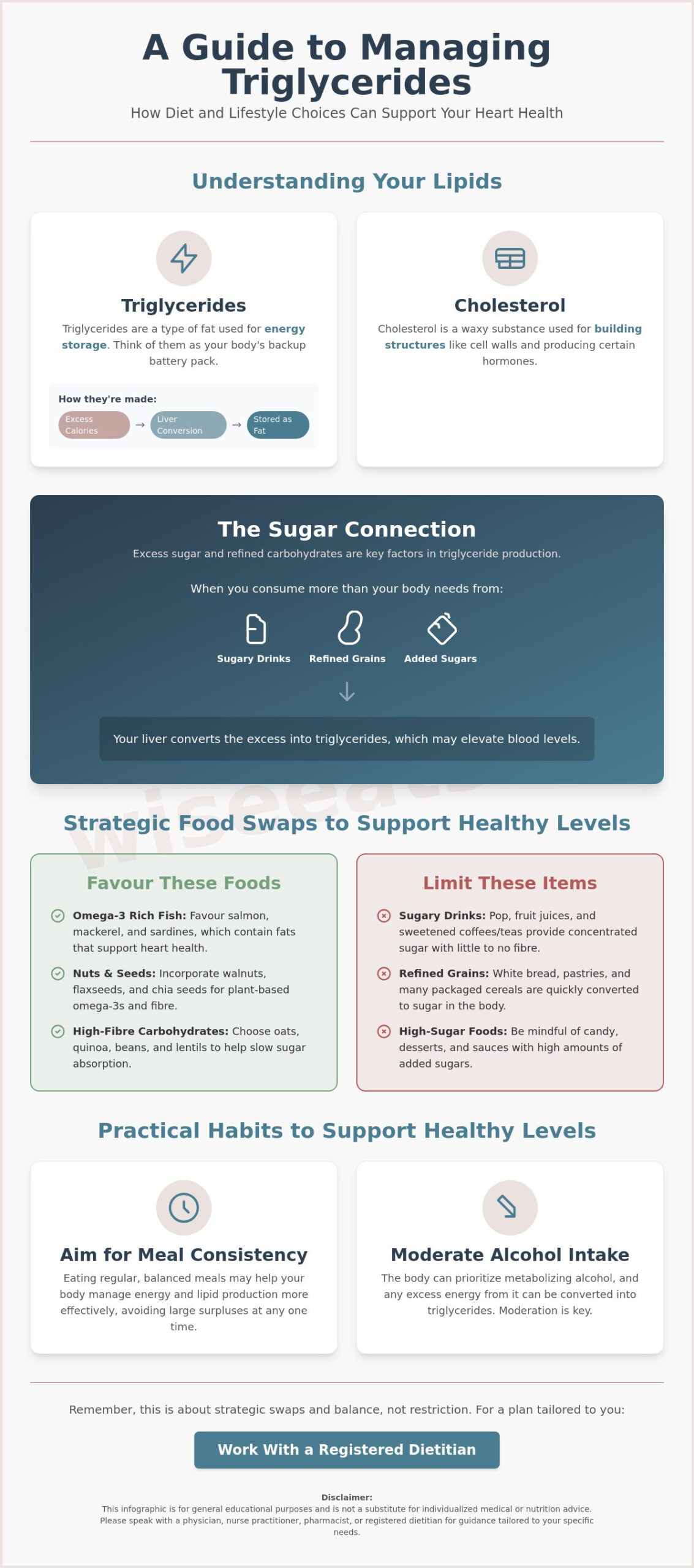
Triglycerides are a type of lipid, or fat, found in your blood. While they might sound complicated, you can think of them as your body’s backup battery. When you consume calories that your body doesn’t need to use for immediate energy, it converts them into triglycerides. These are then stored in your fat cells to be released later when you need a boost between meals. If you’re wondering how to lower triglycerides naturally with diet, it’s helpful to start by recognizing that this process is a normal part of how your body manages energy.
You might wonder how these differ from cholesterol. While both are lipids, they serve very different purposes. Cholesterol is used by your body to build cells and certain hormones, acting like the structural bricks of a house. Triglycerides, on the other hand, are strictly for energy. When levels in the blood remain high over time, it may impact your cardiovascular health. However, having these fats in your system is not a sign that something is “wrong” with your character or your choices; it’s simply a signal from your body about how it’s currently managing fuel.
To better understand this concept, watch this helpful video:
The Journey of a Triglyceride
The process begins in your liver. When you eat, your digestive system breaks down food, and the liver packages any extra energy into these tiny fat droplets. They travel through your bloodstream to reach their destination: your fat cells. This transport system is essential because it ensures every part of your body has access to fuel when needed. Having some triglycerides in your blood is necessary for health, as they provide the stamina you need for daily activities.
Why Levels Might Be Elevated
If your lab results show higher numbers, it’s often due to a mix of factors. Genetics can play a significant role in how your body processes fats. Other times, underlying health conditions or certain medications may contribute to these results. Understanding Hypertriglyceridemia is the first step toward feeling empowered rather than anxious. High levels aren’t a moral failing or a sign of “bad” eating. They are simply a data point that helps us understand how to support your body better. Learning how to lower triglycerides naturally with diet is about finding balance, not perfection. Many people find that nutrition counselling for medical conditions provides the clarity needed to make sustainable shifts based on the latest March 2026 clinical guidelines.
This article is for general educational purposes and is not a substitute for individualized medical or nutrition advice. Please speak with a physician, nurse practitioner, pharmacist, or registered dietitian for guidance tailored to your specific needs.
The Connection Between Sugars, Refined Carbohydrates, and Triglycerides
While many people focus on dietary fat when they see high lipid levels, modern research suggests that sugar and refined carbohydrates play a central role. When you consume more sugar than your body needs for immediate energy, your liver acts like a busy shipping centre. It packages that excess energy into triglycerides to be sent off for storage. Learning how to lower triglycerides naturally with diet often begins with understanding this metabolic cycle. By choosing carbohydrates that digest more slowly, you give your liver a much-needed break.
Refined carbohydrates, such as white bread, sugary cereals, and pastries, are often described as “fast-acting” energy sources. They lack the structural components that slow down digestion, leading to a quick rise in blood sugar. Liquid sugars found in pop or fruit juice have an even stronger impact because they contain no fibre at all. They hit your system almost instantly, which may prompt the liver to create more triglycerides. Making a few gentle swaps can help stabilize this process without making you feel deprived.
- Swap white sandwich bread for a dense, whole-grain loaf or traditional sourdough.
- Replace sugary morning cereals with steel-cut oats or buckwheat porridge.
- Try using pearled barley or quinoa instead of white rice in your favourite stir-fry.
- Opt for sparkling water with a splash of fresh lime instead of sweetened sodas.
Focusing on Fibre and Complex Carbs
Fibre acts as a natural brake for your digestive system. It slows the absorption of sugar into your bloodstream, which helps prevent the energy surges that lead to triglyceride production. Whole grains like oats, barley, and quinoa are excellent heart-healthy choices that keep you feeling full and satisfied. Adding legumes, such as chickpeas or lentils, to your soups and salads is another simple way to boost your daily fibre intake. If you’re looking for a structured way to include these foods, custom meal planning can help you meet your specific fibre goals with ease.
Navigating Added Sugars
Identifying hidden sugars is a valuable skill for heart health. On Canadian nutrition labels, you can look for the “Added Sugars” line to see how much extra sweetness has been stirred into a product. Many sauces, dressings, and yogurts contain more sugar than you might expect. Experts at Grove Medical Associates suggest that reducing these concentrated sweets is a primary strategy for lipid management. You can naturally sweeten your food by adding berries or a sprinkle of cinnamon instead. Whole fruit is still a wonderful choice, as its natural fibre content makes it very different from processed fruit juices.
Finding a balance that fits your life can feel like a big task. If you would like support in creating a plan that works for you, please feel free to reach out for a consultation.
This article is for general educational purposes and is not a substitute for individualized medical or nutrition advice. Please speak with a physician, nurse practitioner, pharmacist, or registered dietitian for guidance tailored to your specific needs.
Choosing the Right Fats: Omega-3s and Heart-Healthy Options
For a long time, the standard advice for heart health was simply to “eat less fat.” We now know that this approach can often lead to feelings of deprivation or a shift toward the refined sugars we discussed in the previous section. When you’re exploring how to lower triglycerides naturally with diet, the focus shifts from avoidance to selection. It’s about choosing “quality fats” that support your body rather than trying to eliminate fat entirely. Think of unsaturated fats as the “helpers” that keep your cardiovascular system running smoothly.
Omega-3 fatty acids are particularly special because they may help reduce the liver’s production of triglycerides. While other fats provide energy, Omega-3s act more like a signal to your body to slow down the assembly line of energy storage. To get the most benefit, Canadian guidelines suggest including fatty fish such as salmon, mackerel, or trout at least twice a week. These fish are rich in EPA and DHA, the specific types of Omega-3s that have the most evidence for supporting healthy lipid levels.
Plant-Based Healthy Fats
If fish isn’t a regular part of your routine, there are plenty of wonderful plant-based options to explore. Walnuts, flaxseeds, and chia seeds are accessible sources of ALA, another type of Omega-3. While your body processes ALA differently than the fats found in fish, these seeds still provide excellent heart-healthy benefits and a satisfying crunch to your meals. Using liquid oils like olive or canola for cooking is another simple shift that provides monounsaturated fats. Adding a few slices of avocado to your toast or salad can also increase satiety, helping you feel full and nourished throughout the day.
The Nuance of Saturated and Trans Fats
While we want to add more “helper” fats, it’s also helpful to look at the types of fats that might be less supportive. Reducing highly processed trans fats, often found in some packaged snacks and fried foods, is a high priority for heart health. You might also consider swapping fatty cuts of meat for leaner proteins or plant-based alternatives like tofu or beans. If you’re curious about whether a fish oil capsule might be a helpful addition to your routine, you can explore our professional supplement reviews to learn more about quality and safety standards.
This article is for general educational purposes and is not a substitute for individualized medical or nutrition advice. Please speak with a physician, nurse practitioner, pharmacist, or registered dietitian for guidance tailored to your specific needs.
Practical Dietary Habits to Support Healthy Levels
When you’re exploring how to lower triglycerides naturally with diet, it’s easy to fall into the trap of thinking only about what you need to “give up.” However, a more sustainable and compassionate approach involves looking at what you can add to your day. Small, consistent habits often have a more significant impact on your metabolic health than temporary, rigid restrictions. For example, maintaining a steady rhythm with your meal timing can help your body regulate blood lipids more effectively. This consistency prevents the energy “spikes” that lead to extra storage in your fat cells. Hydration also plays a vital role, as water is essential for every metabolic process in your body, including how you process fats.
The Role of Alcohol
For some people, even moderate alcohol intake can have a surprising effect on triglyceride production. This happens because the liver prioritizes processing alcohol, which can temporarily shift its focus away from managing other fats and sugars. Rather than setting strict, punishing rules, try a curiosity-based approach. How do you feel when you swap your evening drink for a flavourful mocktail made with sparkling water and fresh herbs, or a soothing herbal tea? These alcohol-free alternatives can offer your liver a bit of breathing room while still providing a relaxing ritual at the end of the day.
Building Balanced Plates
A helpful visual tool for your daily meals is the Canada’s Food Guide “plate method.” By filling half your plate with vegetables, a quarter with lean protein, and a quarter with fibre-rich grains, you create a balance that stabilizes your energy. This combination ensures that energy is released slowly into your bloodstream rather than hitting your system all at once. For a triglyceride-friendly breakfast, you might try savoury steel-cut oats topped with sautéed spinach and a poached egg. For lunch, a colourful quinoa salad with chickpeas, cucumbers, and a lemon-tahini dressing is a wonderful, heart-healthy choice. You can find many of these nutritious Canadian-made foods at your local grocer to help build these balanced meals with ease.
If you’re feeling stuck on how to put these pieces together for your unique lifestyle, please reach out to us for a personalized consultation. We’re here to help you move forward with clarity and confidence.
This article is for general educational purposes and is not a substitute for individualized medical or nutrition advice. Please speak with a physician, nurse practitioner, pharmacist, or registered dietitian for guidance tailored to your specific needs.
Working with a Registered Dietitian for Personalized Support
While general strategies like the plate method or choosing quality fats provide a solid foundation, a “one-size-fits-all” approach often fails when it comes to complex metabolic health. Your body is unique, influenced by your genetics, your daily routine, and your history with food. This is why many people find that general advice on how to lower triglycerides naturally with diet only takes them so far. A Registered Dietitian acts as a knowledgeable partner, helping you refine these strategies into a plan that actually fits your life.
One of the most valuable aspects of professional support is the ability to translate technical lab results into a realistic meal plan. Instead of feeling confused by the data, you’ll gain a clear roadmap for your kitchen. At Wise Eats Registered Dietitians, we also provide personalized vitamin and mineral supplement audits to ensure your choices are safe and evidence-informed. Our commitment is to provide compassionate, non-judgmental care that respects your autonomy and helps you move forward with peace of mind.
When to Seek Individualized Help
You may want to consult a professional if your levels remain high despite making the dietary shifts we’ve explored in this guide. Individualized help is especially important if you have a family history of very high triglycerides, such as familial chylomicronemia, which requires specialized care. Additionally, if you find yourself feeling anxious or obsessive about your food choices, a dietitian can help you find a more balanced and peaceful way to nourish your body.
Next Steps for Your Health Journey
Heart health is a long-term lifestyle shift, not a temporary fix. It’s about finding small, consistent habits that lead to meaningful results over time. We invite you to book a discovery call for guidance tailored to your specific needs. You don’t have to navigate these changes alone; having a steady hand to guide you can make all the difference in your wellness journey.
This article is for general educational purposes and is not a substitute for individualized medical or nutrition advice. Please speak with a physician, nurse practitioner, pharmacist, or registered dietitian for guidance tailored to your specific needs.
Moving Forward with Confidence and Clarity
You’ve taken a significant step toward supporting your heart health by exploring how your body processes energy. Managing your lipids isn’t about rigid restriction or the stress of giving up your favourite foods. Instead, you’ve seen that strategic shifts, like choosing complex carbohydrates over refined sugars and favouring heart-healthy Omega-3s, can make a meaningful difference. By focusing on what you can add to your plate, you create a sustainable rhythm that honours both your health and your enjoyment of food.
Understanding how to lower triglycerides naturally with diet is a journey that feels much lighter with a partner by your side. Our team of Licensed Registered Dietitians across Canada provides evidence-informed nutrition counselling through a compassionate, weight-neutral approach. We’re here to help you translate lab results into a plan that feels realistic and empowering. Book a consultation with our team today to create your personalized heart-health plan. You have the tools and the knowledge to move forward; remember that small, consistent changes lead to the most lasting results.
This article is for general educational purposes and is not a substitute for individualized medical or nutrition advice. Please speak with a physician, nurse practitioner, pharmacist, or registered dietitian for guidance tailored to your specific needs.
Frequently Asked Questions
Can I lower my triglycerides in 30 days?
You may see a change in your triglyceride levels in as little as a few weeks. Since these lipids are highly sensitive to what you eat, making strategic adjustments can lead to measurable results quite quickly. It’s often very encouraging to see these shifts reflected in your blood work within a month of starting a new routine, though long-term consistency is what supports your heart for years to come.
Is coffee okay if I have high triglycerides?
Plain coffee is generally fine and doesn’t directly raise triglycerides for most people. However, unfiltered coffee like French press or espresso contains compounds called cafestol that may impact lipid levels in some cases. You should also be mindful of adding large amounts of sugar or high-fat creamers, which can contribute to the energy surplus your liver converts into triglycerides as we discussed earlier.
Does oatmeal really help lower triglycerides?
Oatmeal is a fantastic choice because it contains a specific type of soluble fibre called beta-glucan. This fibre creates a gel-like substance in your digestive tract that slows down the absorption of sugars. By preventing blood sugar spikes, oatmeal helps your liver manage energy more effectively, which is a key part of how to lower triglycerides naturally with diet. It’s a simple, heart-healthy addition to your morning.
Should I stop eating fruit because of the sugar?
You don’t need to stop eating whole fruit to manage your heart health. While fruit contains natural sugar, it also provides essential fibre, vitamins, and antioxidants that are beneficial for your body. It’s much more helpful to focus on reducing fruit juices or dried fruits, which are more concentrated sources of sugar without the same level of hydration and fibre found in a fresh apple or pear.
Can exercise lower triglycerides even if I don’t change my diet?
Regular physical activity can help lower triglycerides because your muscles use these fats for fuel during movement. However, the most significant improvements usually happen when you combine movement with the dietary strategies we’ve explored in this guide. Think of exercise as the engine that burns through the “backup battery” energy stored in your fat cells, while your diet manages how much energy is being put into storage.
What is the “best” snack for someone with high triglycerides?
A balanced snack that combines fibre with protein or healthy fats is often the most supportive choice for your metabolism. For example, a handful of walnuts paired with a small piece of fruit provides Omega-3s and fibre to keep your energy levels stable. This combination prevents the sudden hunger that might lead to over-consuming refined carbohydrates or sugary snacks later in the day when you’re feeling tired.
Is it better to eat small meals or three large ones for triglycerides?
Consistency in your eating pattern is generally more important than the specific number of meals you have each day. Some people find that smaller, more frequent meals help prevent blood sugar surges, while others prefer three balanced meals. The main goal is to avoid skipping meals only to have a very large, calorie-dense dinner, which can overwhelm the liver’s capacity to process energy efficiently.
What happens if my triglycerides are very high?
If your levels are very high, specifically over 5.6 mmol/L (500 mg/dL), there is an increased risk of a condition called pancreatitis. This is a serious inflammation of the pancreas that requires immediate medical attention. In these cases, your healthcare team will likely recommend a combination of medical intervention and a very specific dietary plan to bring your levels down to a safer range as quickly as possible.
When to seek help: Please consult your physician or a Registered Dietitian immediately if your triglyceride levels are consistently above 5.6 mmol/L, if you have a family history of severe lipid disorders, or if you experience sudden, severe abdominal pain. Professional guidance is essential for managing high-risk levels safely and effectively.
This article is for general educational purposes and is not a substitute for individualized medical or nutrition advice. Please speak with a physician, nurse practitioner, pharmacist, or registered dietitian for guidance tailored to your specific needs.

Article by
Rachel McBryan, Dietitian
Rachel McBryan is a licenced Dietitian in British Columbia offering comprehensive nutrition counselling as virtual and/or in-person counselling sessions to suit your needs and preferences. With a Bachelor of Science in Nutrition and Food Science, Rachel has over 20 years experience helping people address their health through nutrition. She was awarded Human Nutrition and Food Science BSc.from University of Alberta followed by post-grad course work at UBC in guidance counselling.