

What if the secret to steady energy isn’t about what you cut out of your diet, but what you add to your plate? With nearly 12 million Canadians living with diabetes or prediabetes, it’s normal to feel overwhelmed by conflicting advice. You might feel a sense of dread when your glucose monitor beeps. Perhaps you’re tired of that heavy, post-lunch “brain fog” that makes finishing the day feel impossible. Managing blood sugar spikes after meals shouldn’t feel like a punishment or a constant math test.
I understand how exhausting it is to balance your health while trying to stay energized for your life and career. This guide offers evidence-informed, practical strategies to help stabilize your glucose levels without the stress of restrictive dieting. We’ll explore how simple food pairings and gentle movement can help you feel more confident and in control of your health. This article is for educational purposes and is not a substitute for professional medical advice. Please ensure you consult with your own healthcare team for individualized care.
Key Takeaways
- Understand what a post-meal rise actually means for your body and how to interpret your glucose readings with less anxiety.
- Learn the simple “Power of Pairing” technique to combine carbohydrates with protein and fibre for more stable energy.
- Discover how 10 minutes of gentle movement can assist your body in managing blood sugar spikes after meals.
- See how hydration and plate volume play a key role in supporting steady glucose levels throughout the day.
- Identify when to move beyond general advice to find a personalized nutrition plan that respects your unique lifestyle and preferences.
What Exactly is a Blood Sugar Spike After Eating?
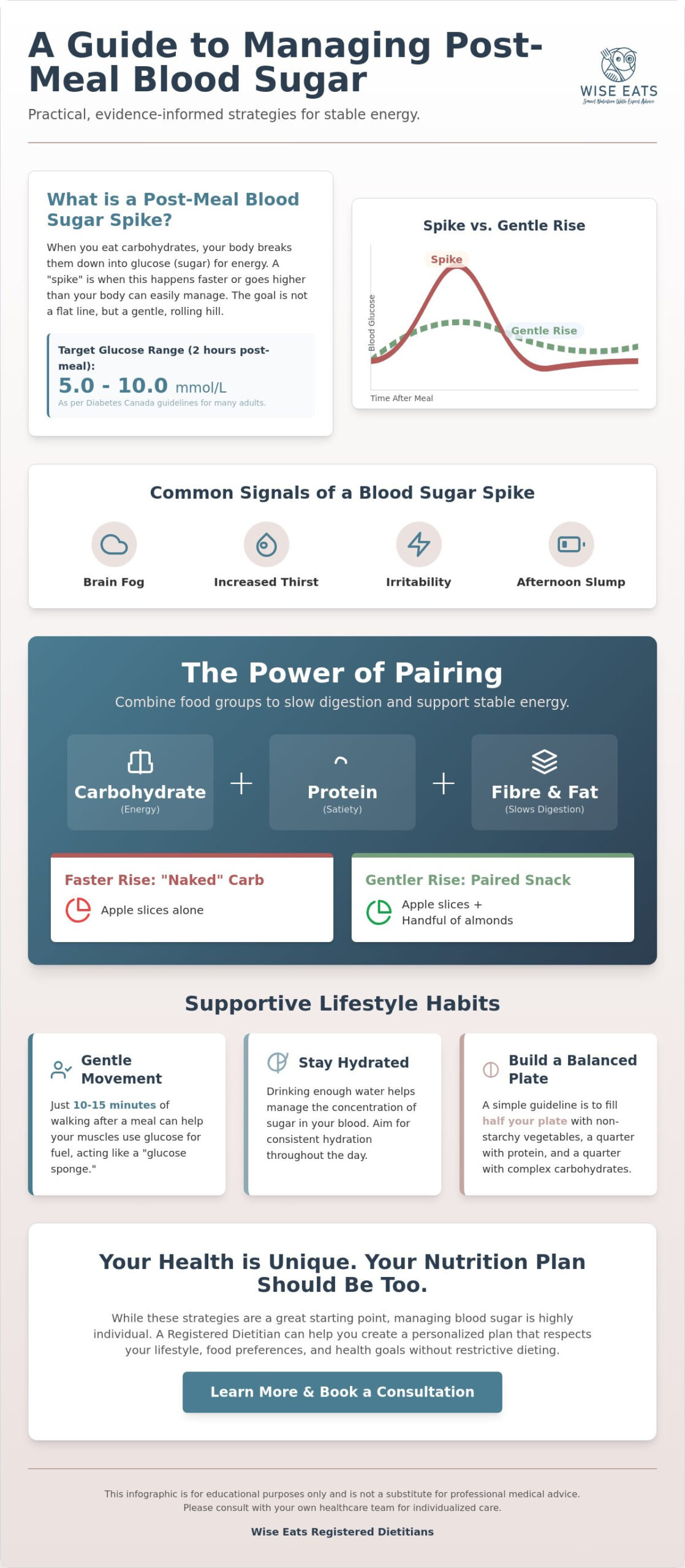
When you eat a meal containing carbohydrates, your body breaks those nutrients down into glucose, which enters your bloodstream to provide energy. This natural rise is called postprandial glucose. It’s a normal, necessary part of being human. However, sometimes that rise happens a bit faster or goes a bit higher than your body can manage efficiently in the moment. We often call this a “spike.”
It’s vital to remember that these fluctuations aren’t a moral failure. They aren’t a sign that you’ve “cheated” or failed at your health goals. Every body experiences shifts in glucose throughout the day. Understanding the mechanics of managing blood sugar spikes after meals is about gaining clarity and peace of mind, not assigning blame.
To better understand this concept, watch this helpful video:
When glucose enters your blood, your pancreas acts like a steady conductor. It releases insulin, a hormone that helps move that sugar into your cells. Think of insulin as the key that unlocks the door to your cells so they can use that energy for everything from thinking to walking. When the rise is too sharp, the body can sometimes struggle to keep up, leading to that “spike” feeling.
Normal Fluctuations vs. Hyperglycemia
A healthy glucose response looks more like a gentle, rolling hill than a jagged mountain peak. According to Diabetes Canada, many adults living with diabetes aim for a target of 5.0 to 10.0 mmol/L two hours after a meal. Your body also uses a hormone called amylin to help slow down how quickly nutrients are absorbed in your small intestine. This process is influenced by the Glycemic Index of your food, which measures how quickly specific carbohydrates might raise your levels. While “stable” is the goal, it doesn’t mean a flat line; your body is designed to adapt to the fuel you provide.
Symptoms You Might Notice
You might not always be looking at a monitor, but your body often sends subtle signals when glucose levels shift rapidly. Have you ever felt an intense “afternoon slump” or sudden irritability shortly after lunch? These can be signs of a spike followed by a quick drop. In some cases, you might notice increased thirst, “brain fog,” or a “hangry” feeling that seems out of proportion to when you last ate. Tracking these sensations alongside your readings can help you find personal patterns. This awareness makes managing blood sugar spikes after meals feel less like guesswork and more like a supportive conversation with your body.
Why Do Blood Sugar Spikes Happen After Meals?
It’s easy to assume that a high reading is simply a direct result of the last thing you ate. In reality, your body’s response is a complex dance involving several interconnected factors. One common culprit is what we call “naked carbohydrates.” These are carbs eaten entirely on their own, such as a plain piece of toast or a handful of crackers. Without protein, fat, or fibre to act as a buffer, these foods break down into glucose almost immediately. Refined grains and simple sugars, like those found in white bread or sweetened drinks, enter your bloodstream much faster than their complex, whole-grain counterparts.
Sometimes, the challenge lies in how your cells respond to the signals they receive. This is often referred to as insulin resistance. Imagine insulin is a doorbell that tells your cells to open up and let glucose in for fuel. With resistance, the cells become less responsive to that chime. The pancreas has to work much harder to be heard, and glucose can linger in the blood longer than we’d like. Beyond your food choices, your lifestyle acts as the backdrop for this entire process. Poor sleep or high stress can make your body temporarily more resistant to insulin. Even dehydration plays a part; when you’re low on water, the sugar in your blood becomes more concentrated. This is why watching your blood sugar involves looking at your whole day, not just your plate.
The Role of Digestion Speed
Think of your digestion like a water management system. A meal full of refined, “naked” carbs is like a “glucose waterfall,” where sugar crashes into your bloodstream all at once. Conversely, a balanced meal is like a “gentle stream,” releasing energy slowly and steadily. The speed of gastric emptying, which is how fast food leaves your stomach, determines the timing of that peak. If your stomach empties too quickly, you might see a sharper rise. Your unique gut health also dictates how efficiently you absorb these nutrients, which is a key part of managing blood sugar spikes after meals.
Individual Variability in Glucose Response
Have you ever wondered why you and a friend can eat the exact same bagel, yet your monitors show completely different results? It’s a common source of frustration, but it’s also perfectly normal. Your genetics and the unique community of bacteria in your gut, known as the microbiome, heavily influence how you metabolize food. Research suggests that our bodies are highly individual in how they process specific carbohydrates. This variability is why personalized nutrition counselling is so valuable. It helps you move past generic rules to find what truly works for your unique biology. If you’re feeling confused by your own patterns, reaching out for a supportive conversation can help provide the clarity you deserve.
Practical Ways to Manage Blood Sugar Spikes with Nutrition
The most empowering shift you can make in your diet isn’t about what you remove, but what you add. We call this “The Power of Pairing.” Since carbohydrates are your body’s preferred fuel source, the goal isn’t to avoid them, but to give them an “anchor.” By always combining carbohydrates with protein, healthy fats, or fibre, you can slow down how quickly sugar enters your bloodstream. This simple habit is one of the most effective tools for managing blood sugar spikes after meals while still enjoying the foods you love; for creative ideas on balanced meals, you might explore the digital recipe database at Meghna’s Food Magic.
Adding volume to your meals with non-starchy vegetables is another practical strategy. These vegetables are high in water and fibre, which helps slow the digestion of the entire plate. Soluble fibre, found in foods like oats, beans, and lentils, is particularly helpful. It creates a “gel” in your digestive tract that acts as a natural barrier, slowing the absorption of sugar. Whenever possible, choosing whole-grain or less processed versions of your favourite foods can provide that extra layer of fibre your body needs to stay steady.
The “Plate Method” for Balance
A simple way to visualize a balanced meal is to use the “Plate Method.” Imagine filling half of your plate with colourful, non-starchy vegetables. Fill one-quarter with a source of protein and the remaining quarter with a starch or grain. This visual guide helps you get a variety of nutrients without the need for meticulous calorie counting. For a Canadian-friendly dinner, you might try a roasted salmon fillet paired with half a plate of garlicky roasted broccoli and a small scoop of quinoa. If you’re looking for more specific ideas, personalized meal planning can help you find combinations that fit your unique tastes.
Smart Food Swaps and Additions
Small tweaks can make a significant difference in how your body responds to a meal. If you enjoy yogurt for a snack, try adding a tablespoon of hemp seeds or a few walnuts to “buffer” the natural sugars in the dairy and fruit. When eating fruit like apples or pears, leave the skin on; that’s where most of the essential fibre lives. The Glycemic Index is a helpful tool that ranks how quickly different carbohydrate foods affect your blood sugar, though it’s best used as a guide rather than a rigid rulebook.
The Order of Eating
Some emerging research suggests that the order in which you eat your food may influence your glucose response. Starting your meal with fibre-rich vegetables and protein before moving to your starches may help “coat” the digestive tract and slow down glucose entry. While this can be a helpful technique, it shouldn’t make your mealtime feel stressful or clinical. If you’re out for dinner with friends, don’t worry about being perfect. Focus on the joy of the meal and use these tips as gentle tools rather than strict requirements.
Lifestyle Habits That Support Stable Glucose
While what’s on your plate is a vital piece of the puzzle, your daily habits create the environment in which your body processes that food. Think of these habits as the “support crew” for your metabolism. For instance, staying well-hydrated is a simple but powerful tool. When you’re dehydrated, your blood volume decreases, which can make the sugar in your blood more concentrated. Similarly, managing your stress levels can prevent cortisol from signalling your liver to release extra glucose into your system. These small, non-food factors are often overlooked when managing blood sugar spikes after meals, yet they provide the foundation for a steadier day.
Consistent meal timing also plays a significant role in your metabolic health. Your body thrives on a predictable rhythm. When you eat at roughly the same times each day, your internal clock can better prepare for the incoming fuel. This predictability helps your pancreas and cells work in harmony, reducing the likelihood of unexpected surges or drops in energy. It’s about creating a sense of safety and stability for your body’s systems.
The Power of a Post-Meal Walk
Your muscles are the primary “sink” for glucose in your body. When you move, your muscles can pull sugar from your blood to use as fuel, often without needing as much insulin to do the job. This doesn’t mean you need a high-intensity workout after every lunch. A gentle, 10-minute stroll around the block or even doing some light housework is often enough to see a benefit. I often suggest finding a “movement snack” that fits naturally into your day. Could you take a short walk after dinner or stand up for a few stretches while the kettle boils? These small bursts of activity help your body process energy more efficiently and naturally.
Prioritizing Restorative Sleep
Did you know that just one night of poor sleep can temporarily increase insulin resistance the next morning? When we’re tired, our bodies struggle to manage glucose as effectively as they do when we’re well-rested. In a Canadian clinical context, it’s also important to consider conditions like sleep apnoea, which can significantly impact blood sugar management if left unaddressed. Creating a calming bedtime routine, such as dimming the lights or reading a book, supports your metabolic health by lowering stress hormones before you drift off. Quality rest ensures your body is ready to handle the next day’s meals with more resilience.
Finding the right balance between food, movement, and rest is a personal journey that doesn’t have to feel like a chore. If you’re feeling overwhelmed by how these factors interact, you don’t have to figure it out alone. You can reach out to us today to discuss how a personalized approach can help you feel more in control of your daily energy levels and health.
When to Consult a Professional for Personalized Support
While the strategies we’ve discussed provide a solid foundation, every person’s metabolic profile is as unique as a fingerprint. General education is a wonderful starting point, but it can’t always account for the nuances of your specific lab results, your daily schedule, or your cultural food preferences. To get a better understanding of your unique biomarkers, Dyvine Medical & Wellness offers comprehensive wellness panels that can provide valuable data for your health journey. This is where medical nutrition therapy differs from general advice. It’s a collaborative process where we look at your data together to understand the “why” behind your readings. Managing blood sugar spikes after meals becomes much simpler when you have a clear roadmap tailored just for you.
One of the biggest hurdles in health management is decision fatigue. Choosing what to eat several times a day while worrying about glucose numbers can feel like a full-time job. By utilizing custom meal planning, you can remove that guesswork. We focus on foods you actually enjoy while ensuring they’re balanced to support your energy levels. This isn’t about following a rigid “diet,” but rather about finding a sustainable rhythm that respects your lifestyle and your taste buds.
When to Seek Help
There are certain times when professional guidance is particularly beneficial. You might consider reaching out if you experience frequent, unexplained highs or lows despite making dietary changes. It’s also important to consult your healthcare team if managing your blood sugar is causing significant anxiety or interfering with your relationship with food. For those who may need additional help with daily routines, Elleson Care provides person-centred support that can help manage health conditions while living independently. If you’re currently taking glucose-lowering medications, always speak with a doctor or dietitian before making significant changes to your eating patterns to ensure your safety and well-being.
Working with a Canadian Registered Dietitian
Seeing a dietitian for diabetes management who understands the Canadian food landscape offers a distinct advantage. We’re familiar with the specific brands in our grocery stores and the seasonal availability of produce in British Columbia. Our approach is fundamentally weight-neutral, meaning we prioritize health behaviours and how you feel over the number on the scale. We’re here to act as your knowledgeable partner, helping you translate complex data into actionable steps without any shame or judgment. If you’re ready to move forward with more clarity, I encourage you to reach out for a discovery call to see how personalized support can help you thrive.
This article is for educational purposes and is not a substitute for professional medical advice. Please ensure you consult with your own healthcare team, such as a doctor or Registered Dietitian, for individualized care and before making changes to your health routine or medications.
Moving Forward with Confidence and Clarity
Managing blood sugar spikes after meals doesn’t have to be a source of constant stress or restriction. By focusing on the “Power of Pairing” and incorporating gentle movement like a short walk, you can create a more stable energy rhythm for your body. These practical, evidence-informed shifts allow you to prioritize your health while still enjoying the foods that bring you joy. You’ve already taken the first step by learning how your body processes fuel; now it’s about finding the specific patterns that work for your unique biology.
If you’re looking for a knowledgeable partner to help navigate this journey, we’re here to support you. Our BC-licensed professionals offer evidence-based nutrition care through a compassionate, weight-inclusive approach. We provide specialized support for diabetes and insulin resistance, helping you translate complex readings into a clear, actionable plan. You deserve to feel empowered and energized every day.
Ready to take the next step? Book a consultation with a Registered Dietitian to create your personalized blood sugar management plan and discover how a tailored approach can bring you peace of mind. We’re in this together, and a more balanced life is well within your reach.
This article is for educational purposes and is not a substitute for professional medical advice. Always consult with your own healthcare team before making changes to your diet or health routine.
Frequently Asked Questions
Is it normal for blood sugar to rise after every meal?
Yes, it’s perfectly normal for your blood sugar to rise after you eat. This is a natural biological process called a postprandial response, where your body breaks down carbohydrates into glucose for energy. While everyone experiences these rises, the goal of managing blood sugar spikes after meals is to keep that rise within a range that feels good for your body and maintains your energy levels.
How long after eating should I check my blood sugar to see a spike?
You’ll typically see the highest point in your blood sugar about one to two hours after finishing a meal. Diabetes Canada often recommends checking two hours after a meal to see how well your body has managed the glucose. This timing can vary depending on what you ate, as high-fat or high-fibre meals can sometimes slow down how quickly your blood sugar peaks.
Can drinking water help lower a blood sugar spike quickly?
Drinking water doesn’t directly “flush out” sugar to lower a spike instantly, but staying hydrated is essential for overall glucose management. When you’re dehydrated, your blood volume decreases, which can make the sugar in your blood more concentrated. Proper hydration helps your kidneys function well, which can assist in filtering out excess glucose from your system over time.
Does apple cider vinegar really stop blood sugar spikes?
Some small studies suggest that vinegar may modestly improve insulin sensitivity in some cases, but the evidence is currently uncertain and limited. It isn’t a “magic bullet” or a substitute for established nutrition strategies like pairing carbohydrates with protein. If you enjoy the taste in a salad dressing, it’s a fine addition, but it shouldn’t replace the practical, evidence-informed habits we’ve discussed.
What are some effective snacks to prevent blood sugar crashes later?
Helpful snacks combine a source of fibre with a source of protein or healthy fat to provide steady, lasting energy. For example, pairing a small apple with a tablespoon of almond butter or having a Greek yogurt with a few berries can provide a more stable response. These combinations help you avoid the “roller coaster” of a sharp spike followed by a sudden, fatiguing crash.
Should I stop eating fruit if I am worried about blood sugar spikes?
You don’t need to stop eating fruit, as it provides essential vitamins, antioxidants, and fibre that support your overall health. Instead of cutting it out, try pairing your fruit with a protein source, like a piece of cheese or a few walnuts. Choosing fruits with the skin on, such as berries or pears, also adds more fibre to help slow down the absorption of sugar.
What should I do if my blood sugar is high after a meal?
If you notice a high reading, a helpful first step is to stay calm and engage in some gentle movement, like a 10-minute stroll around the house. This helps your muscles use up some of that extra glucose for energy without needing as much insulin. It’s also useful to note what you ate and how you felt, as this information is a valuable tool for your next discussion with your healthcare team. For those looking to gain deeper insights into their health through testing, you can read more about Bewell to explore comprehensive checkup packages.
Can stress cause my blood sugar to spike even if I haven’t eaten?
Yes, stress can absolutely cause your blood sugar to rise through the release of hormones like cortisol. When you’re stressed, your body enters a “fight or flight” mode and signals your liver to release stored glucose for a quick energy boost. This is why managing blood sugar spikes after meals involves looking at your emotional well-being and sleep quality just as much as your food choices.
This article is for educational purposes and is not a substitute for professional medical advice. Please ensure you consult with your own healthcare team, such as a doctor or Registered Dietitian, for individualized care and before making changes to your health routine or medications.

Article by
Rachel McBryan, Dietitian
Rachel McBryan is a licenced Dietitian in British Columbia offering comprehensive nutrition counselling as virtual and/or in-person counselling sessions to suit your needs and preferences. With a Bachelor of Science in Nutrition and Food Science, Rachel has over 20 years experience helping people address their health through nutrition. She was awarded Human Nutrition and Food Science BSc.from University of Alberta followed by post-grad course work at UBC in guidance counselling.
An eating disorder is a serious mental health illness.
If you are in immediate distress or crisis, please contact emergency services by dialing 911 or calling Vancouver Island Crisis Line: 1-888-494-3888. This article is educational information only, not professional diagnosis or treatment. Content is AI generated and may not be reviewed for accuracy.