

How a Dietitian for Rheumatoid Arthritis Can Support Your Health Journey
Living with rheumatoid arthritis (RA) involves managing symptoms that can affect your entire life, from joint pain and stiffness to profound fatigue. While medication prescribed by your rheumatologist is the cornerstone of treatment, nutrition plays a crucial supportive role. A Registered Dietitian (RD) is a regulated health professional who specializes in translating complex nutritional science into practical, everyday food choices to help you manage your condition.
-
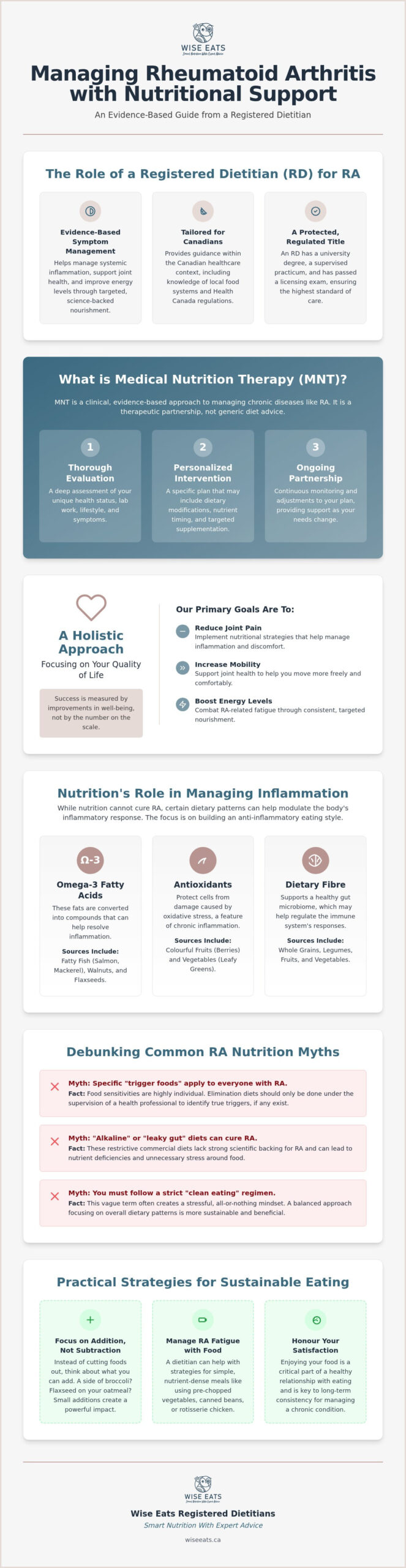
For individuals with RA, a dietitian focuses on evidence-based strategies to help manage systemic inflammation, support joint health, and improve overall energy levels through targeted nourishment.
-
Working with a dietitian for rheumatoid arthritis in Canada ensures you receive guidance tailored to the Canadian context. This includes familiarity with local food systems, Health Canada regulations, and navigating provincial healthcare to collaborate effectively with your existing medical team.
-
In Canada, the term "Registered Dietitian" is a protected title, meaning an RD has completed a university degree in nutrition, a supervised practicum, and passed a national licensing exam. This distinguishes them from unregulated "nutritionists," ensuring you receive care based on the highest standard of scientific evidence.
The Role of Medical Nutrition Therapy (MNT)
Medical Nutrition Therapy (MNT) is a clinical, evidence-based approach used by dietitians to manage chronic diseases, including autoimmune conditions like rheumatoid arthritis. It is a therapeutic process that goes far beyond generic diet advice, focusing on a deep assessment of your unique health status, lab work, lifestyle, and symptoms.
-
MNT involves a thorough evaluation of your nutritional needs, followed by a personalized intervention plan. This may include specific dietary modifications, nutrient timing, and targeted supplementation to address inflammation and nutrient deficiencies common in RA.
-
Unlike general wellness coaching, MNT is grounded in established clinical protocols and scientific research. Your dietitian works as a partner in your healthcare, providing ongoing monitoring and adjustments to your plan as your needs change.
-
This partnership is built on a foundation of support and professional guidance, helping you implement sustainable changes without the judgment or pressure often associated with restrictive diets.
Understanding Nutrition and Inflammation: A Clinical Perspective
Inflammation is a natural and necessary biological process, but in rheumatoid arthritis, the immune system mistakenly attacks healthy tissues, leading to chronic inflammation. While nutrition cannot "cure" RA, specific dietary patterns can play a significant role in modulating the body’s inflammatory response. Food is one powerful tool in your comprehensive management plan.
-
Focus on Anti-Inflammatory Patterns: Rather than eliminating foods, the goal is to build a dietary pattern rich in compounds that help manage inflammation. Key components include omega-3 fatty acids, antioxidants, and dietary fibre.
-
Omega-3 Fatty Acids: Found in fatty fish (like salmon, mackerel, and sardines), walnuts, and flaxseeds, these fats are converted into compounds that can help resolve inflammation.
-
Antioxidants: These molecules, abundant in colourful fruits and vegetables like berries, leafy greens, and bell peppers, help protect cells from damage caused by oxidative stress, a key feature of chronic inflammation.
-
Dietary Fibre: A high-fibre diet supports a healthy gut microbiome. Emerging research suggests that the gut plays a role in regulating the immune system, and a balanced microbiome may help influence autoimmune responses.
Debunking Common RA Nutrition Myths
The internet is filled with conflicting advice about diet and RA, much of which is not supported by strong scientific evidence. A Registered Dietitian can help you navigate this misinformation and focus on strategies that are both safe and effective.
-
"Trigger Foods": While some individuals may find specific foods worsen their symptoms, there is no universal list of "trigger foods" for everyone with RA. Common culprits like nightshades (tomatoes, peppers) or gluten only need to be avoided if a true sensitivity or allergy is identified through a structured elimination diet supervised by a health professional.
-
"Alkaline" or "Leaky Gut" Diets: Many popular diets claim to "cure" RA by altering the body’s pH or healing a "leaky gut." The human body tightly regulates its pH regardless of diet, and while gut health is important, these restrictive commercial diets often lack scientific backing and can lead to nutrient deficiencies.
-
"Clean Eating": This vague term often promotes an unnecessary fear of processed foods and can create a stressful, all-or-nothing mindset. A more balanced approach focuses on the overall nutritional quality of your diet rather than labelling foods as "good" or "bad." For more on this, see our guide on red flags to watch for in nutrition advice.
Practical Strategies for Sustainable Eating
Adopting a nourishing eating pattern shouldn’t feel like a strict, joyless regime. The goal is to integrate beneficial foods into your life in a way that feels manageable and satisfying. This approach helps ensure long-term consistency, which is key to managing a chronic condition.
-
Focus on Addition, Not Subtraction: Instead of thinking about what to cut out, consider what you can add. Can you add a side of steamed broccoli to your dinner? Can you sprinkle ground flaxseed on your morning oatmeal? Small additions accumulate to create a powerful impact over time.
-
Manage RA Fatigue with Food: The profound fatigue associated with RA can make cooking feel impossible. A dietitian can help you develop strategies for simple, nutrient-dense meals that require minimal energy, such as using pre-chopped vegetables, canned beans, or rotisserie chicken.
-
Honour Satisfaction: Enjoying your food is a critical part of a healthy relationship with eating. A sustainable plan includes foods you genuinely like, ensuring that your meals support both your physical and emotional well-being.
Personalizing Your RA Nutrition Plan: Custom Meals and Precision Supplements
Because rheumatoid arthritis affects every person differently, a one-size-fits-all diet plan is rarely effective. A truly personalized nutrition strategy must consider your unique biochemistry, lifestyle, food preferences, and even your energy levels on any given day. This is where a custom approach to both meals and supplements becomes essential.
-
A personalized plan should reflect your cultural background, budget, and cooking abilities. The Wise Eats approach to custom meal planning prioritizes flexibility and real-world practicality.
-
Off-the-shelf multivitamins often contain generic formulas that may not provide the specific nutrients or therapeutic doses needed to address the metabolic demands of an autoimmune condition.
-
We partner with VitaminLab, a Canadian company specializing in bespoke supplement manufacturing, to offer precision-engineered formulas designed to meet your exact needs.
Bespoke Supplements with VitaminLab
For those with RA, managing multiple supplements can lead to "pill fatigue"—the burden of taking numerous pills each day. A bespoke, all-in-one formula can simplify your routine, improve consistency, and deliver targeted support where you need it most.
-
Using your health history, symptoms, and available lab results, we can help design a unique supplement formula crafted specifically for you. This data-driven approach ensures you get what you need, without unnecessary fillers or ingredients.
-
Combining key nutrients into a single, easy-to-take powder or capsule reduces the number of bottles in your cabinet and makes it easier to stick with your plan, which is crucial for seeing results.
-
Quality and safety are paramount. VitaminLab’s manufacturing facility is NSF-certified and holds a site license from Health Canada, ensuring your personalized supplements meet the highest standards for purity and potency.
Bioavailability and Targeted Ingredients
When it comes to supplements, the details matter. The effectiveness of a nutrient depends not just on the dose, but also on its chemical form, which determines how well your body can absorb and utilize it (its bioavailability).
-
For example, magnesium glycinate is often better absorbed and less likely to cause digestive upset than magnesium oxide, making it a preferable choice for many individuals.
-
Your health is not static, and neither is your nutrition plan. We believe in practitioner-guided adjustments, regularly reviewing your progress and modifying your formula to ensure it continues to meet your evolving needs. You can learn more about the risks of a non-professional approach in our guide to the hidden risks of self-prescribing supplements.
Practical Strategies for Managing RA Flares and Kitchen Fatigue
One of the most challenging aspects of living with RA is the unpredictability of flares. During a flare-up, joint pain, swelling, and overwhelming fatigue can make even the simplest tasks, like preparing a meal, feel monumental. A compassionate and realistic nutrition plan must account for these difficult days.
-
During a flare, "healthy eating" is whatever is most accessible and requires the least amount of effort. It is crucial to have a plan for low-energy days.
-
This includes strategies like using pre-cut vegetables, canned beans and fish, frozen fruit for smoothies, and having healthy frozen meals on hand.
-
Organizing your kitchen to be more ergonomic can also make a significant difference. Storing heavy items at waist level, using lightweight cookware, and investing in adaptive kitchen tools can reduce strain on your joints.
When to Seek Extra Support
Managing nutrition with a chronic illness can be complex. It is important to recognize when you might need professional guidance from a dietitian. Here are a few signs that it’s time to seek extra support:
-
Food-Related Anxiety: You feel anxious, guilty, or overwhelmed when you cannot stick to your "ideal" eating plan, especially during a flare.
-
Unintended Weight Changes: You are experiencing significant weight loss or gain because pain, fatigue, or medication side effects are interfering with your appetite or ability to eat.
-
Digestive Distress: You are consistently experiencing digestive symptoms like bloating, constipation, or diarrhea that impact your ability to eat a varied diet.
Building a "Flare-Friendly" Pantry
Having a well-stocked pantry and freezer can be a lifeline during a flare. The goal is to have nourishing, easy-to-prepare options available so you can fuel your body with minimal effort. Consider keeping these staples on hand:
-
Shelf-Stable Proteins: Canned salmon or tuna, canned lentils and beans, protein powder, and shelf-stable tofu.
-
Easy Grains & Starches: Instant oatmeal, whole-grain crackers, minute rice or quinoa, and whole-wheat pasta.
-
No-Chop Fruits & Vegetables: Frozen berries and mangoes, canned peaches in water, applesauce, and low-sodium canned vegetables.
-
Hydration and Simple Snacks: Herbal teas, electrolyte drinks, bone broth, nuts, seeds, and individual yogurt cups.
Building Your Healthcare Team: The Role of a Registered Dietitian
Your relationship with your healthcare providers should be a safe and collaborative space. When seeking nutritional support for RA, it is important to find a Registered Dietitian who understands the clinical complexities of autoimmune disease and can work as an integrated member of your healthcare team.
-
When choosing a dietitian, ask about their experience with chronic inflammatory conditions and their approach to creating personalized, sustainable nutrition plans.
-
At Wise Eats, our commitment is to provide evidence-informed care delivered with professionalism and empathy. We focus on practical solutions that fit your life.
-
Your first session involves a comprehensive assessment of your medical history, symptoms, current eating patterns, and personal health goals. From there, we work together to build a realistic and effective plan.
Our Canadian Team of Registered Dietitians
Our team of dietitians is licensed to provide care for clients across Canada, including in British Columbia, Alberta, and Ontario. We understand the importance of accessible care, especially for those living with mobility challenges.
-
We offer virtual consultations, allowing you to receive expert guidance from the comfort of your own home. This eliminates the stress of travel and ensures you can access support when you need it most. You can learn more about our team, including BC-based dietitian Rachel McBryan, RD.
-
We believe in integrated care and are committed to collaborating with your rheumatologist, family doctor, and other healthcare providers to ensure your nutrition plan complements your overall medical treatment.
Your Next Steps Toward Improved Quality of Life
Managing rheumatoid arthritis is a long-term journey, and nutrition is one part of a multifaceted approach to care. The goal is not perfection, but consistent, small steps toward supporting your body and reducing inflammation.
-
We encourage you to start with one small, manageable change at a time. Lasting progress is built on a foundation of sustainable habits.
-
Patience and self-compassion are essential. There will be good days and difficult days. A flexible nutrition plan allows you to adapt to the ups and downs of living with a chronic condition.
-
Remember, your health is influenced by many factors beyond food, including stress management, sleep, and appropriate physical activity. You are more than your diagnosis, and our goal is to help you live your life as fully as possible.
If you are looking for a dietitian for rheumatoid arthritis in Canada, our team is here to help. Book a consultation with a Wise Eats Registered Dietitian to develop a balanced, evidence-based nutrition plan that works for you.
Mandatory Medical Disclaimer: This article is intended for informational purposes only and is not a substitute for professional medical advice, diagnosis, or treatment. Always seek the advice of your physician or other qualified health provider with any questions you may have regarding a medical condition.

Article by
Rachel McBryan, Dietitian
Rachel McBryan is a licenced Dietitian in British Columbia offering comprehensive nutrition counselling as virtual and/or in-person counselling sessions to suit your needs and preferences. With a Bachelor of Science in Nutrition and Food Science, Rachel has over 20 years experience helping people address their health through nutrition. She was awarded Human Nutrition and Food Science BSc.from University of Alberta followed by post-grad course work at UBC in guidance counselling.
An eating disorder is a serious mental health illness.
If you are in immediate distress or crisis, please contact emergency services by dialing 911 or calling Vancouver Island Crisis Line: 1-888-494-3888. This article is educational information only, not professional diagnosis or treatment. Content is AI generated and may not be reviewed for accuracy.