

That persistent, uncomfortable feeling of fullness can be more than just a physical nuisance—it can disrupt your day, affect your confidence, and leave you feeling frustrated. If you’re navigating the world of gut health, you’ve likely been overwhelmed by promises of quick fixes and miracle cures. But what if the path to digestive comfort wasn’t about restrictive diets or a cabinet full of random pills? What if it was about understanding your unique body and providing it with targeted, evidence-based support?
As a team of Registered Dietitians in Canada, we see the confusion and discomfort that bloating causes every day. You’re looking for real answers, not wellness trends. You want to know which supplements are backed by science, how to find them safely in Canada, and how to integrate them into your life without falling back into a cycle of restriction. This guide is for you. We’ll explore the evidence-based supplement strategies that can help manage bloating and support your digestive health, all through a compassionate, professional lens.
Understanding Bloating and the Role of Gut Health Supplements
First, let’s be clear: bloating is a physical sensation, not a personal failing. It’s often described as a feeling of pressure, tightness, or a swollen abdomen, sometimes accompanied by gas, burping, or abdominal gurgling. While occasional bloating is a normal part of digestion, persistent and uncomfortable symptoms are a sign that your digestive system could use some additional support.
Many factors can contribute to this discomfort. For instance, irregular eating patterns can impact gut motility—the coordinated muscular contractions that move food through your digestive tract. When this rhythm is disrupted, it can lead to a buildup of gas and that familiar feeling of pressure. From our weight-inclusive perspective, the focus is always on how you feel and function, not on the appearance of your body. Our goal is to help you find relief and improve your quality of life.
Common Causes of Digestive Discomfort in Canada
Digestive discomfort is complex, with various potential underlying causes. Conditions like Irritable Bowel Syndrome (IBS) and functional dyspepsia are common diagnoses characterized by symptoms like bloating, gas, pain, and altered bowel habits. At the heart of many of these issues is the gut microbiome.
Think of your gut microbiome as a bustling ecosystem inside your digestive tract, home to trillions of microorganisms, including bacteria, viruses, and fungi. This community plays a vital role in breaking down food, absorbing nutrients, producing essential vitamins, and supporting your immune system. When the balance of this ecosystem is disrupted—a state known as dysbiosis—it can lead to increased gas production and inflammation, contributing directly to bloating. Factors like stress, medication use, and dietary patterns can all influence the health of your microbiome. For some, digestive shifts can also occur during recovery from disordered eating, as the body adapts to more regular and adequate nourishment. For more information on this connection, you can read our guide on IBS and disordered eating.
When Supplements Can Support Your Digestive Journey
A well-rounded, flexible approach to eating is the foundation of good digestive health. Supplements are not a replacement for nourishment; rather, they are tools that can provide targeted support when needed. They can deliver concentrated doses of specific compounds that may be difficult to obtain from food alone in therapeutic amounts.
For example, certain supplements can help manage specific symptoms like excessive gas or slow motility. The key is understanding that there is no one-size-fits-all solution. The "best" supplement is one that is carefully chosen to address your body’s specific needs, based on your symptoms, health history, and eating patterns. This is where professional guidance becomes invaluable.
Evidence-Based Ingredients for Digestive Support and Comfort
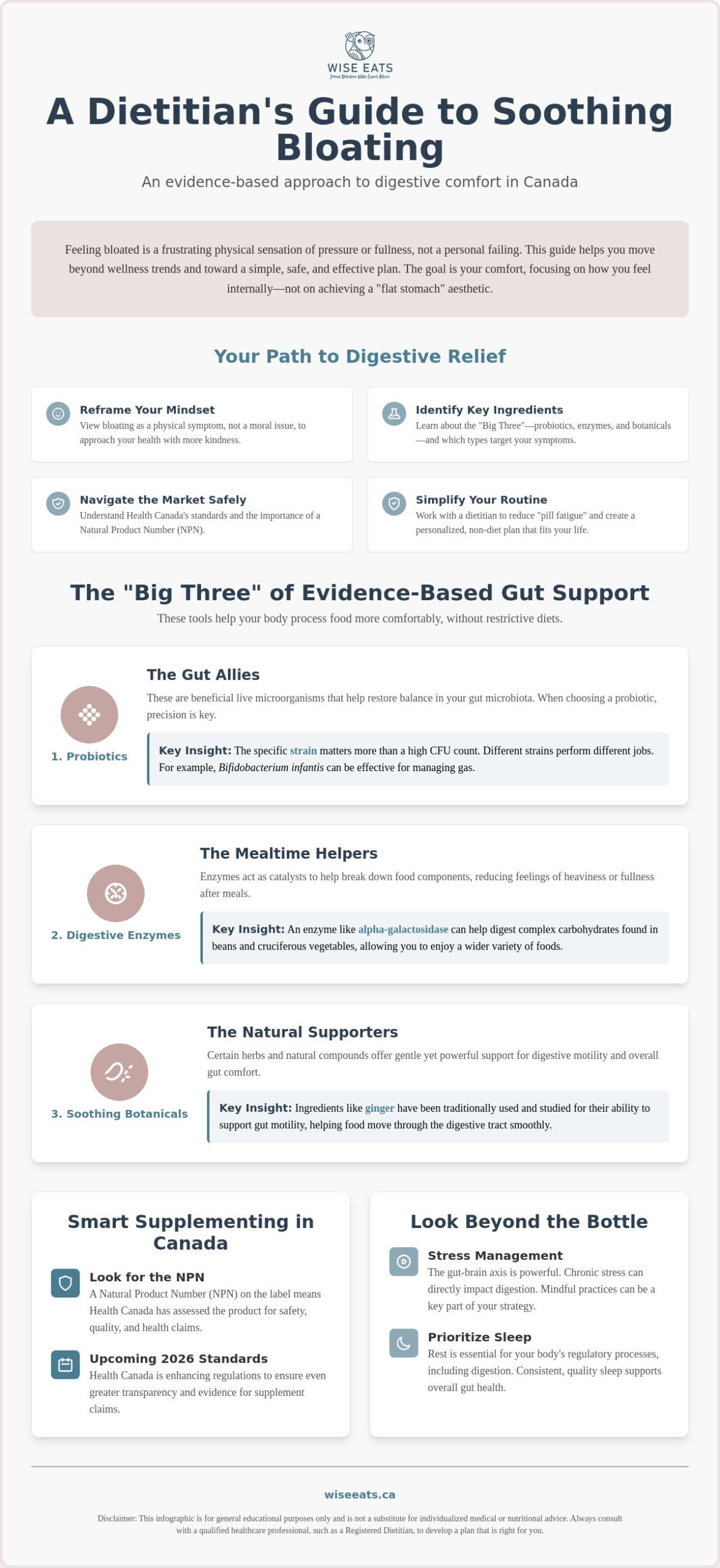
Instead of relying on dietary restriction as the only solution for bloating, we can use targeted nutraceuticals to support digestive function and comfort. The goal is to expand your diet with confidence, not shrink it with fear. This involves understanding the "Big Three" categories of gut health ingredients: probiotics, digestive enzymes, and soothing botanicals. The most effective approach often involves precision dosing—getting the exact ingredients you need at the right levels, without unnecessary fillers.
Probiotics and Enzymes: Restoring Balance
Probiotics are live microorganisms that, when administered in adequate amounts, confer a health benefit on the host. They help replenish and support the beneficial bacteria in your gut microbiome. However, not all probiotics are created equal. Strain specificity is crucial; for example, strains like Bifidobacterium lactis are well-researched for their ability to help manage gas and bloating. When choosing a probiotic, Colony Forming Units (CFUs) aren’t the only measure of quality. The specific strains and their ability to survive the journey to your gut are far more important.
Digestive enzymes, on the other hand, are proteins that help break down the food you eat. Our bodies produce them naturally, but sometimes a little extra help can make a big difference. For instance, an enzyme like alpha-galactosidase can help break down the complex carbohydrates found in beans and cruciferous vegetables, reducing the gas and bloating they can sometimes cause. This allows you to enjoy a wide variety of nutrient-dense foods without discomfort.
Herbal and Amino Acid Support
Beyond probiotics and enzymes, several other compounds have strong evidence for supporting digestive comfort:
-
Ginger Root and Peppermint Oil: Both are known as prokinetics, meaning they help support gentle and regular gut motility. They can help soothe the stomach and reduce the feeling of food sitting too long, which contributes to fullness and bloating.
-
L-Glutamine: This amino acid is a primary fuel source for the cells that line your intestines. Research suggests it may play a role in supporting the integrity of the intestinal lining, which is crucial for proper gut function and a healthy immune response.
-
Magnesium: Known for its role in muscle relaxation, magnesium can also help with regularity by drawing water into the intestines and supporting smooth muscle contractions in the colon. It’s a gentle way to promote comfortable bowel movements. For more on this mineral, see our general information on supplements.
Navigating the Supplement Aisle: Safety and Quality in Canada
Walking into the "wellness" aisle can be overwhelming. With countless bottles making bold claims, how can you be sure you’re choosing a safe and effective product? In Canada, there’s a key indicator of safety and quality to look for: the Natural Product Number (NPN).
An NPN on a product label means that Health Canada has assessed it for safety, quality, and efficacy. It’s a crucial checkpoint that separates regulated products from questionable ones sold online. But even with safe products, a new problem can arise: "pill fatigue." Trying to manage five, six, or even more separate bottles for your digestive health is not only expensive but also complicated and unsustainable. This is where a modern, personalized approach can change everything. Through our partnership with VitaminLab, we can offer custom-crafted, data-driven formulas that combine your needed ingredients into a single, simple dose. Because these formulas are hand-crafted after you order, you can be assured of their freshness and potency.
The Importance of Third-Party Testing and GMP
Beyond an NPN, look for products manufactured in a facility that follows Good Manufacturing Practices (GMP). GMP is a set of guidelines that ensures products are consistently produced and controlled according to quality standards. It covers everything from the sourcing of raw materials to the final packaging.
Third-party certifications, such as those from NSF International, provide another layer of assurance. These organizations test products to verify that they contain what the label says they contain and are free from contaminants. High-quality supplement providers, like VitaminLab, also use branded ingredients (such as Albion Minerals®) that have been clinically studied for superior absorption and effectiveness.
Personalized All-in-One Formulas
Imagine simplifying your entire gut health routine into one daily capsule or powder. That’s the benefit of a personalized formula. Instead of buying separate bottles of a probiotic, a digestive enzyme, ginger, and magnesium, you can have them combined into a single, cohesive blend designed specifically for you.
Working with a Registered Dietitian is the key to unlocking this potential. We use your symptoms, health history, and even lab data to determine the precise ingredients and dosages your body needs. This evidence-based approach ensures your formula is built on science, not guesswork. Self-prescribing supplements can be ineffective at best and risky at worst. To understand more, read about the hidden risks of self-prescribing supplements.
Building Your Personalised Gut Health Strategy with a Dietitian
A Registered Dietitian acts as your expert guide, helping you navigate the complexities of bloating without resorting to restrictive diets or unproven trends. We take a holistic approach, looking at the big picture of your health. This includes exploring the interplay between your eating patterns, stress levels, sleep quality, and physical activity, as all these factors can influence digestive well-being.
Our philosophy is to support a varied and flexible eating pattern that nourishes your body without creating unnecessary rules or restrictions. We provide virtual care to clients across Canada, including in British Columbia and Alberta, making expert guidance accessible from the comfort of your home.
What to Expect in a Digestive Health Consultation
Your journey with a dietitian is a collaborative process. We start by listening to your story and understanding your unique experience with bloating. We may use tools like symptom logs to identify patterns and potential triggers, all while ensuring we don’t create fear around food.
This information helps us build a comprehensive plan that may include dietary adjustments, lifestyle strategies, and a personalized VitaminLab supplement formula tailored to your needs. Our focus is on creating sustainable habits that fit into your life, moving away from the "30-day challenge" or "gut cleanse" mentality and toward long-term digestive comfort and health.
When to Seek Help: Red Flags
While bloating is common, certain symptoms warrant a conversation with a healthcare professional. If you experience any of the following, we encourage you to reach out:
-
Persistent or worsening abdominal pain
-
Significant and unintentional weight changes
-
Changes in bowel habits that are severe or ongoing
-
Difficulty swallowing or a feeling of food getting stuck
-
Dietary restrictions that cause significant distress or impact your social life
If your relationship with food has become a source of anxiety, please know that you are not alone and professional support is available. You can connect with our team of compassionate dietitians through our contact page to start your journey toward relief.
Frequently Asked Questions (FAQs)
Can I take gut health supplements if I have a history of disordered eating?
Yes, but it should always be done under the guidance of a healthcare team that includes a dietitian and a therapist. The focus should be on supporting regular nourishment and digestive function without promoting restrictive behaviours. A professional can help ensure supplements are used as a tool for healing, not as a substitute for food.
How long does it take for bloating supplements to start working?
This varies greatly depending on the individual, the cause of the bloating, and the specific supplement. Some people may notice improvements with digestive enzymes within a few days. Probiotics and other supportive ingredients may take several weeks to a month to show a noticeable effect as your gut microbiome adjusts.
Is it better to get nutrients from food or supplements for gut health?
Food is always the foundation. A diet rich in a variety of plant fibres, lean proteins, and healthy fats provides the fuel your gut needs to thrive. Supplements should be seen as a targeted "add-on" to fill specific gaps or provide a therapeutic dose of a compound that is difficult to get from food alone.
Are personalized vitamins worth the cost compared to drugstore brands?
While the initial cost may be higher, personalized vitamins can be more cost-effective in the long run. You are paying for exactly what you need—no more, no less. This eliminates the expense of buying multiple separate bottles, many of which may contain fillers or ingredients that aren’t right for you. The precision and quality can lead to better results, making it a worthwhile investment in your health.
What is the difference between a probiotic and a digestive enzyme?
A probiotic is a live beneficial bacterium that becomes part of your gut ecosystem, helping to improve its overall health and balance. A digestive enzyme is a non-living protein that acts like a catalyst to help break down specific components of food (like fats, proteins, or carbohydrates) into smaller, more absorbable units.
Can I take too much Vitamin D while trying to support my gut health?
Yes. Vitamin D is a fat-soluble vitamin, which means excess amounts are stored in the body and can build up to toxic levels. While it’s important for immune function, which is linked to gut health, it’s crucial to have your levels tested and supplement under professional guidance to ensure you’re taking a safe and appropriate dose.
Your Next Step Toward Digestive Comfort
You deserve to feel comfortable in your body and confident in your food choices. Let us help you cut through the noise and create a clear, personalized plan for your digestive health.
-
Access to Health Canada Licensed custom formulas
-
Compassionate, weight-inclusive care
-
Licensed experts in BC, Alberta, and Ontario
Mandatory Disclaimer: This article is intended for general educational purposes only and is not a substitute for individualized medical or nutritional advice. Always consult with a qualified healthcare professional, such as a Registered Dietitian or your doctor, before making any changes to your diet, lifestyle, or supplement routine.

Article by
Rachel McBryan, Dietitian
Rachel McBryan is a licensed Dietitian in British Columbia offering comprehensive nutrition counselling as virtual and/or in-person counselling sessions to suit your needs and preferences. With a Bachelor of Science in Nutrition and Food Science, Rachel has over 20 years' experience helping people address their health through nutrition. She was awarded a Human Nutrition and Food Science BSc. from the University of Alberta, followed by post-grad coursework at UBC in guidance counselling.
An eating disorder is a serious mental health illness.
If you are in immediate distress or crisis, please contact emergency services by dialling 911 or calling the Vancouver Island Crisis Line: 1-888-494-3888. This article is for educational information only, not professional diagnosis or treatment. Content is AI generated and may not be reviewed for accuracy.