

An eating disorder is a serious mental health illness.
If you are in immediate distress or crisis, please contact emergency services by dialing 911 or calling Vancouver Island Crisis Line: 1-888-494-3888. A dietitian, psychologist, psychiatrist, and medical team work together to support eating disorder recovery.
This article is educational information only, not professional diagnosis or treatment. Content is AI generated and may not be reviewed for accuracy.
What if the number on your bathroom scale was actually the least interesting thing about your health? Many of us have felt that familiar sting of anxiety before stepping onto a cold scale, only to let a fluctuating digit determine whether we have had a “good” or “bad” day. It is incredibly frustrating to feel like a failure despite making positive, sustainable changes to your eating habits. You are not alone in this struggle, and your worth is certainly not defined by gravity’s pull on your body.
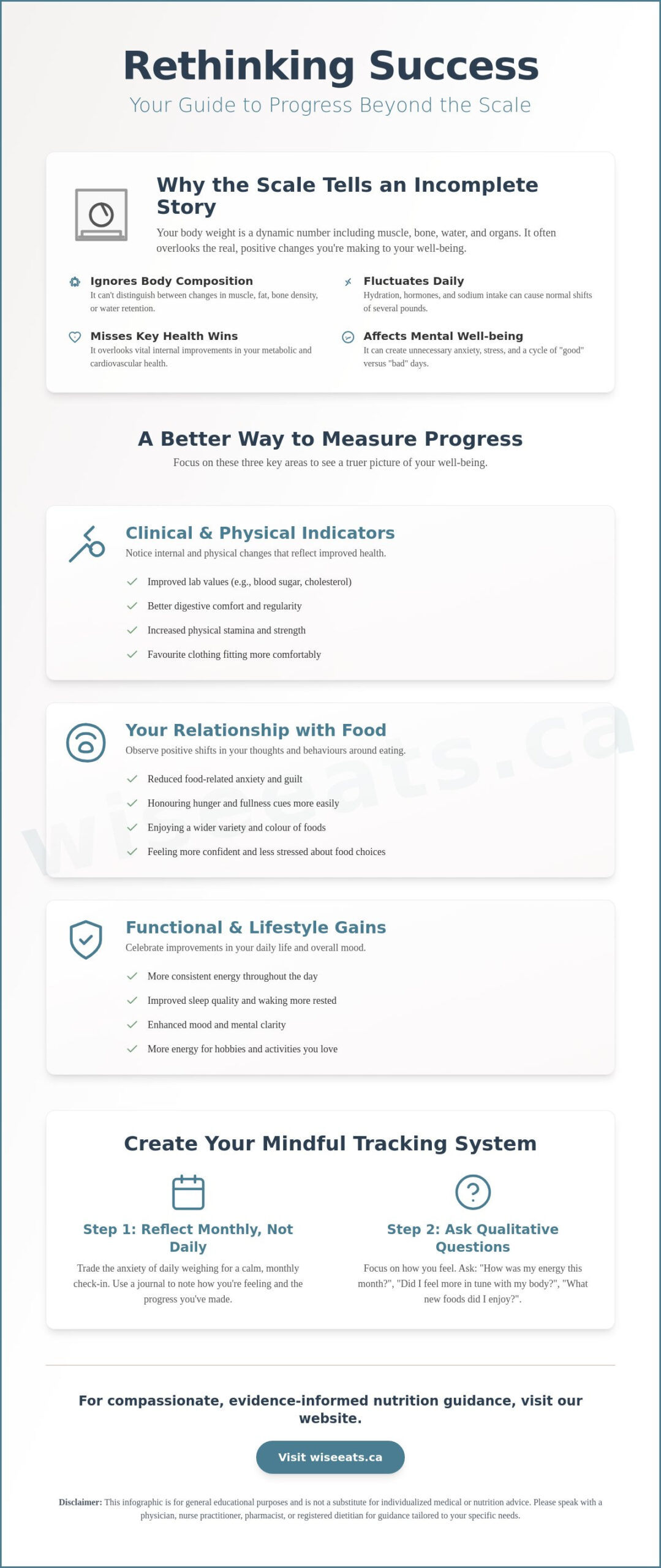
You deserve a more reliable and compassionate way to track your journey. This guide will show you how to measure nutrition success without a scale by using a weight-neutral, evidence-informed framework. Instead of focusing on a single, often misleading number, you will learn to monitor your progress through clinical, behavioural, and functional markers. We will walk through a structured checklist that helps you recognize improvements in your energy, mood, and relationship with food, providing the clarity you need to move forward with confidence.
Disclaimer: This article is for general educational purposes and is not a substitute for individualized medical or nutrition advice. Please speak with a physician, nurse practitioner, pharmacist, or registered dietitian for guidance tailored to your specific needs.
Key Takeaways
- Understand why the scale provides an incomplete picture of health and how it overlooks vital changes in muscle mass, bone density, and hydration levels.
- Explore objective clinical markers, such as improved digestive comfort and stable lab values, to monitor your internal well-being effectively.
- Discover how to measure nutrition success without a scale by tracking positive shifts in your relationship with food and your attunement to hunger cues.
- Identify functional lifestyle wins, like increased energy for daily activities or noticing that your favourite clothing fits you more comfortably.
- Learn to implement a sustainable tracking system that focuses on monthly qualitative reflections rather than the daily anxiety of weighing.
The Limitations of the Scale in Your Health Journey
Stepping on the scale can feel like a high-stakes exam you never signed up for. For many of us, that one number has the power to dictate our mood, our food choices, and even our self-worth for the entire day. This emotional toll is real, and it often creates a cycle of anxiety that actually makes it harder to stay consistent with healthy habits. If you have ever felt like a failure because the number didn’t budge after dedicated efforts, please know that the scale is a very blunt tool for a very complex job.
The reality is that your body weight is a dynamic measurement. It includes your bones, organs, muscle, and even the amount of water your cells are holding onto at any given moment. Factors like your menstrual cycle, sodium intake, or even a tough workout can cause the scale to fluctuate by several pounds overnight. These shifts have nothing to do with your long-term nutritional progress. Learning how to measure nutrition success without a scale allows you to see the real changes happening beneath the surface.
To better understand this concept, watch this helpful video:
Why Weight Does Not Equal Health
It’s helpful to distinguish between a body size and a health behaviour. While we can control what we eat or how we move, we have much less control over our genetic blueprint. Genetics can account for a significant portion of our body shape and size. When we focus solely on a target weight, we might be tempted to use unsustainable or restrictive methods that actually harm our metabolic health in the long run. If you are looking for an effective way to understand your physical makeup, you can unlock a clearer picture of your body composition by looking at functional markers instead.
The Benefits of a Weight-Neutral Perspective
Adopting a weight-neutral approach doesn’t mean ignoring your health; it means prioritizing behaviours that make you feel good regardless of the scale. This perspective is central to the Health at Every Size philosophy, which encourages us to honour our bodies through intuitive eating and joyful movement. Understanding why diets fail long-term from a compassionate, evidence-based perspective can help you embrace this path. By shifting your focus, you can reduce food-related anxiety and start celebrating qualitative wins, like having more energy to play with your kids or feeling more centred throughout the day. This shift is essential for building a lifestyle that truly lasts.
Disclaimer: This article is for general educational purposes and is not a substitute for individualized medical or nutrition advice. Please speak with a physician, nurse practitioner, pharmacist, or registered dietitian for guidance tailored to your specific needs.
Clinical and Physical Indicators of Nutritional Progress
Your lab results tell a story the scale cannot. While a scale measures total mass, clinical markers provide a window into your metabolic health and internal organ function. Learning how to measure nutrition success without a scale involves paying close attention to these internal shifts. By looking at markers like glycated haemoglobin (A1c) or your lipid panel, you gain a clearer picture of how your food choices are supporting your long-term wellness. Using medical data to measure physical changes provides an objective way to see results that a scale simply cannot capture.
Monitoring Chronic Disease Markers
For those managing prediabetes or type 2 diabetes, stable blood sugar levels are a major win. The 2025-2030 Dietary Guidelines for Americans suggest that no single meal should exceed 10 grams of added sugars to help maintain these levels. When you notice your post-meal energy is steady rather than crashing, your body is giving you positive feedback. Regular blood pressure monitoring is also a vital tool; seeing these numbers move toward a target range can indicate that your heart is working more efficiently. Working with a Registered Dietitian can help you interpret these clinical changes and adjust your plan based on evidence rather than guesswork.
Digestive Health and Energy
How you feel after eating is a powerful indicator of nutritional success. A reduction in bloating, gas, or acid reflux suggests that your digestive system is processing food more comfortably. You might choose to use a stool diary to track regular bowel movements, which is a key marker of adequate fibre and hydration. Beyond digestion, pay attention to your “functional energy.” This is your ability to complete daily tasks, like grocery shopping or gardening, without feeling exhausted by mid-afternoon. Many people find that as their nutrition improves, “brain fog” lifts, replaced by a sense of mental clarity and focus that lasts throughout the workday.
Physical changes often show up in subtle ways on the outside too. You may notice that your skin appears clearer, your hair feels stronger, or small scratches heal more quickly than they used to. These are all signs that your body has the necessary building blocks to repair and maintain its tissues. If you are curious about how your lab results relate to your eating habits, you can book a consultation to discuss your specific goals.
Disclaimer: This article is for general educational purposes and is not a substitute for individualized medical or nutrition advice. Please speak with a physician, nurse practitioner, pharmacist, or registered dietitian for guidance tailored to your specific needs.
Measuring Success Through Your Relationship with Food
When we stop obsessing over the number on the scale, we finally create the space needed to listen to our bodies. One of the most profound ways to understand how to measure nutrition success without a scale is by observing how your thoughts about food change over time. Do you still feel like food is an enemy to be conquered? Or is it becoming a reliable source of nourishment and pleasure? This shift in your internal dialogue is a powerful indicator that your nutrition plan is supporting your mental health as well as your physical body.
To help you track these qualitative wins, consider this checklist of positive shifts in your relationship with food:
- Are you more attuned to your hunger and fullness cues? You can identify when your body needs fuel before you reach a state of total exhaustion.
- Have you noticed a decrease in “food noise”? You spend less time during the day having obsessive or intrusive thoughts about what your next meal will be or what you “shouldn’t” eat.
- Are you able to enjoy a wide variety of foods without guilt? You can eat a piece of cake at a birthday party or enjoy a pizza night without feeling the need to punish yourself later.
- Can you navigate social situations with more ease? Dining out with friends feels like a joyful connection rather than a stressful calculation of calories or points.
The Intuitive Eating Checklist
Success often looks like recognizing biological hunger before it reaches a point of “hangry” urgency. When we wait too long to eat, our primal drive takes over. This makes it difficult to make mindful choices that actually make us feel good. Honouring your taste satisfaction is another vital marker of progress. Have you reached a point where you can choose a food because it actually tastes good, not just because it’s on a list of “allowed” items? Another sign of growth is the ability to leave food on your plate simply because you are comfortably full. You no longer feel a moral obligation to finish every bite just because it’s there.
Healing the Binge-Restrict Cycle
For many, the greatest victory is breaking free from the “all-or-nothing” mindset. You might realize you no longer feel the need to “start over on Monday” after a weekend of indulgence. This shift indicates a move toward a more sustainable, year-round pattern of eating that doesn’t rely on willpower. If you find yourself repeatedly caught in cycles of restriction and loss of control, it may be worth exploring the problems with restrictive dieting and why willpower isn’t the solution, as these patterns often have deep biological roots that have nothing to do with personal discipline. You may also notice a reduction in the frequency of emotional eating episodes. While eating for comfort is a normal part of being human, having other tools in your emotional toolkit is a sign of resilience. Ultimately, success is feeling empowered to make food choices based on self-care rather than rigid self-control. This mental freedom is a vital component of knowing how to measure nutrition success without a scale.
Disclaimer: This article is for general educational purposes and is not a substitute for individualized medical or nutrition advice. Please speak with a physician, nurse practitioner, pharmacist, or registered dietitian for guidance tailored to your specific needs.
Functional Gains and Lifestyle Improvements
Have you noticed that your favourite pair of jeans feels more comfortable lately? Perhaps you’ve realized you are no longer breathless when walking up the stairs at the local community centre. These tangible experiences are often the most rewarding indicators of progress. Learning how to measure nutrition success without a scale involves looking at how your body interacts with the world around you. These functional wins prove that your habits are working, even when the scale remains stationary.
To help you recognize these improvements, consider this checklist of functional and lifestyle markers:
- Is your clothing fitting differently? You might notice more room in your waistband or a more comfortable fit across your shoulders.
- Have you reached a personal movement milestone? This could be walking through a local park for an extra ten minutes or carrying groceries without feeling strained.
- Are you more consistent with your kitchen habits? You find yourself reaching for a variety of colourful, Canadian-grown produce more often than you used to.
- Do you have the stamina for what matters? You have the energy to engage in your favourite hobbies or play with your children and pets at the end of a long day.
Functional Movement and Strength
Progress can be measured by what your body can do, rather than what it looks like in a mirror. You might notice improvements in your balance, flexibility, or how quickly your body recovers after a busy weekend of activity. This shift marks a beautiful transition from viewing exercise as a form of punishment to seeing movement as a source of joy. When your body feels strong and capable, it’s a clear sign that your nutrition is providing the necessary fuel for your unique lifestyle.
Sustainability and Habits
True success is found in a rhythm that feels easeful rather than restrictive. Finding a sustainable approach to meal planning allows you to nourish yourself without the stress of rigid rules. This shift from short-term “dieting” to long-term lifestyle integration is the ultimate goal. It’s about building a foundation that lasts for years, not just weeks. If you are ready to build a nutrition plan that supports your functional goals and fits your life, get in touch with our team today to start your journey.
Disclaimer: This article is for general educational purposes and is not a substitute for individualized medical or nutrition advice. Please speak with a physician, nurse practitioner, pharmacist, or registered dietitian for guidance tailored to your specific needs.
Creating Your Tracking System and When to Seek Help
Building a sustainable relationship with your health requires a shift in how you document your progress. Instead of the daily ritual of the scale, consider using a “Non-Scale Victory” journal. This simple tool allows you to record the qualitative wins we have discussed, such as improved energy or a more peaceful relationship with food. By writing these moments down, you create a tangible record of growth that exists entirely outside of body weight.
Consistency is key, but checking in every single day can sometimes fuel the very anxiety we are trying to reduce. Establishing a monthly reflection period is often more effective. This timeframe is long enough to see genuine trends in your habits and physical markers without getting caught up in the normal, daily fluctuations of your body. When you look back over four weeks, you can more easily identify how to measure nutrition success without a scale by seeing patterns in your sleep, digestion, and mood.
When to Seek Specialized Nutrition Support
While general education is a great starting point, certain situations require a more personalized approach. You may benefit from a specialized assessment if you are navigating complex health conditions like kidney disease, heart disease, or persistent nutrient deficiencies. Professional guidance is also essential if you experience ongoing digestive distress that interferes with your daily life. If you are struggling with chronic bloating or unpredictable bowel habits, understanding the differences between a dietitian vs naturopath for IBS can help you find the most evidence-informed path to relief. It is particularly important to reach out if you notice signs of an eating disorder; these conditions are serious, with someone in the U.S. dying from complications every 52 minutes. In British Columbia, Registered Dietitians are trained to support recovery and help you rebuild a safe relationship with food. Working with an intuitive eating dietitian in Canada can be especially valuable if you find that restrictive patterns keep pulling you back into cycles of deprivation and loss of control.
Clinical Disclaimer and Next Steps
This article is for general educational purposes and is not a substitute for individualized medical or nutrition advice. Please speak with a physician, nurse practitioner, pharmacist, or registered dietitian for guidance tailored to your specific needs. Discussing your non-scale markers with your healthcare team ensures that your plan remains evidence-informed and safe for your unique medical history. A Registered Dietitian can help you filter through misinformation and provide a steady hand during times of change.
If you are ready for a deeper look at your progress, you might consider a tailored body composition analysis. This provides a more detailed view of your health than a standard scale ever could. To connect with a BC-licensed dietitian and begin your personalized journey, please feel free to reach out to us directly. We are here to act as your knowledgeable partner in health, helping you translate complex data into actionable, compassionate steps forward.
Disclaimer: This article is for general educational purposes and is not a substitute for individualized medical or nutrition advice. Please speak with a physician, nurse practitioner, pharmacist, or registered dietitian for guidance tailored to your specific needs.
Embrace a Fuller Picture of Your Well-being
You don’t have to navigate this transition alone. Our team provides evidence-based nutrition care with a weight-neutral and empathetic approach. As Registered Dietitians licensed in British Columbia, we are here to help you translate your unique clinical and functional markers into a clear plan. If you’re ready to define what success looks like for your body, book a consultation with a Registered Dietitian to define your personal health markers today. You deserve to feel confident in your progress.
Disclaimer: This article is for general educational purposes and is not a substitute for individualized medical or nutrition advice. Please speak with a physician, nurse practitioner, pharmacist, or registered dietitian for guidance tailored to your specific needs.
Frequently Asked Questions
Is it possible to be healthy without losing weight?
Yes, it is absolutely possible to improve your health without seeing a change in your body weight. Health is a multifaceted mosaic that includes your cardiovascular fitness, metabolic stability, and mental well-being. Many individuals see significant improvements in their blood pressure, blood sugar levels, and cholesterol through nutrition changes even when their weight remains stable. Your health is defined by your daily behaviours and how your body functions rather than its total mass.
How often should I check my clinical markers like cholesterol or A1c?
Most healthcare providers recommend checking these markers every 3 to 12 months, depending on your specific health history. These tests provide a long-term view of your internal health and how your body is responding to nutritional shifts. It’s helpful to work closely with your physician or nurse practitioner to determine the right frequency for your needs. Regular monitoring helps you and your healthcare team stay informed about your progress behind the scenes.
What if my clothes fit differently but the scale has not moved?
This is a common sign that your body composition is changing in a positive way. Muscle tissue is more dense than fat tissue, which means it takes up less space in your body even if your total weight remains the same. It’s a clear and rewarding example of how to measure nutrition success without a scale. Noticing that your waistband is looser or your sleeves fit differently is a tangible win that reflects your hard work.
Can a dietitian help me if I do not want to focus on weight loss?
Absolutely, Registered Dietitians are trained to support a wide variety of health goals that have nothing to do with weight. We can assist you with managing digestive issues, improving your sports performance, or simply finding a more peaceful relationship with food. Our focus is on providing evidence-informed education that helps you nourish your body effectively. We prioritize your overall well-being and functional health markers above all else.
How do I explain my non-scale goals to my doctor?
An effective approach is to use specific, action-oriented language during your appointment. You might say, “I am currently focusing on improving my energy levels and digestive comfort through nutrition.” You can also ask your doctor to prioritize monitoring your blood pressure or lab values as markers of success. Most healthcare providers appreciate when a patient is proactive about their functional health and can provide specific feedback on how they are feeling.
What are effective ways to track energy levels throughout the day?
A simple energy log is an excellent tool for identifying patterns in your stamina. You can use a scale of 1 to 10 to rate how you feel when you wake up, after your lunch, and during the late afternoon. Note any “slumps” or periods of high focus to see how your meal timing and food choices might be playing a role. This data helps you understand which habits provide the most consistent fuel for your busy life.
How long does it take to see improvements in digestive health?
While everyone is different, many people begin to notice changes in their digestive comfort within a few days to a few weeks. Consistency with fibre intake, hydration, and mindful eating habits can lead to a reduction in bloating or irregular bowel movements relatively quickly. It’s important to remember that healing your gut can be a gradual process. If you experience persistent distress, seeking a specialized assessment from a professional is a wise next step. For those weighing their options, learning about the differences between a dietitian vs naturopath for IBS in Canada can help you choose the right support for your gut health journey.
Can I still use a scale occasionally if it does not trigger me?
Yes, you can use a scale if you find it to be a neutral data point that doesn’t cause you stress. However, it’s often more helpful to balance that number with the other markers we’ve discussed. Learning how to measure nutrition success without a scale ensures that you don’t become overly reliant on a single, fluctuating measurement. Prioritizing your relationship with food and your physical stamina will always provide a more complete picture of your health journey.
Disclaimer: This article is for general educational purposes and is not a substitute for individualized medical or nutrition advice. Please speak with a physician, nurse practitioner, pharmacist, or registered dietitian for guidance tailored to your specific needs.

Article by
Rachel McBryan, Dietitian
Rachel McBryan is a licenced Dietitian in British Columbia offering comprehensive nutrition counselling as virtual and/or in-person counselling sessions to suit your needs and preferences. With a Bachelor of Science in Nutrition and Food Science, Rachel has over 20 years experience helping people address their health through nutrition. She was awarded Human Nutrition and Food Science BSc.from University of Alberta followed by post-grad course work at UBC in guidance counselling.